

Anodizing cast aluminum vs. machining anodized aluminum-Same surface finish but two different process
Anodizing cast aluminum yields different results from anodizing wrought aluminum due to silicon content, porosity and microstructure. Whether to anodize before or after machining greatly influences the dimensions, corrosion resistance, tool life and total cost. This guide discusses the seven engineering pain points about anodizing cast aluminum vs. machining anodized aluminum. Furthermore, it provides practical solutions to each.
Key Takeaways
| Factor | Anodize → Then Machine | Machine → Then Anodize |
| Dimensional Control | Risk of removing coating at critical features | Allows tolerance compensation (+/- 0.01mm) |
| Corrosion Protection | Exposed cuts lose oxide layer | Full coverage on final geometry |
| Tool Wear | High — hardcoat (Type III) ≈ ceramic hardness | Lower — cutting raw aluminum |
| Best Use Case | Non-critical surfaces, masking required | Precision bores, mating faces, threaded holes |
| Typical Anodize Layer | 0.0002″ – 0.001″ (Type II); up to 0.002″ (Type III) | Same — must be planned before machining |
| Alloy Compatibility | A380, ADC12 require pre-treatment; 6061 preferred | Low-silicon casting alloys preferred |
Why Anodizing Cast Aluminum Is Not the Same as Anodizing Wrought Aluminum
Typically, engineers and designers have expectations of what the anodized finished surface will look like from their experience with anodized extrusions made from 6061-T6. However, these expectations can be very costly when anodizing is specified on die cast parts due to the material properties inherent in high pressure die casted Alloys such as Aluminum A380 and ADC-12.
These alloys are formulated with silicon content levels that range from 7.5% to 9.5% by weight. The presence of silicon in these alloys provides a necessary characteristic; it allows the molten metal to flow well and fully fill all areas of the mold cavity. However, silicon does not react to electrochemical processes used to create anodic coatings the same way pure aluminum does.
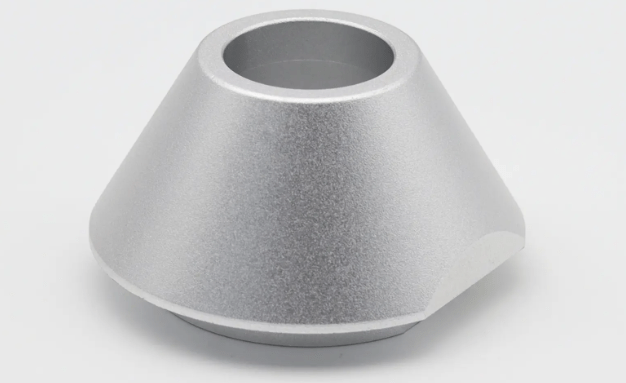
Therefore, during the electrochemical conversion process, most of the silicon inclusions within the structure of the part do not react and thus remain unchanged. This results in a sootier, darker or uneven appearance to the anodic coating – often referred to as having a ‘sooty’ appearance.
Pain Point 1: Dimensional Tolerance Creep, Why Does Process Sequence Matter?
Anodizing is not a pure surface coating. It is a conversion process. Roughly 50% of the oxide layer grows inward (consuming base metal) and 50% grows outward (adding material). This makes anodizing cast aluminum a dimensionally active process.
For a Type II (sulfuric acid) anodize at 0.0005″ total thickness, you gain approximately 0.00025″ per surface. On a precision bore with a bilateral tolerance of +/- 0.01mm, this is enough to push the part out of specification.
The tolerance compensation protocol:
- Determine the target anodize thickness per the engineering drawing.
- Calculate half the total thickness as the outward growth per surface.
- Machine the raw casting to that offset, intentionally undersized, so the anodized final dimension hits specification.
This approach requires coordination between the machining program and the anodizing specification. A supplier who handles both operations in-house eliminates the communication gap where this calculation is most often dropped.
Pain Point 2: Exposed Edges and Post-Machining Corrosion Risk
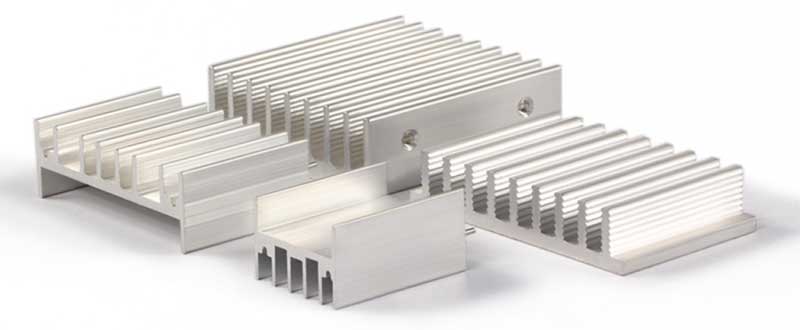
Machining anodized aluminum removes the protective oxide layer at every cut surface, resulting in exposed edges. These become corrosion sites in corrosive or high-humidity environments. And if these parts are used in an assembly with dissimilar metals, the galvanic corrosion is accelerated.
Automotive and marine applications require all die casting parts to be certified under IATF 16949 quality standards (which is essential in demonstrating that the parts offer long-term corrosion resistance). And this means these parts can’t be used in these industries.
Solutions for exposed surfaces:
- Apply a chemical conversion coating, such as Alodine 1200S or chromate conversion per MIL-DTL-5541, to freshly machined areas to provide localized corrosion protection without requiring full re-anodizing
- Document all post-anodize machining operations and their surface treatment mitigation in the PFMEA (Process Failure Mode and Effects Analysis), which is required under IATF 16949 and ISO 9001 controlled production environments
- Re-anodize after final machining die casted parts that need full corrosion resistance and apply tolerance compensation at the pre-machining stage
Pain Point 3: Why Is Machining Hard Anodized Aluminum So Damaging to Tooling?
With type III hardcoat anodizing, the aluminum oxide development has been shown to have a Vickers hardness of 400–600 HV, basically as hard as tungsten carbide tooling. When regular carbide end mills are used in machining hard anodized aluminum, it can quickly lead to increased scrap and tool replacement costs.
The hardcoat acts like a ceramic; abrasive in contact with the tool flank, acts brittle at its edges, and micro cracks get formed due to cutting forces.
Recommended approaches:
- Diamond-Like Carbon (DLC) coated tools reduce friction against the oxide layer and extend tool life by 3–5x compared to uncoated carbide
- Polycrystalline Diamond (PCD) inserts are the preferred solution for high-volume machining hard anodized aluminum on sliding surfaces or precision features
- Strategic masking during anodizing is a cost-effective approach than machining through a hardcoat layer, therefore, before the part enters the anodizing bath use silicone plugs or UV-curable masks on critical bores, threads, and mating faces
Pain Point 4: Hidden Porosity, The Silent Defect in Anodizing Aluminum Castings
Die casting can be a problem even when it is done well. It can trap air pockets under the surface of the part. For parts that are machined or painted this is usually not a big deal. When anodizing aluminum castings the acid used in the process can get into these air pockets, get stuck and then come out hours or days later. This can ruin the finish of the part from the inside out.
This kind of problem is very hard to find before you anodize the part unless you carry out destructive testing or X-ray inspection.
Prevention and mitigation:
- Vacuum-assisted HPDC venting can help a lot by removing the air from the mold before you put the metal in
- Resin impregnation (per MIL-I-17563 or Henkel Loctite Resinol process) seals micro-porosity prior to anodizing, which is a standard practice in aerospace and defense procurement for anodizing aluminum castings that must hold a clean finish
- Mold-flow simulation during the tooling design phase can predict high-porosity zones, allowing gate and vent placement to be optimized before the first shot is pulled
Pain Point 5: Aesthetic Inconsistency and Splotchiness
The first major pain point engineers specializing in anodizing die cast aluminum complain about is cosmetic. The complaint is that the end product doesn’t look like the approved sample, which in many cases is made from wrought 6061.
Silicon-rich alloys create surface smut, a dark, adherent film, during the anodizing bath. This smut prevents uniform oxide formation, resulting in blotchy, inconsistent color.
Solutions:
- Switch to low-silicon anodizable die casting alloys where cosmetics are a primary requirement
- Apply an acid-etch pre-treatment, such as nitric/hydrofluoric acid blend, to remove silicon smut before the anodizing bath begins
- If you must use A380 or ADC12 because of structural or tooling cost reasons, manage client expectations with approved cosmetic samples
Pain Point 6: Edge Chipping and Coating Crazing During Machining
Type III hardcoat is brittle and so when a cutting tool exits a bore or crosses an edge, the stress at the exit point can cause the oxide layer to crack or chip. This is known as crazing. When the oxide layer gets crazed, it becomes unable to provide corrosion protection and the specified wear resistance.
This pain point is common when machining hard anodized aluminum with conventional milling strategies carried over from raw aluminum work.
Machining parameter adjustments:
- Reduce feed rate by 30–40% at tool entry and exit points
- Use climb milling rather than conventional milling; climb milling applies cutting forces directed into the workpiece, reducing the peel-away stress at the oxide-aluminum interface
- Specify chamfered or radiused edges on the casting design; sharp 90° external corners concentrate stress during machining and are the most common initiation sites for edge chipping
Pain Point 7: The Cost of Getting Process Sequencing Wrong
When you are anodizing die cast aluminum, the sequence used determines the end result. You can either follow the sequence:
Cast → Machine → Anodize
Or use this sequence:
Cast → Anodize → Machine
None of these methods is universally correct. What I mean is it all depends on your end product needs. But, using the wrong method results in scrap, re-work, and an inflated total cost of ownership (TCO). This table is a sequence recommendation:
| Scenario | Recommended Sequence | Rationale |
| Precision bores, threads, mating faces | Machine → Anodize | Anodize must cover final geometry; compensate tolerances during machining |
| Decorative exterior surfaces only | Anodize → Machine (interior) | Protect cosmetic areas; machine non-visible features after |
| Full hardcoat on wear surfaces | Machine → Anodize → Selective re-machine | Use masking; avoid cutting hardcoat unless PCD tooling is available |
| Electrical/thermal hybrid parts | Machine → Anodize (masked) | Ground pads masked; anodize body for corrosion/wear resistance |
It’s not advisable to distribute these steps across multiple vendors, a trend many manufacturers tend to do. When you are using different vendors, it becomes difficult to have a single point of accountability, resulting in dimensional changes that compound across this process chain. The end result? Late-stage scrap in anodizing cast aluminum programs.
Pros and Cons: Anodizing Cast Aluminum vs. Powder Coating Cast Aluminum
Anodizing Cast Aluminum Pros:
- Harder surface (Type III: 400–600 HV vs. powder coat: ~80 HV)
- Thinner layer, better dimensional control
- Excellent wear and abrasion resistance
- No risk of coating delamination
Anodizing Cast Aluminum Cons:
- Cosmetic inconsistency on high-silicon alloys (A380, ADC12)
- Brittle, edges vulnerable to chipping
- Electrically insulating, conflicts with grounding requirements
Powder Coating Cast Aluminum Pros:
- Better cosmetic uniformity on silicon-rich die casting alloys
- Wide color range with consistent results
- More forgiving on porous castings
Powder Coating Cast Aluminum Cons
- Thicker layer (60–120 microns), affects tight tolerances
- Lower hardness, not suitable for wear applications
- Can trap outgassing from porosity, causing “fish-eye” defects
Anodizing Cast Aluminum Vs Machining Anodized Aluminum FAQs
Q1: Can A380 or ADC12 die castings be anodized to a bright, cosmetically acceptable finish?
Not consistently on the regular processes. The high content of silicon in the two alloys gives it an unbalanced dark finish. In case of appearance being a concern, change to either low-silicon anodizable alloy or powder coat chromate conversion primer. but we could have anodizing die casting aluminum solution for your requirement, if any of your die casting parts that must be using anodized surface finish, welcome to contact us, or you can go to how to anodize cast aluminum to know more.
Q2: What is the correct tolerance offset when machining aluminum castings before Type II anodizing?
To sulfuric acid anodize Type II at 0.0005 inches total thickness: offset machined dimensions by half the total layer offset (.00025 inches per surface) (i.e. 50 percent away).
In Type III hardcoat with a total of 0.002. The thickness of a layer can always be checked with your anodizer before you cut the machining program.
Q3: Is re-anodizing after post-anodize machining a viable production strategy?
Yes, but a complete tolerance compensation cycle is necessary, part will have to be re-machined to take into consideration a second anodize layer. This adds cost and lead time. High-value and safety-critical components in aerospace or defence programs are usually only justified.
Q4: How do I prevent acid bleed-out on die cast parts going to anodizing?
Specify vacuum-assisted HPDC during casting, and require resin impregnation (per MIL-I-17563) before the parts enter the anodizing line. This is a standard quality requirement for any anodizing die cast aluminum program where sub-surface porosity is a known risk.
Q5: What certifications should I require from a supplier handling both die casting and anodizing aluminum castings?
At minimum require ISO 9001:2015 certification. For automotive supply chains IATF 16949 is mandatory. For aerospace or defense programs AS9100 Rev D is the standard. Suppliers should provide inspection reports covering pre- and post-anodize measurements to verify tolerance compliance, for A380 and ADC12.
How aludiecasting Solves These Challenges
Aludiecasting has over 20 years of experience in high-pressure die casting and precision CNC machining. We operate as a vertically integrated manufacturer, handling mold design, mold-flow simulation, HPDC production, CNC machining, and surface finishing coordination under a single quality system certified to ISO 9001 and IATF 16949. Our in-house mold-flow analysis capabilities can help identify and mitigate porosity risks before tooling is cut, which is the most cost-effective point to solve the problems that compromise anodizing aluminum castings downstream.
GC MOULD manages the full process chain eliminating the vendor-to-vendor tolerance gaps which are the leading cause of scrap and re-work in programs involving anodizing cast aluminum.
Ready to eliminate anodizing defects and tolerance failures from your cast aluminum program? Submit your part drawing and annual volume requirements to our engineering team for a process-sequence recommendation, alloy selection review, and quote, with full traceability from mold design to finished surface treatment.
0 Comments