
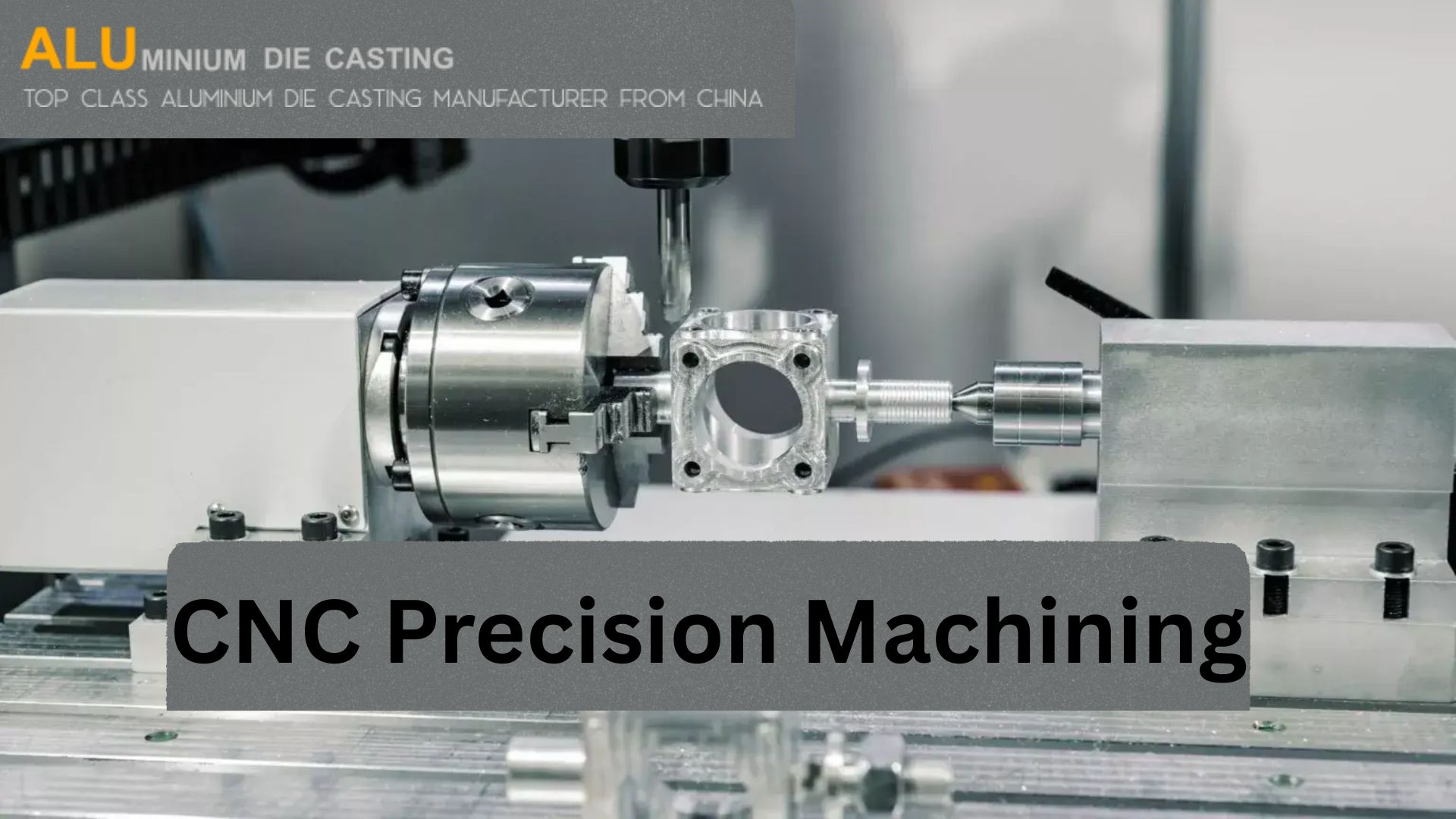
L'usinage de précision CNC est un aspect très important de la fabrication contemporaine. Il est utilisé pour fabriquer des pièces précises et de haute qualité. L'automobile, l'aérospatiale, la médecine et l'électronique sont quelques-unes des industries qui utilisent des machines CNC pour produire des composants précis.
Le Usinage de précision CNC sera décrit dans un langage simple dans ce guide. Vous saurez comment il fonctionne, quels sont ses avantages, ses utilisations et pourquoi il est important dans le monde moderne.
Qu'est-ce que l'usinage de précision CNC ?
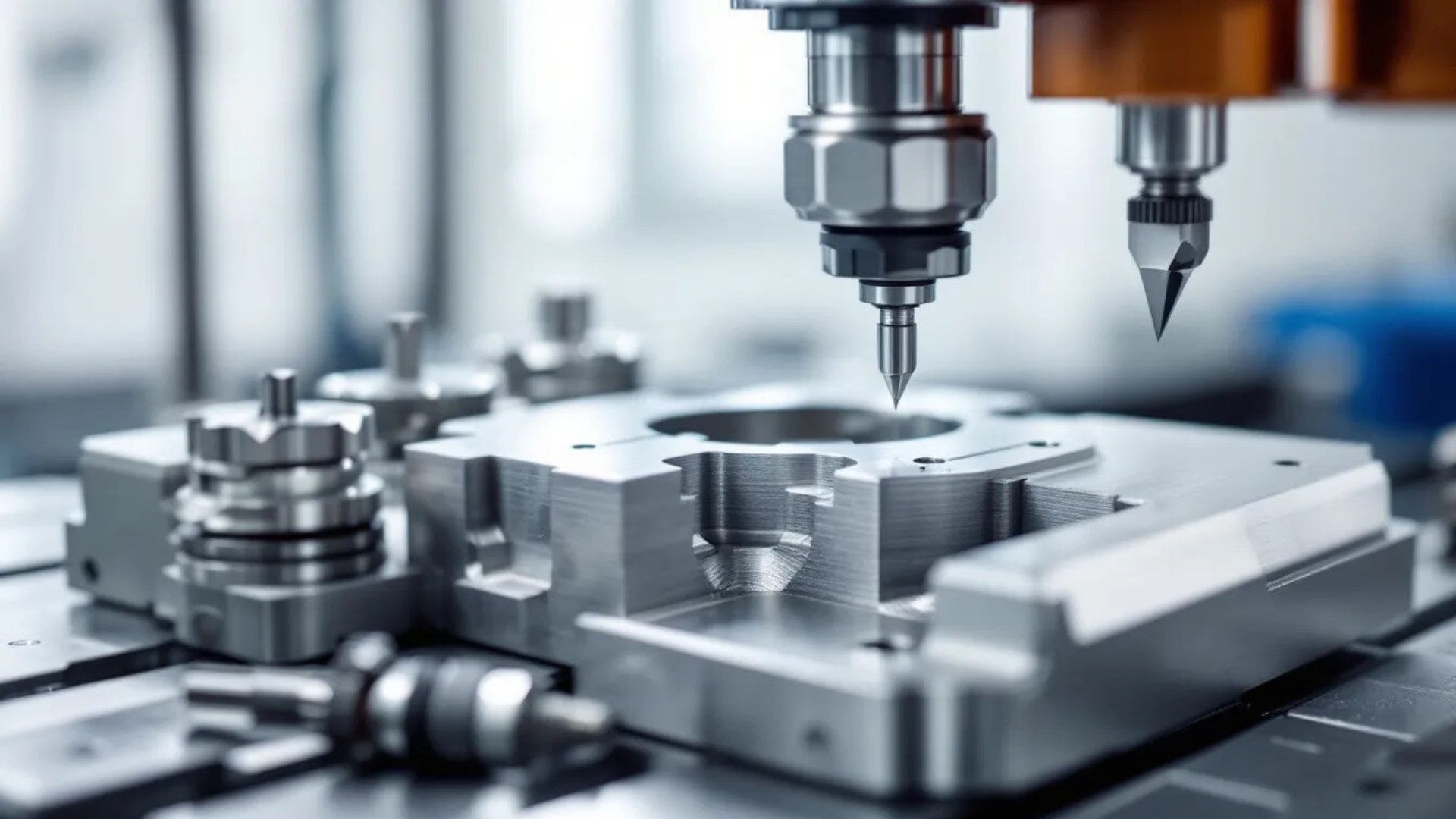
CNC est l'abréviation de Computer Numerical Control (commande numérique par ordinateur). Elle utilise des ordinateurs pour gérer les machines-outils. L'usinage de précision fait référence à des composants dont les dimensions sont précises et les tolérances faibles.
L'usinage de précision CNC est une combinaison des deux. Les outils de coupe sont dirigés par des ordinateurs pour fabriquer des pièces de haute précision et reproductibles. Cela permet de minimiser les erreurs humaines et d'améliorer la qualité du produit.
Le mécanisme de l'usinage de précision CNC
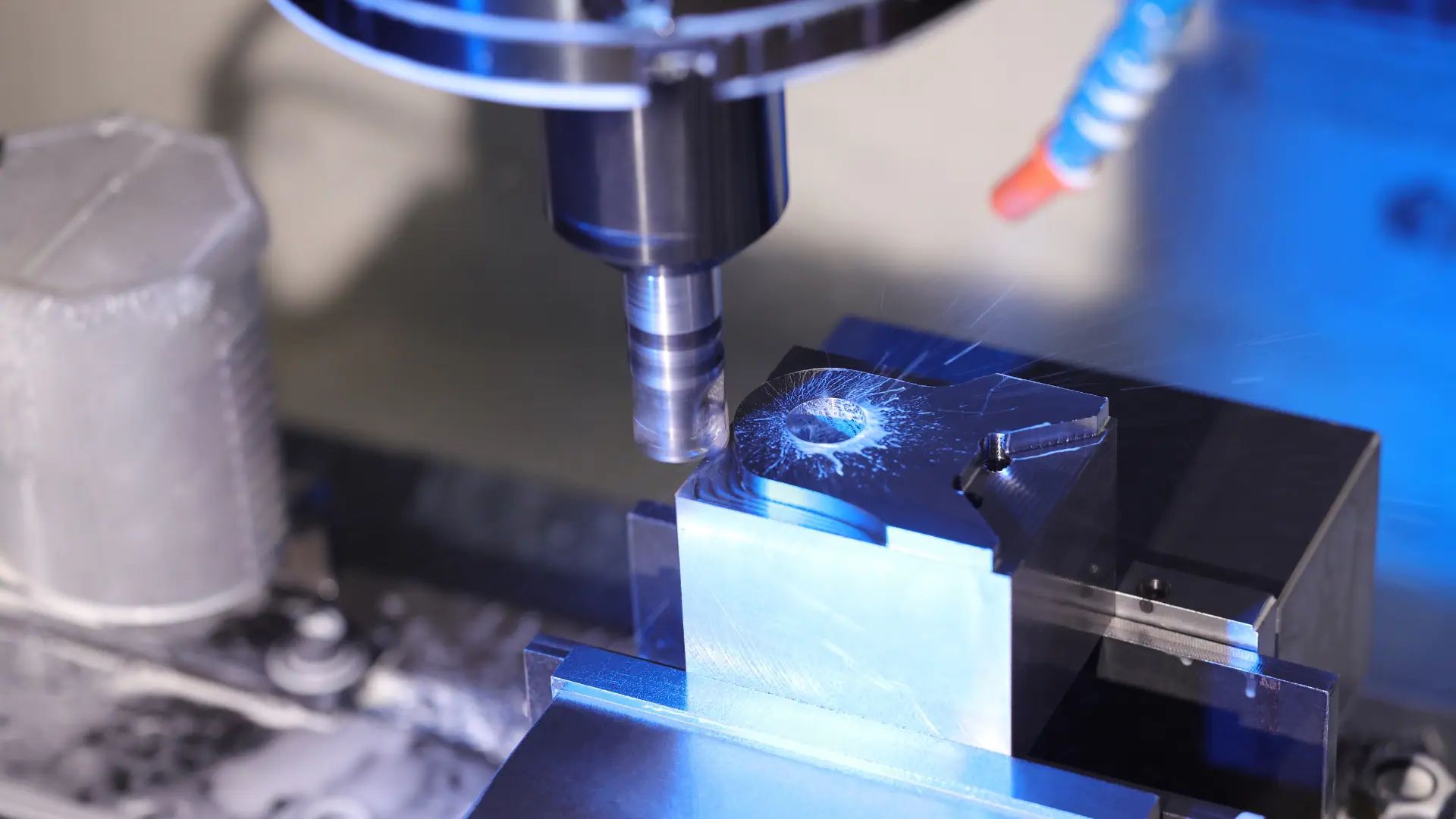
La conception est le point de départ de l'usinage de précision CNC. Le logiciel de CAO est un modèle numérique de la pièce qui est développé par les ingénieurs. Cette conception présente tous les détails et toutes les dimensions de la pièce.
La conception est ensuite transférée aux instructions de la machine CNC. Celles-ci sont obtenues sous la forme d'un logiciel de FAO. Ces instructions sont lues par la machine, qui sait alors comment déplacer et découper le matériau.
Les outils utilisés dans la machine CNC comprennent les fraises, les tours et les toupies pour façonner le matériau. Elle est capable de travailler avec des métaux, des plastiques, du bois et des matériaux composites.
La machine a des mouvements très précis. Toutes les coupes, tous les perçages ou toutes les rotations sont conformes à la conception. Cela est dû à la grande précision et à la minimisation des erreurs.
Après avoir fabriqué la première pièce, la machine peut répéter le processus plusieurs fois. Toutes les sections émergent de la même manière que la première. C'est la raison pour laquelle Usinage CNC est idéal pour la production à grande échelle.
La machine peut être surveillée par les opérateurs pendant le processus. Si nécessaire, ils peuvent apporter des modifications mineures. La qualité et l'uniformité de chaque composant sont ainsi préservées.
Les machines CNC peuvent également effectuer plusieurs opérations en une seule fois. Par exemple, il est possible de percer, fraiser et tourner sans déplacer la pièce. Cela permet de gagner du temps et de l'efficacité.
Le principe général de l'usinage de précision CNC est l'intégration de la commande informatique et des instruments mécaniques. Le résultat est la précision et l'uniformité des pièces, ainsi que la possibilité de les utiliser dans des constructions complexes.
Types de machines CNC
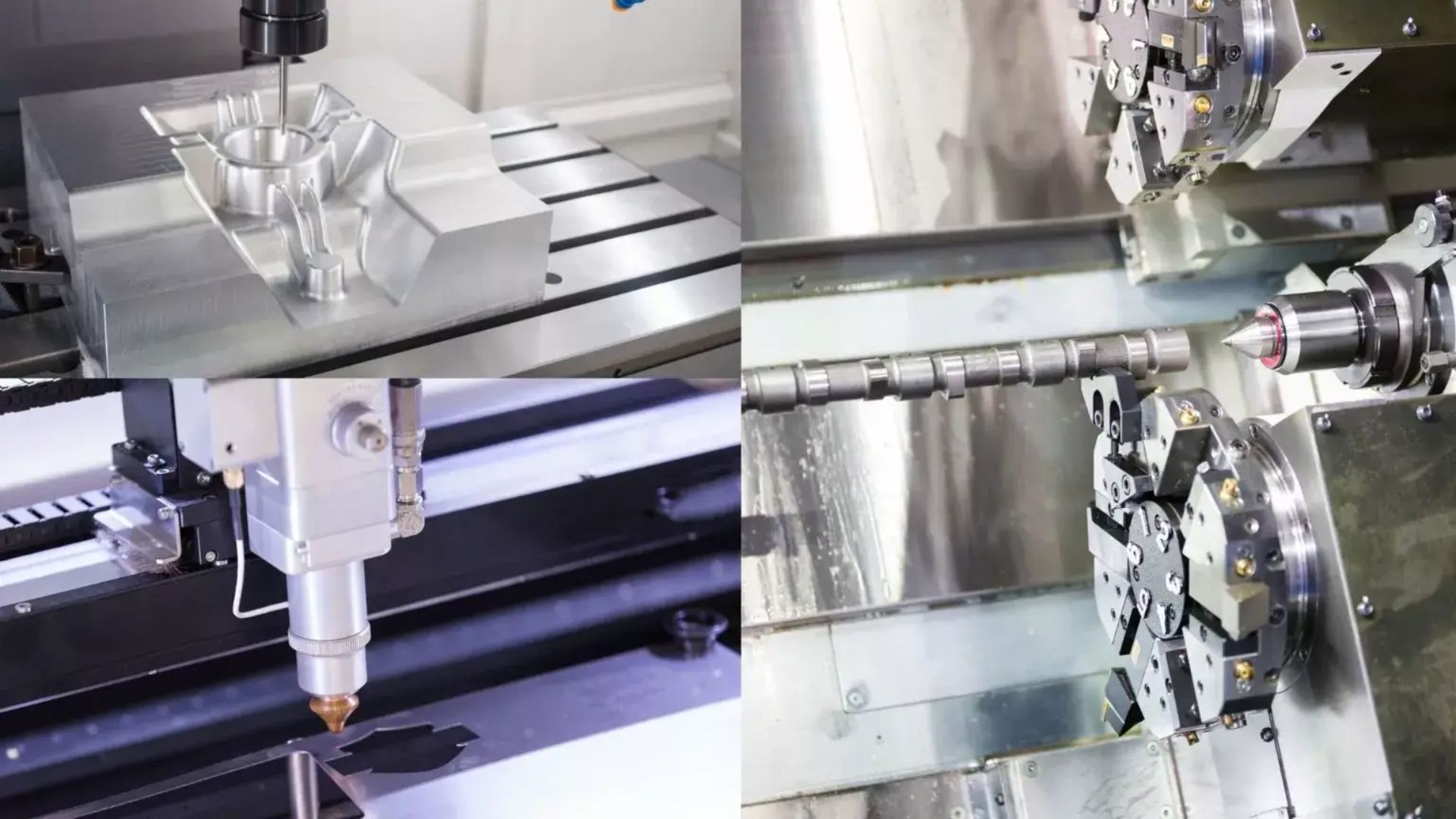
Les machines CNC sont de différents types. Les deux types sont orientés vers un objectif particulier.
Machines à fraiser CNC
Les fraiseuses à commande numérique utilisent des outils de coupe rotatifs. Une pièce est façonnée par enlèvement de matière. Elles conviennent aux surfaces planes et aux conceptions complexes. Les fraiseuses peuvent traiter les métaux, les plastiques et le bois.
Tours CNC
Le matériau est tourné par des tours CNC et coupé par un outil de coupe. Ils sont taillés pour produire des composants cylindriques tels que les tiges, les arbres, les t,s et les tuyaux. Les tours sont précis et rapides.
Défonceuses CNC
Les défonceuses CNC sont principalement utilisées pour les métaux tendres, le plastique et le bois. Elles sont capables de développer des motifs et des décorations élaborés. Elles trouvent de nombreuses applications dans l'ameublement et la fabrication d'enseignes.
Machines CNC à 5 axes
Les directions de mouvement des machines CNC à 5 axes sont au nombre de cinq. Elles sont utilisées pour les composants complexes et compliqués. Les machines à 5 axes sont très demandées dans les secteurs de l'aérospatiale et de la construction automobile. Ces machines permettent de gagner du temps et de minimiser les erreurs, car elles disposent d'un certain nombre de fonctions fonctionnant dans le cadre d'une configuration unique.
Découpeuses laser CNC (en option)
D'autres usines disposent de découpeurs laser à commande numérique. Elles sont utilisées pour découper des matériaux avec une grande précision à l'aide de lasers de grande puissance. Elles sont adaptées aux métaux fins et aux plastiques.
Les machines CNC ont leurs avantages et leurs utilisations. Le choix du type approprié se fera en fonction du type de matériau, de la forme et de la précision nécessaires.
Avantages de l'usinage de précision CNC
Il y a de nombreux avantages à Usinage de précision CNC par rapport aux méthodes traditionnelles. La raison pour laquelle elle est largement utilisée est qu'elle améliore la qualité, l'efficacité et la fiabilité.
Haute précision
Les pièces fabriquées à l'aide de machines CNC sont très précises dans leurs mesures. Même les détails les plus infimes sont découpés de la bonne manière. Cette précision est importante dans des secteurs tels que l'aérospatiale et les équipements médicaux, où la précision des dimensions est primordiale. Un niveau élevé de précision minimise également le gaspillage de matériaux, puisque les erreurs sont réduites.
Cohérence
Le les pièces fabriquées par des machines à commande numérique sont identiques à 100 %. Une fois qu'un programme est établi, la machine est capable de répéter le processus des centaines ou des milliers de fois. Cette caractéristique est importante pour les industries qui exigent des pièces standardisées, comme l'automobile ou l'électronique.
Vitesse
Une machine CNC est beaucoup plus rapide que l'usinage manuel. Elles sont capables d'accomplir en quelques heures des tâches qui prendraient des jours à être réalisées manuellement. La production à grande vitesse permet de gagner du temps, de réduire les dépenses et de permettre aux entreprises d'effectuer des tâches dans les délais impartis.
Flexibilité
Les machines à commande numérique sont très adaptables. Il est facile de modifier la conception de la pièce. Les instructions numériques sont simplement mises à jour par les ingénieurs. La machine est capable de réaliser la nouvelle conception sans modification du réglage ou des outils. C'est cette flexibilité qui permet aux fabricants de réagir rapidement aux demandes des clients.
Production à grande échelle Rentabilité
Bien que les machines CNC soient coûteuses à court terme, elles sont rentables à long terme, en particulier pour la production à grande échelle. Elles sont moins coûteuses en main-d'œuvre, car elles nécessitent peu d'opérateurs. Les matériaux sont également moins gaspillés grâce à une découpe précise. Il en résulte un gain de temps considérable.
Sécurité
Les contrôleurs des machines CNC sont informatisés ; les opérateurs ne sont donc pas en contact direct avec les outils de coupe. Cela réduit les risques d'accident sur le lieu de travail. Des boucliers de sécurité et des arrêts d'urgence sont également présents sur de nombreuses machines afin de promouvoir un environnement sûr.
Compétences en matière de conception de modèles complexes
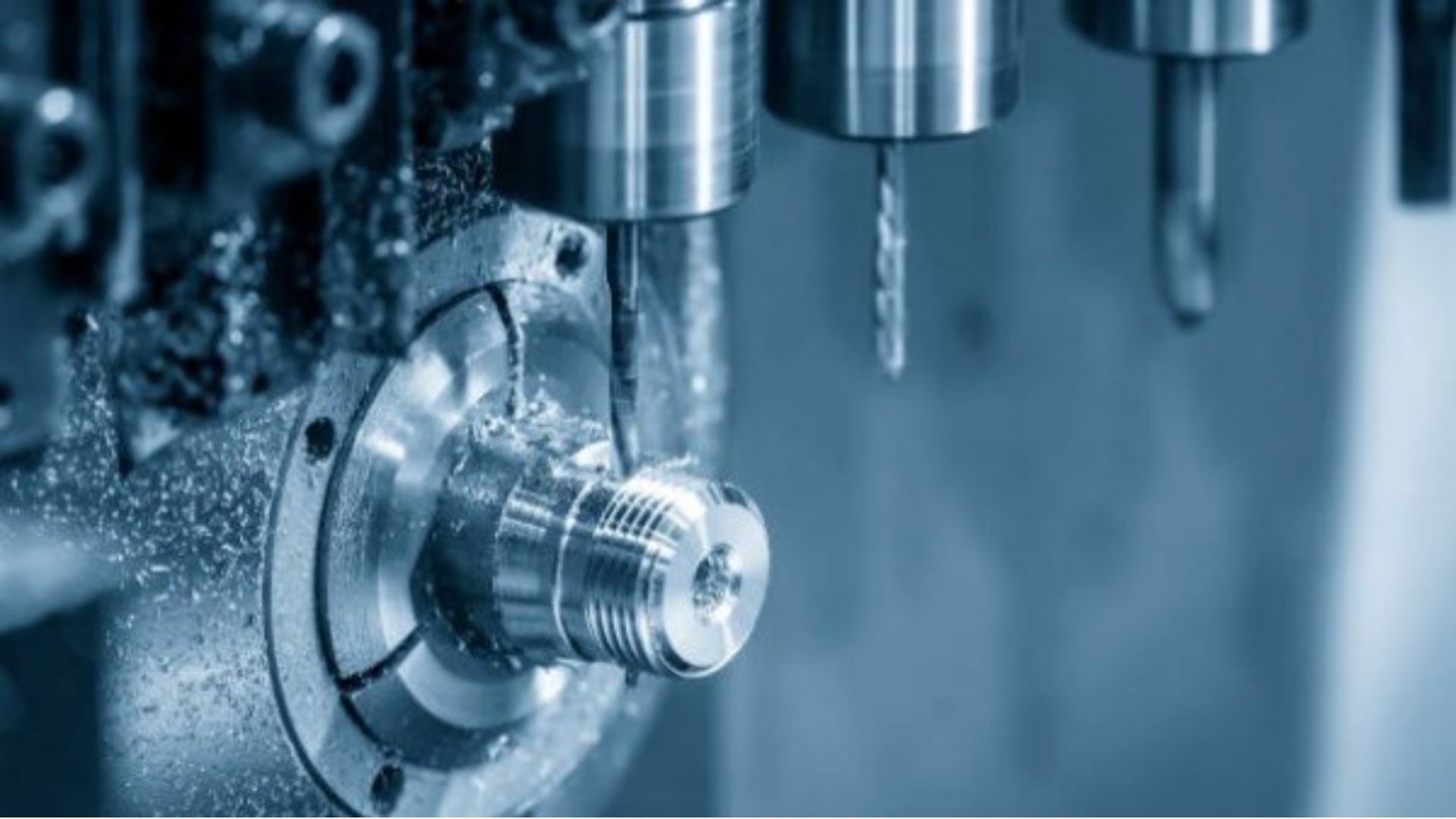
Des formes compétentes et complexes peuvent être créées à l'aide de l'outil Machines CNC lorsqu'ils sont difficiles ou impossibles à réaliser à la main. Il s'agit de surfaces courbes, de trous minuscules et de motifs très détaillés. C'est ce qui fait que les machines CNC conviennent à des industries telles que l'aérospatiale, l'équipement médical et l'électronique.
Réduction des erreurs humaines
Les machines CNC étant programmées, les risques d'erreur humaine sont réduits. Cela se traduit par des pièces de qualité et une réduction des produits défectueux.
Utilisation efficace des matériaux
L'usinage de précision CNC est rentable dans l'utilisation des matériaux. La précision de la découpe permet d'économiser de l'argent et des ressources. Cela contribue également au respect de l'environnement par les fabricants.
Évolutivité
Les machines CNC peuvent être utilisées pour la production à petite ou à grande échelle. L'usinage CNC peut prendre en charge une commande de dix pièces ou de dix mille pièces et offrir une qualité constante.
Fiabilité
Les machines CNC sont très pratiques, à condition d'être bien entretenues. Elles sont capables de travailler de longues heures avec des intervalles de repos minimes. Elles sont donc idéales pour les industries qui doivent être en production constante.
Interconnexion simple avec les technologies contemporaines
Les machines à commande numérique sont compatibles avec d'autres technologies de pointe, notamment la numérisation 3D, les logiciels de CAO/FAO et les systèmes d'automatisation. Cela permet aux entreprises d'automatiser la production et de maintenir les meilleures normes.
Dans l'ensemble, l'usinage de précision CNC offre précision, rapidité, sécurité et flexibilité. Il aide les entreprises à fabriquer des produits de qualité à long terme, à réduire les déchets et à économiser du temps et de l'argent. C'est pourquoi la technologie CNC est devenue un élément essentiel de la production contemporaine.
Matériaux dans l'usinage de précision CNC
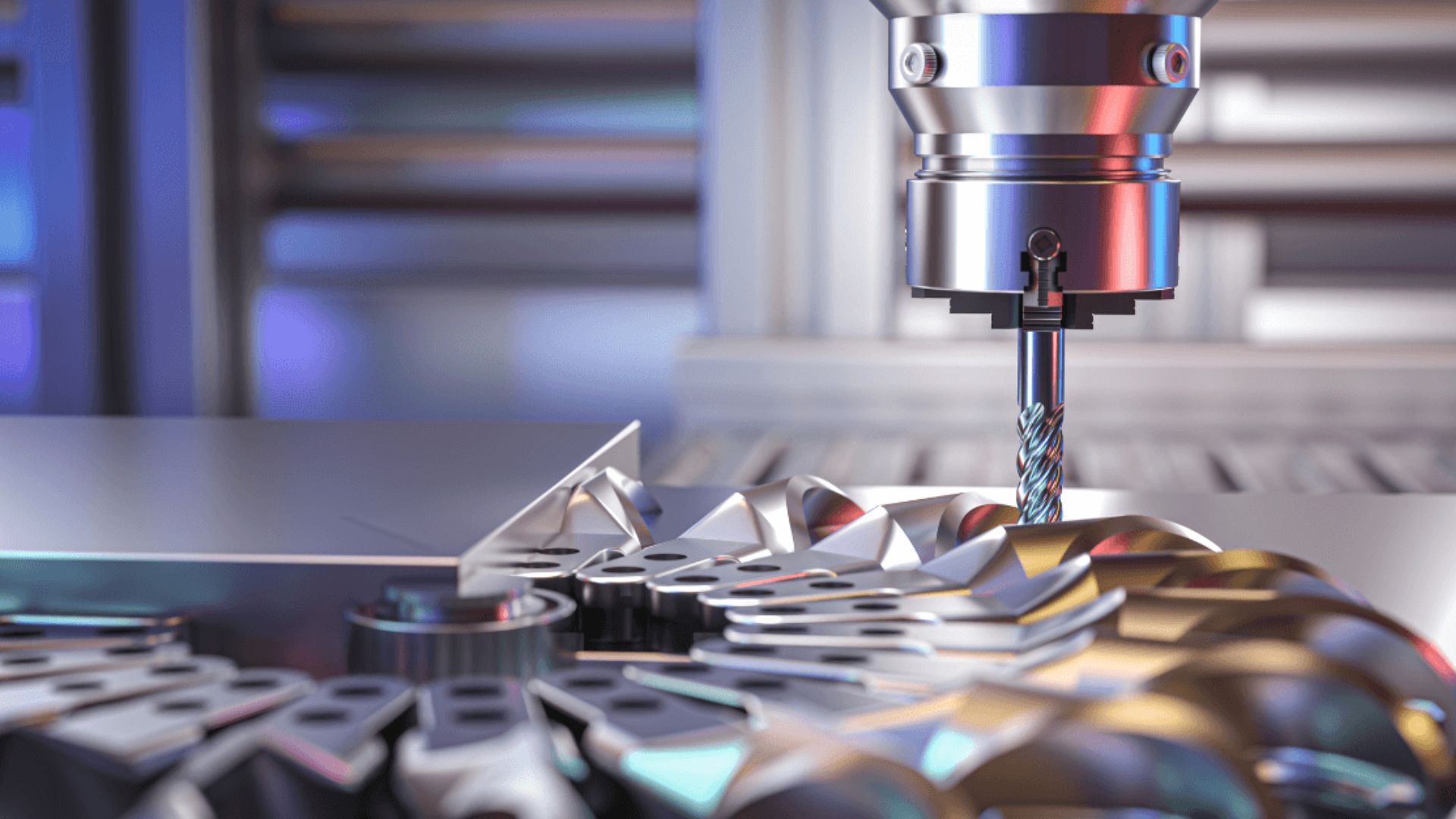
Une grande variété de matériaux peut être utilisée dans les machines CNC. Cela les rend très adaptables à de nombreuses industries. Le choix du matériau dépend de l'application de la pièce, de ses exigences en matière de résistance et de la complexité de sa conception.
Métaux
Les matériaux les plus répandus dans l'usinage de précision CNC sont les métaux. Il s'agit notamment de
- Aluminium : Léger et puissant. Faciles à usiner, ils sont utilisés dans l'aérospatiale et les composants automobiles.
- Acier : Solide et durable. Utilisé dans les machines industrielles, les pièces automobiles et les matériaux de construction.
- Acier inoxydable : Sans corrosion. Idéal pour les outils médicaux, culinaires et dans l'environnement marin.
- Laiton : Il est facile à usiner et constitue un matériau offrant une bonne résistance à la corrosion. Utilisé pour les raccords, soupapes, ainsi que des éléments décoratifs.
- Titane : Il est très résistant et léger. Les applications les plus performantes sont l'aérospatiale, les implants médicaux et les pièces de haute performance.
- Le cuivre : Bon conducteur de courant électrique. Composant électrique et échangeur de chaleur.
Plastiques
Les plastiques sont légers et faciles à usiner. Ils sont parfaits pour les prototypes et les pièces non structurelles. Les plastiques CNC les plus courants sont les suivants :
- Nylon : Solide et résistant. Utilisé pour les engrenages, les roulements et les pièces industrielles.
- Acrylique : léger et transparent. Idéal pour les enseignes, les présentoirs et les ornements.
- PVC : Solide, imperméable, f et résistant aux produits chimiques. S'applique aux systèmes de plomberie et aux éléments de construction.
- Polycarbonate : Solide et résistant. S'adapte parfaitement aux équipements de sécurité et à l'électronique.
Composites
Les composites sont un mélange de deux ou plusieurs matériaux en raison de leurs caractéristiques améliorées. Ils comprennent :
- Fibre de carbone : La fibre de carbone est un matériau très résistant et fin. Elle est couramment utilisée dans l'aérospatiale, l'automobile et les équipements sportifs.
- Fibre de verre : supérieur et résistant à la corrosion. Ils sont utilisés dans les secteurs de la marine, de l'automobile et de la construction.
Bois
L'usinage CNC utilise également le bois, en particulier les meubles, les pièces décoratives et les maquettes. Les défonceuses CNC permettent d'usiner aussi bien le bois tendre que le bois dur.
Matériaux de spécialité
Certaines machines CNC peuvent fonctionner sur des matériaux étranges tels que la céramique ou certains alliages. Elles sont utilisées dans des applications de haute précision ou de haute performance.
L'importance du choix des matériaux
Elle influence la vitesse de coupe, l'usure des outils et la qualité de la pièce finale. Les machines à commande numérique ont la capacité de modifier la vitesse, la vitesse d'avance, les dents et les outils en fonction du matériau. Le bon matériau peut être sélectionné pour garantir la performance, la rentabilité et la durabilité.
En termes simples, l'usinage de précision CNC est très flexible puisqu'il est capable de traiter des métaux, des plastiques, des bois composites et des matériaux spéciaux. Il peut donc être adapté efficacement à différents secteurs d'activité.
L'usinage de précision CNC est utilisé dans les industries
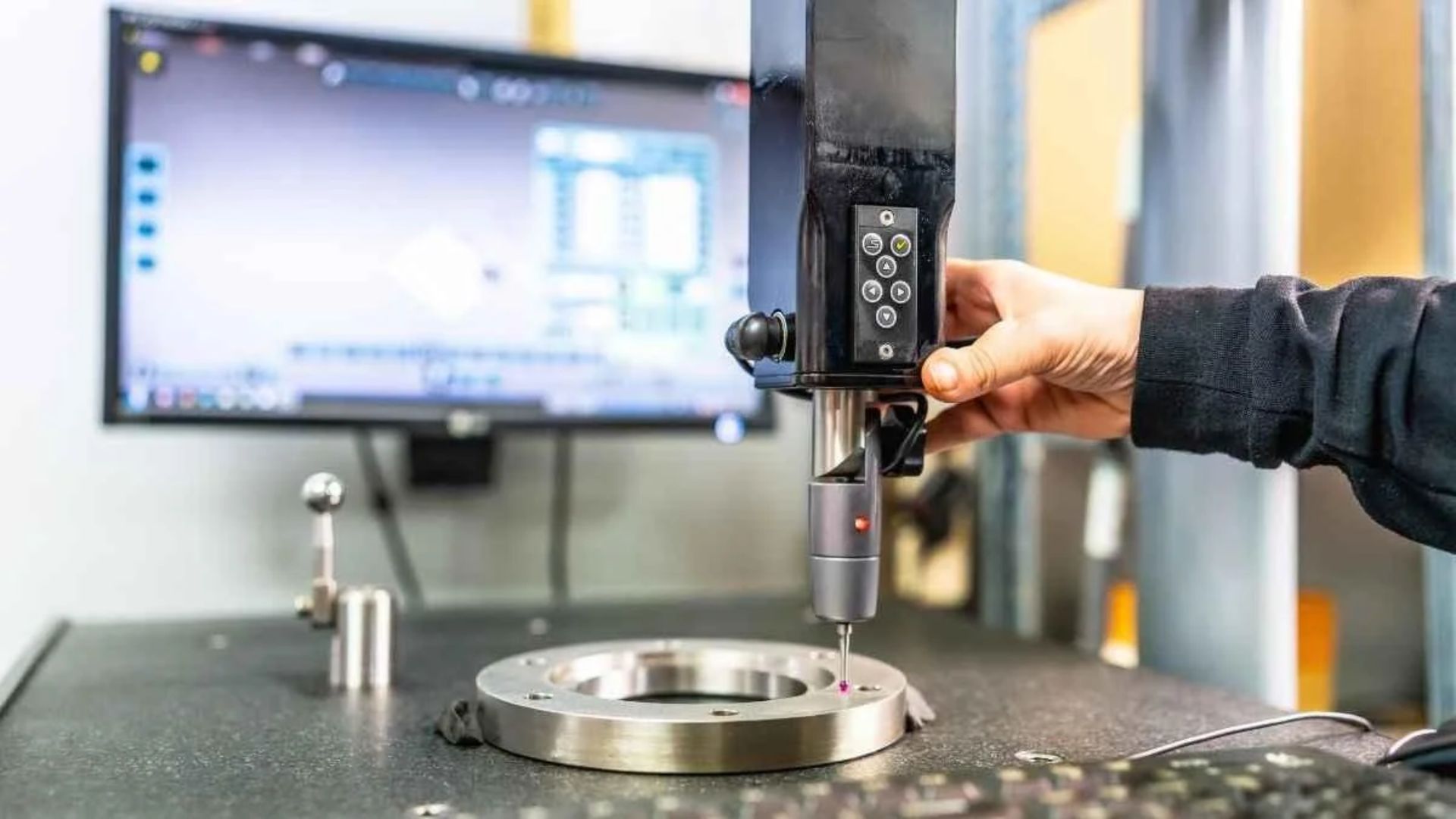
L'usinage de précision CNC trouve des applications dans la plupart des industries. Il est important de disposer d'une grande précision et d'une grande cohérence.
Industrie automobile
Les machines CNC sont utilisées par l'industrie automobile pour produire des pièces de moteur, des engrenages et des composants sur mesure. Ces machines garantissent que les pièces sont montées de manière idéale et qu'elles sont fiables. L'usinage CNC est également utile dans la production de composants performants et légers utilisés dans les véhicules modernes.
Industrie aérospatiale
L'industrie aérospatiale exige des pièces très fines et robustes. Les machines CNC fabriquent des aubes de turbine, des pièces structurelles d'avion et des pièces de train d'atterrissage. L'usinage de précision CNC s'avère très utile, même en cas d'erreurs mineures susceptibles d'entraîner d'énormes problèmes.
Industrie médicale
Les implants et les dispositifs médicaux doivent être corrects et sûrs. Les instruments chirurgicaux, les implants, les prothèses et les outils dentaires sont fabriqués par usinage CNC. Cette méthode est fiable et sûre pour le patient, car la précision est élevée.
Industrie électronique
Les matériaux électroniques doivent être minuscules, précis, te et uniformes. Les machines CNC sont utilisées pour la fabrication de cartes de circuits imprimés, de boîtiers, de connecteurs ou de boîtiers. Cela garantit le bon fonctionnement des équipements électroniques.
Industrie de la défense
Dans l'industrie de la défense, les machines CNC sont utilisées pour fabriquer des armes, des véhicules et des équipements spéciaux. La précision est importante, car même des erreurs mineures peuvent influer sur les performances.
Machines industrielles
L'usinage CNC fabrique des pièces pour les machines, les outils et les équipements d'usine. Des pièces adéquates sont le gage d'un fonctionnement irréprochable et d'une réduction de la demande d'entretien.
Secteur de l'énergie
L'usinage CNC est utilisé dans l'industrie de l'énergie pour les turbines, les pompes, les vannes et autres. Les composants doivent être soumis à des pressions, des chaleurs et des contraintes élevées, d'où l'importance de la précision.
Fabrication sur mesure
Les machines CNC permettent aux entreprises de produire des pièces individuelles ou des prototypes dans un délai très court. Elles sont applicables dans le cas des start-ups, du développement de produits et des tests de conception.
L'importance de la CNC dans toute industrie
L'usinage de précision CNC garantit la précision, la cohérence et l'efficacité. Il minimise les erreurs et le gaspillage de matériaux par les êtres humains. Il s'agit donc d'un outil essentiel pour les industries qui ont besoin de pièces fiables et de haute qualité.
En bref, CNC Precision Machining est une entreprise efficace qui dessert les secteurs de l'automobile, de l'aérospatiale, de la médecine, de l'électronique, de la défense, de l'industrie, de l'énergie et de la fabrication sur mesure. Grâce à sa flexibilité et à sa précision, il constitue l'un des fondements de la fabrication d'aujourd'hui.
La différence entre l'usinage de précision CNC et l'usinage traditionnel
Il existe deux méthodes de fabrication de pièces : L'usinage de précision CNC et l'usinage traditionnel, qui sont très différents dans leur fonctionnement. Les ordinateurs contrôlent les machines CNC, ce qui leur permet de fabriquer des pièces avec des tolérances serrées et une grande précision. Le contrôle manuel de l'usinage traditionnel est effectué par des ouvriers qualifiés, ce qui peut entraîner des erreurs mineures à certains endroits.
En fonction de l'usinage traditionnel, de légères variations entre les pièces peuvent apparaître, mais les machines CNC ont la capacité de fabriquer des centaines ou des milliers de pièces identiques avec la même qualité. L'usinage CNC est également beaucoup plus rapide : les travaux complexes sont réalisés en quelques heures, contre plusieurs jours pour le travail manuel. Les machines CNC sont également faciles à modifier, car le logiciel est facilement actualisable, alors que dans les machines traditionnelles, la conception doit être modifiée manuellement, ce qui prend beaucoup de temps et d'énergie.
Machines CNC sont capables de produire des formes et des détails complexes qu'il est difficile, voire impossible, de réaliser manuellement. Elles nécessitent moins d'opérateurs, moins de gaspillage de matériaux et sont plus sûres car les travailleurs n'entrent pas en contact direct avec les outils de coupe. L'usinage conventionnel est toutefois plus exigeant en main-d'œuvre, consomme plus de matériaux et est également plus sujet aux accidents.
Les machines CNC sont rapides, précises et constantes, ce qui les rend rentables lorsque l'échelle de production est énorme, mais elles sont très coûteuses à l'achat et à l'installation. L'usinage conventionnel peut être moins coûteux à court terme, mais dans le cas de gros volumes ou de travaux de précision, il s'avère plus lent, moins stable et plus coûteux à long terme.
Dans l'ensemble, l'usinage de précision CNC est plus rapide, plus précis, plus sûr et plus fiable que l'usinage conventionnel. Il est préférable pour l'industrie manufacturière contemporaine, alors que l'usinage traditionnel s'applique principalement à de petits projets ou à des pièces simples.
Types d'usinage CNC courants
Tournage
Le tournage est utilisé pour enlever de la matière d'une pièce en rotation. Il donne naissance à des formes cylindriques.
Fraisage
Les outils rotatifs du fraisage sont utilisés pour découper le matériau. Il permet de former des surfaces planes ou complexes.
Forage
Le perçage est utilisé pour réaliser des trous précis dans les pièces. Précision et reproductibilité Le perçage CNC est précis.
Broyage
La rectification permet de lisser les surfaces. Elle est appliquée pour compléter et resserrer les tolérances.
Tolérances d'usinage CNC
Les tolérances correspondent à la variation admissible des dimensions. Des tolérances serrées, de l'ordre de 0,01 mm, peuvent être obtenues dans le cadre de l'usinage de précision CNC. Cela garantit que les pièces s'emboîtent parfaitement dans les assemblages.
Logiciel d'usinage CNC
L'usinage de précision CNC ne peut se passer de logiciels.
- CAO (conception assistée par ordinateur) : Conception 2D ou 3D.
- FAO (fabrication assistée par ordinateur) : Transformer les conceptions en données machine.
- Logiciel de simulation : Concevoir - avant de construire.
Maintenance des machines à commande numérique
Il est important de l'entretenir correctement. Les machines doivent être fréquemment nettoyées, lubrifiées et étalonnées. Ne pas en tenir compte peut entraîner des erreurs et des temps d'arrêt.
L'avenir de l'usinage de précision à commande numérique
La technologie CNC évolue rapidement. Les fabricants travaillent selon de nouvelles tendances. L'automatisation et la robotique sont utilisées pour améliorer la vitesse et l'efficacité de la production. Des logiciels basés sur l'intelligence artificielle sont utilisés pour identifier les erreurs et affiner les conceptions avant le processus d'usinage. Les machines à commande numérique sont également intégrées à l'impression 3D afin de produire des systèmes de fabrication hybrides plus flexibles. Les usines intelligentes sont une application de la surveillance et du contrôle en temps réel pour suivre tous les aspects du processus de production, ce qui permet d'améliorer la qualité et de réduire les déchets. Ces évolutions transforment l'usinage de précision CNC, qui devient plus précis, plus flexible et plus rapide que jamais.
La sélection d'un service d'usinage CNC
Un certain nombre de facteurs doivent être pris en considération lors du choix d'un service d'usinage CNC. L'expérience de l'entreprise est importante, car plus elle est ancienne, plus elle a d'expérience et de crédibilité. Vous devez également vérifier si le service est capable de répondre à vos exigences spécifiques en matière de matériaux et de conception. La précision et l'efficacité requièrent un équipement moderne et bien entretenu. Un autre facteur important est le contrôle de la qualité : toutes les pièces doivent être vérifiées et testées avant la livraison. Enfin, l'assistance à la clientèle permet à l'entreprise d'être réactive et serviable, ce qui rend le processus d'exécution fluide et fiable. Lors de la sélection du service, il est important de s'assurer que vos pièces seront fabriquées correctement, dans les délais et avec une qualité élevée.
Conclusion
Dans la production contemporaine, Usinage de précision CNC est nécessaire. Elle est précise, rapide et fiable. Les machines CNC peuvent être utilisées pour presque toutes les tâches, qu'il s'agisse de petits articles ou de grands composants industriels.
Les secteurs de l'automobile, de l'aérospatiale, de la médecine et de l'électronique utilisent l'usinage de précision CNC pour fabriquer des produits fiables et de haute qualité.
Un investissement CNC ou une société de services CNC professionnelle garantira que vos composants répondent aux spécifications requises et que les normes sont respectées.
L'apprentissage de l'usinage de précision CNC permettra aux entreprises d'économiser de l'argent et d'accroître leur efficacité, ainsi que de fabriquer des produits de haute qualité.

0 commentaires