
La fonte d'aluminium est l'aluminium qui a été fondu puis coulé dans un moule pour lui donner la forme souhaitée. Cette opération permet aux fabricants de créer des composants plus avancés, d'où la présence de la fonte d'aluminium dans la plupart des industries contemporaines telles que les voitures et les avions, ainsi que dans la coutellerie et l'électronique.
Les premières lignes de la liste des sciences des matériaux incluent la fonte d'aluminium en raison de sa flexibilité. Elle offre une bonne combinaison de durabilité, de rentabilité et de flexibilité dans sa conception. La fonte d'aluminium reste une option privilégiée dans le monde entier, car les entreprises recherchent toujours des matériaux légers et résistants.
La fonte d'aluminium contribue de manière significative à la durabilité de la fabrication. Comme l'aluminium peut être réutilisé presque continuellement sans perte significative de résistance, les mêmes entreprises utilisent la fonte comme moyen de recyclage du métal pour l'utiliser dans de nouveaux produits, réduire leurs coûts et minimiser le gaspillage. Enfin, la fonte d'aluminium peut servir de transition entre l'ingénierie de haute technologie et les produits ordinaires. La fonte d'aluminium peut être trouvée partout sous les pièces détachées de voiture comme le bloc moteur, ou une poêle que vous aimez utiliser.
Comment fabrique-t-on la fonte d'aluminium ? Processus étape par étape
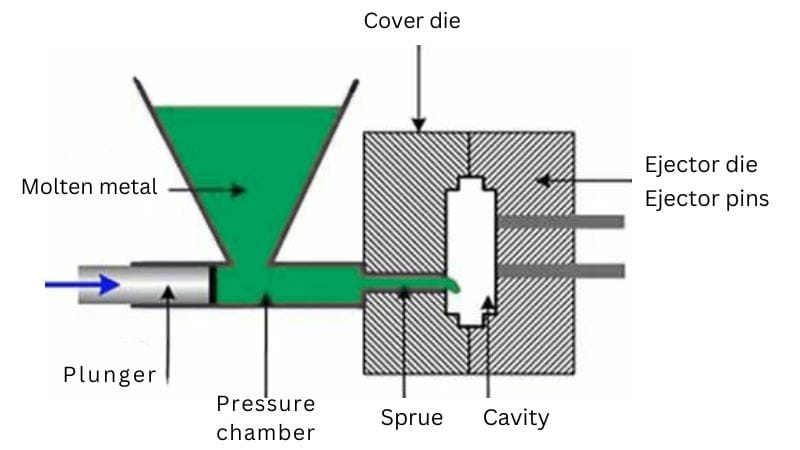
Processus de moulage de l'aluminium étape par étape dans une fonderie moderne
La fonte d'aluminium est un matériau scientifique et, en même temps, étonnamment artistique. Des techniciens expérimentés contrôlent plusieurs phases afin de garantir que le matériau s'affaisse et ne perde pas son support structurel.
Fusion de l'aluminium
Dans un four, l'aluminium brut ou la ferraille sont portés à des températures supérieures à 1 200 degrés Fahrenheit, ce qui est suffisant pour faire fondre leurs métaux en un liquide fondu pur. Cette chaleur intense est utilisée pour faire fondre les structures métalliques solides et l'aluminium se présente sous la forme d'un liquide fondu qui est coulé dans des moules.
Préparation du moule
La pièce d'aluminium coulée est façonnée par le moule, qui lui donne la forme finale que le métal en fusion occupera. Les moules peuvent être fabriqués à partir de sable, d'acier, de céramique ou de graphite, en fonction de la complexité de la conception et des exigences du processus de production, car chacun présente ses propres avantages en termes de précision, de longévité et de qualité de la surface.
Couler l'aluminium
Lorsque l'aluminium est complètement fondu, il est versé ou injecté dans le moule prêt à l'emploi. Le timing et la température sont essentiels, car une coulée trop rapide, trop lente ou à des niveaux de chaleur différents peut entraîner des fissures, des bulles d'air ou des points faibles sur le produit moulé final.
Refroidissement et solidification
Une fois l'aluminium fondu coulé, on le laisse refroidir et se solidifier dans le moule. La vitesse de refroidissement du métal influe considérablement sur la résistance finale, la densité et la composition du grain interne. La régulation de la température permet d'éviter les défauts et d'obtenir un moulage durable et de haute qualité.
Retrait de la pièce moulée
Une fois que le processus de solidification de l'aluminium est terminé, les techniciens ouvrent ou coupent très délicatement le moule pour révéler la nouvelle pièce qui vient d'être formée. Cette opération est nécessaire pour éviter la destruction du moulage, tout en veillant à ce que le couvrage conserve la forme, la qualité de surface et l'intégrité souhaitées.
Parage et finition
Au cours du processus d'ébarbage et de finition, les restes d'aluminium après le processus de moulage sont coupés. La pièce peut ensuite être polie, poncée ou revêtue afin d'améliorer son aspect, la douceur de sa surface et son fonctionnement général.
Le rôle des moules dans la coulée d'aluminium
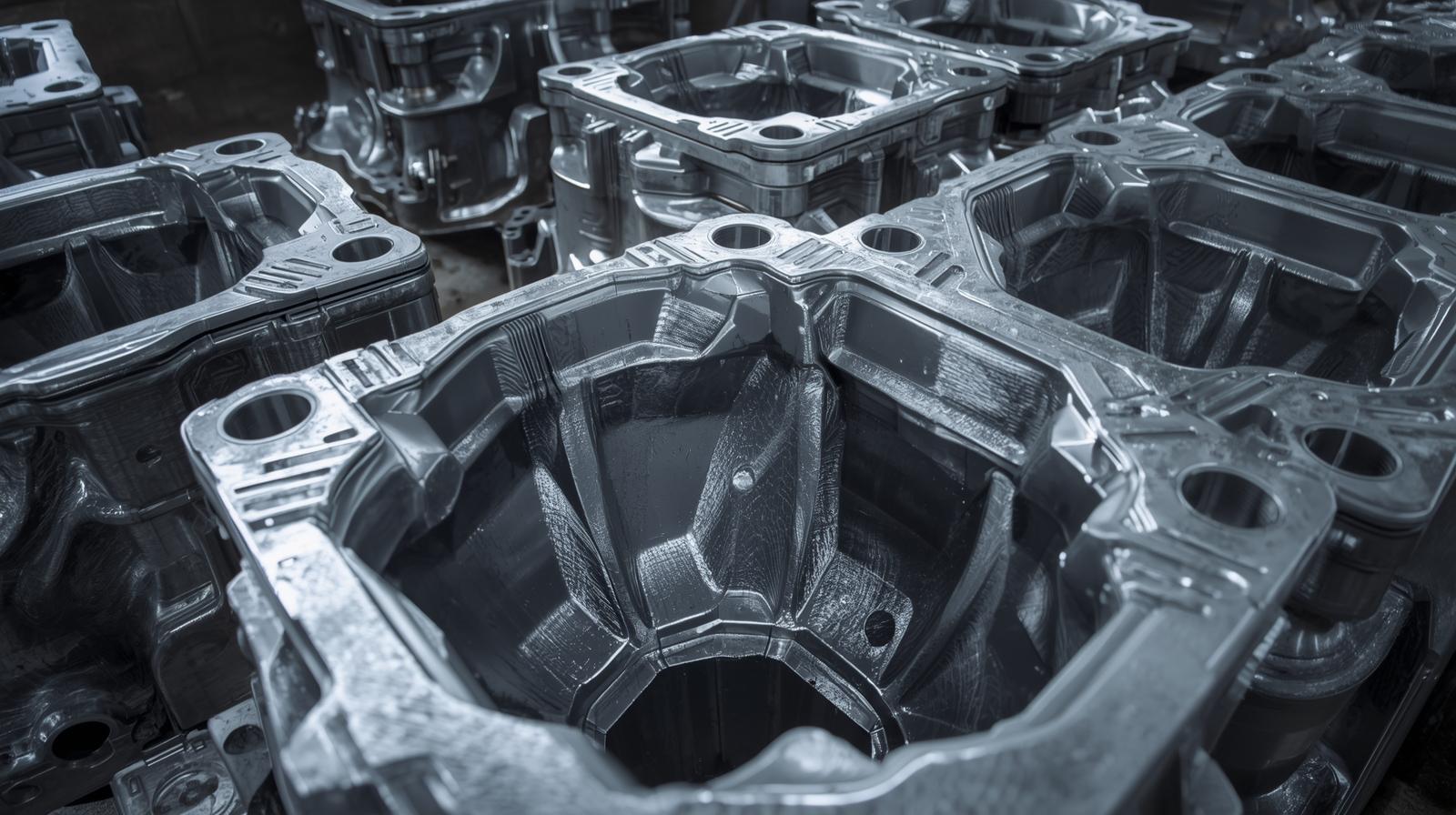
Moules guidant le processus de moulage de l'aluminium en fonderie
Les moules constituent le support du processus de moulage. Ils déterminent :
- Texture de la surface
- Forme et épaisseur
- Résistance structurelle
Les moules en sable sont bon marché et conviennent aux pièces personnalisées ou de faible volume. La production de masse est réalisée dans des moules en acier, car ils sont résistants à la chaleur et peuvent être utilisés plusieurs fois.
Explication des méthodes de moulage les plus courantes
La plupart des méthodes de moulage ont leurs propres besoins :
- Moulage sous pression : Haute pression, à ailettes. Idéal pour la production de masse.
- Moulage au sable : Le système de moulage est bon marché et flexible. Il convient aux objets de grande taille ou particuliers.
- Moulage à la cire perdue : Haute précision. Les pièces parfaites pour l'aérospatiale.
- Moulage en moule permanent : Moules permanents à leur coût.
Propriétés de la fonte d'aluminium qui la rendent populaire
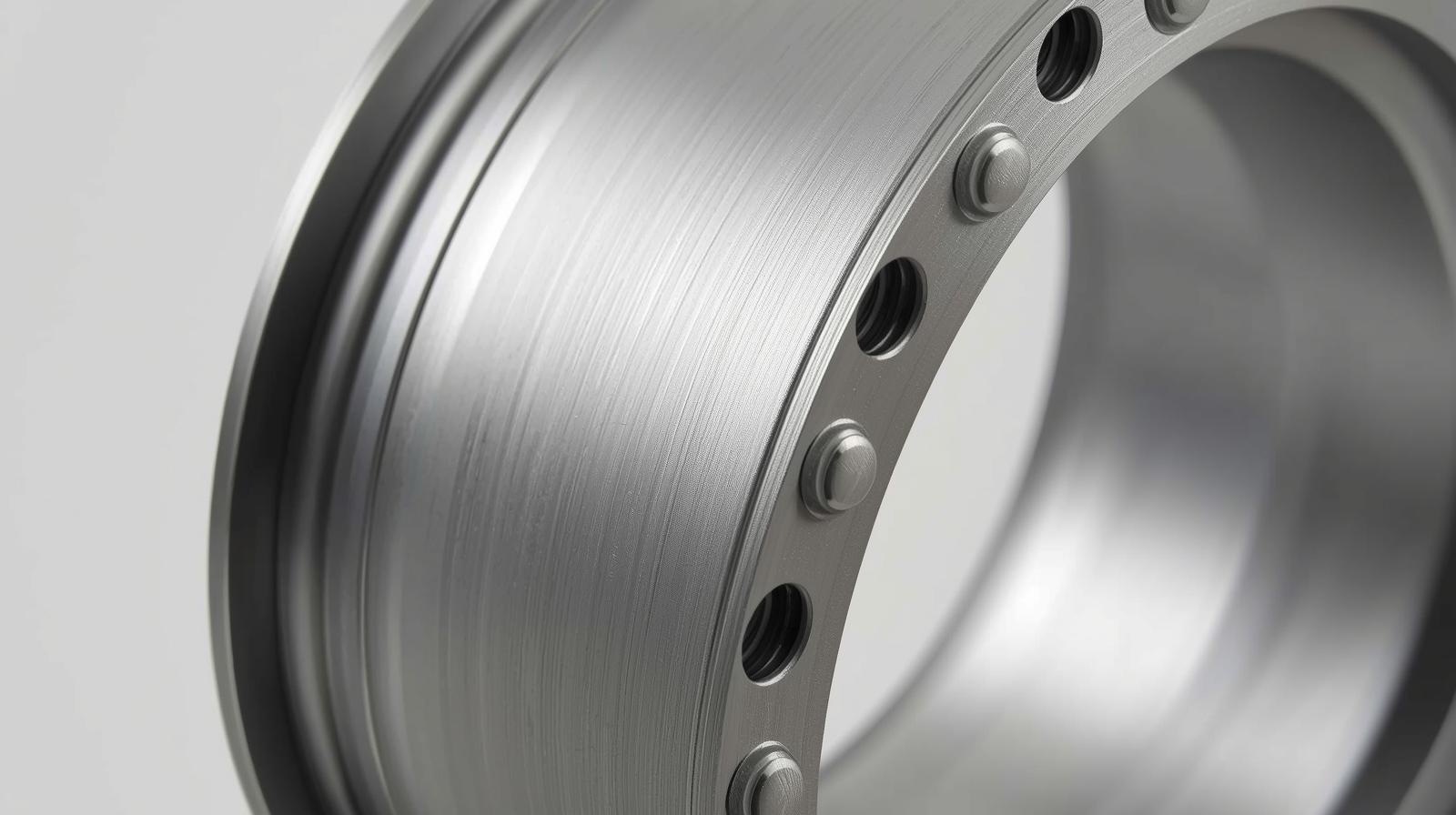
Propriétés clés de la popularité de la fonte d'aluminium dans l'industrie
La fonte d'aluminium est également un matériau unique, car elle offre de nombreuses propriétés souhaitables dans un seul matériau.
Facteurs de solidité et de durabilité.
La fonte d'aluminium est légère mais possède des propriétés mécaniques impressionnantes, son rapport résistance/poids est bien supérieur à celui de la plupart des matériaux. Cet équilibre lui confère une grande valeur dans les applications exigeantes. Il est également utilisé dans les composants automobiles et les machines industrielles qui ont besoin de durabilité et de résistance aux contraintes.
Résistance à la corrosion Avantages
L'aluminium forme naturellement une fine couche d'oxyde lorsqu'il est exposé à l'air, ce qui constitue une barrière protectrice. Ce revêtement résiste à la rouille, à l'humidité et à la corrosion chimique, ce qui améliore la durée de vie des produits. Ce type de résistance à la corrosion facilite l'utilisation de l'aluminium dans des applications extérieures telles que la construction, les biens de consommation et les outils et équipements marins, où la résistance aux conditions environnementales est nécessaire.
Aluminium moulé et aluminium corroyé : Principales différences
Ces deux formes d'aluminium diffèrent principalement par leur mode de production et leur lieu d'utilisation.
| Fonctionnalité | Aluminium moulé | Aluminium forgé |
|---|---|---|
| Processus | Fondus et coulés dans des moules | Laminés, forgés ou extrudés |
| La force | Modéré | Plus élevé |
| Complexité | Haut - idéal pour les formes complexes | Limitée |
| Coût | Généralement inférieur | Souvent plus élevé |
Applications où l'aluminium moulé excelle
La fonte d'aluminium est choisie là où :
- Une forme complexe est nécessaire
- Des volumes importants doivent être fabriqués.
- Contre toute attente, le poids compte et la force compte.
La fonte d'aluminium peut être utilisée pour les boîtiers d'engrenages, les poignées d'ustensiles de cuisine, etc.
Avantages du choix de la fonte d'aluminium
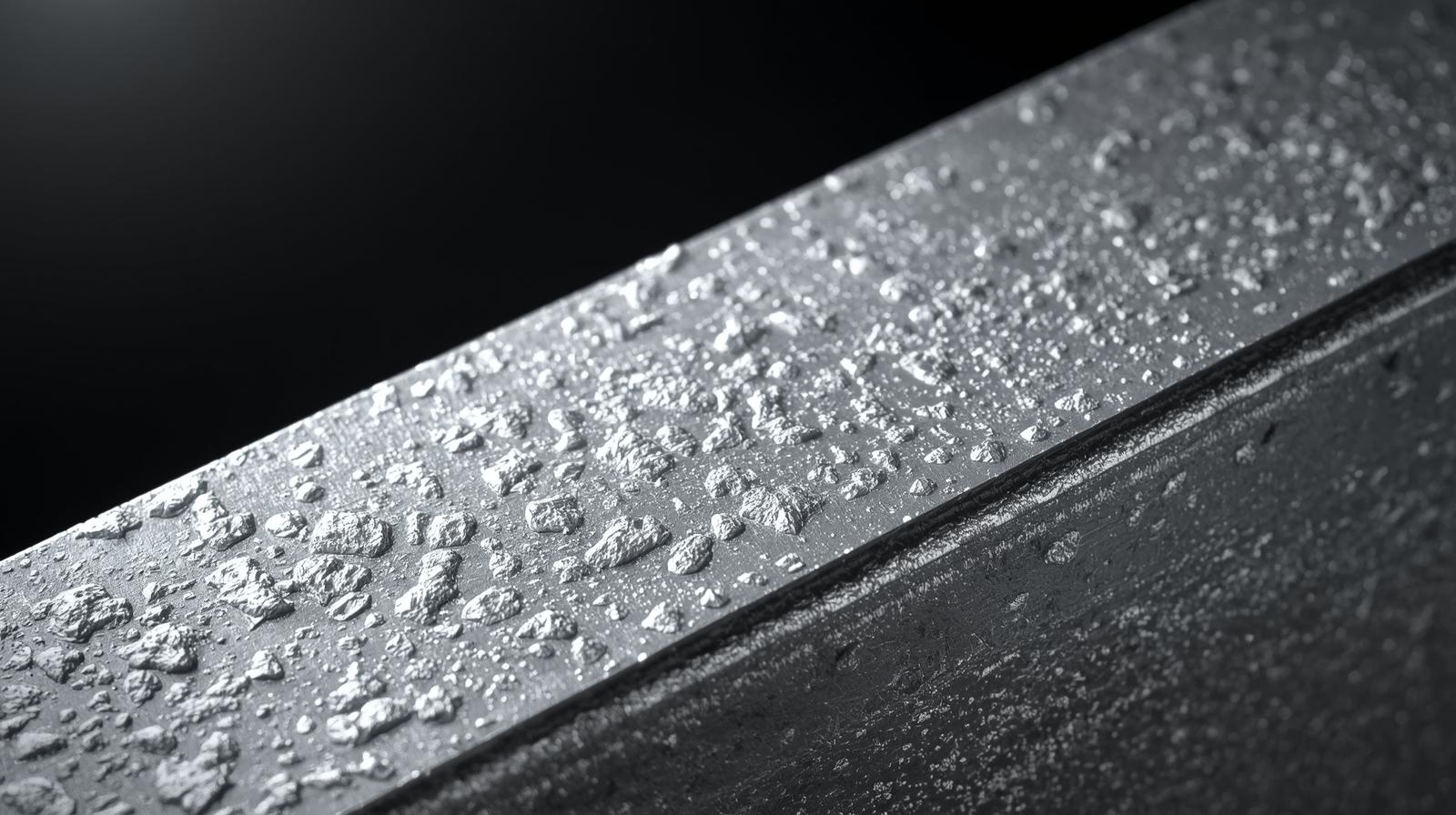
Avantages de la fonte d'aluminium en termes de solidité, de durabilité et de rentabilité
La fonte d'aluminium est le meilleur choix dans toutes les industries en raison de ses avantages.
Avantages en termes de coûts et d'efficacité
Le moulage permet de réaliser de nombreuses économies dans le cadre d'une production à grande échelle, car les moules peuvent être recyclés plusieurs fois. Dans le cas du moulage sous pression, le coût initial d'un moulage est recouplé à une production en grande quantité dans un laps de temps très court. Cette productivité réduit les coûts unitaires et le moulage en aluminium est une option rentable pour les industries qui ont besoin de composants peu coûteux, stables et durables.
Caractéristiques écologiques
La recyclabilité de l'aluminium est un gage de durabilité, car il peut être réutilisé sans détérioration de sa résistance et de sa qualité. Le moulage lui-même nécessite également moins d'énergie que la production d'acier ou de cuivre, ce qui est bénéfique pour l'environnement. Toutes ces caractéristiques respectueuses de l'environnement peuvent faire du moulage en aluminium un choix pour les fabricants qui visent spécifiquement la réduction des déchets et l'économie des ressources.
Inconvénients et limites de la fonte d'aluminium
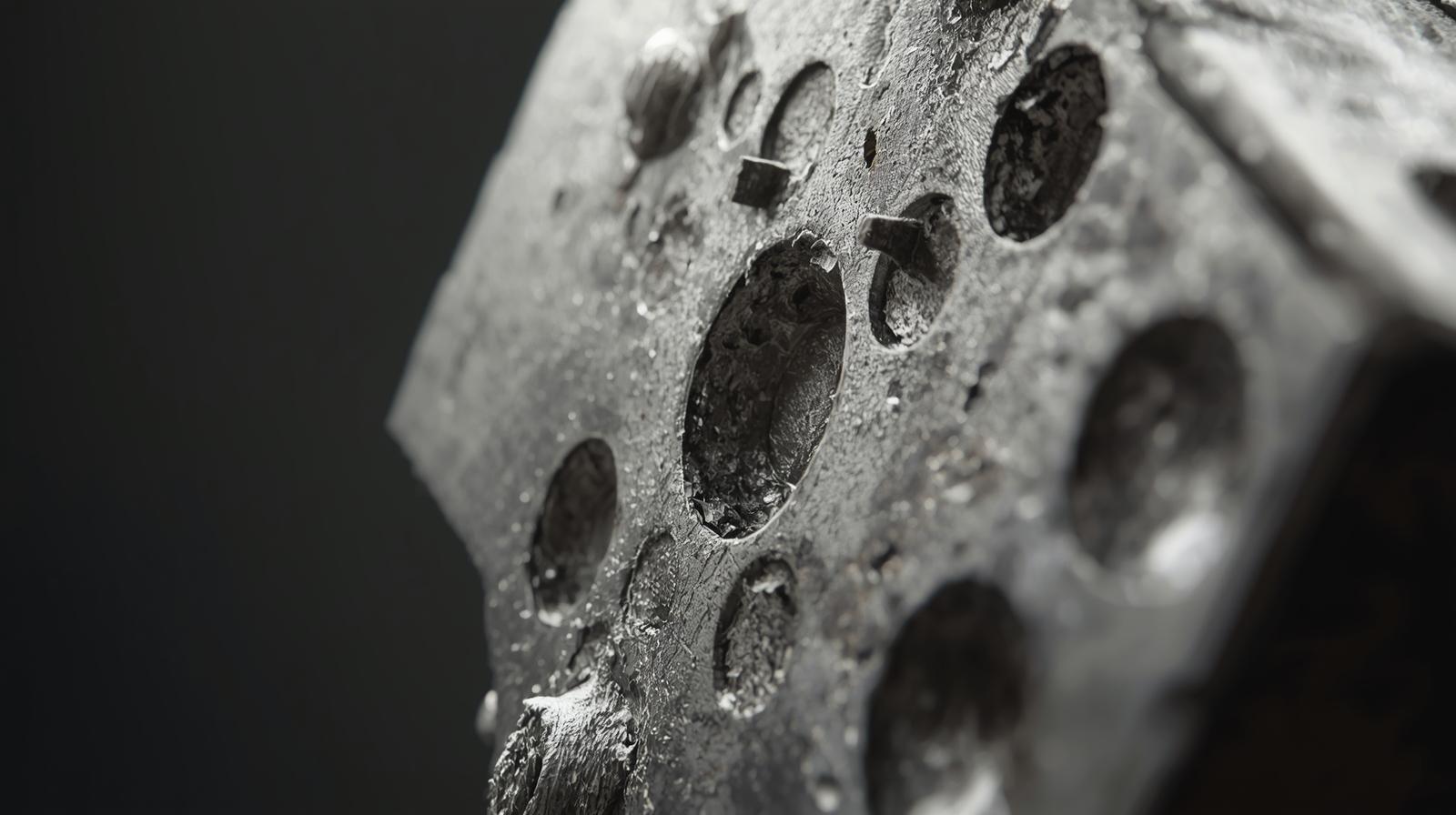
Défis liés à l'utilisation de l'aluminium moulé dans les applications industrielles
Aucun matériau n'est parfait. La fonte d'aluminium présente quelques inconvénients.
Sensibilité à la chaleur
La fonte d'aluminium, bien que résistante dans des conditions normales, peut se déformer ou se tordre lorsqu'elle est soumise à des températures extrêmement élevées. Cette restriction le rend moins applicable à une série d'applications telles que les pièces de fours industriels ou les environnements qui exigent une résistance à la chaleur de longue durée. Lorsqu'ils utilisent l'aluminium dans des équipements à haute température, les ingénieurs doivent tenir compte des conditions de travail.
Comparaison des faiblesses avec d'autres métaux
L'acier est plus résistant à l'état brut que l'aluminium et le magnésium est plus léger. Néanmoins, ces deux matériaux ne peuvent rivaliser en termes d'équilibre des propriétés. La combinaison de la solidité, de la légèreté, de la résistance à la corrosion et de l'efficacité des coûts dans les aluminium moulé sont également uniques et peuvent donc être utilisés dans la plupart des industries, les performances, la durabilité et les coûts étant les principaux facteurs à respecter et à équilibrer.
Utilisations les plus courantes de la fonte d'aluminium dans toutes les industries
Dans l'industrie contemporaine, la fonte d'aluminium joue un rôle important.
Utilisations dans l'automobile et l'aérospatiale
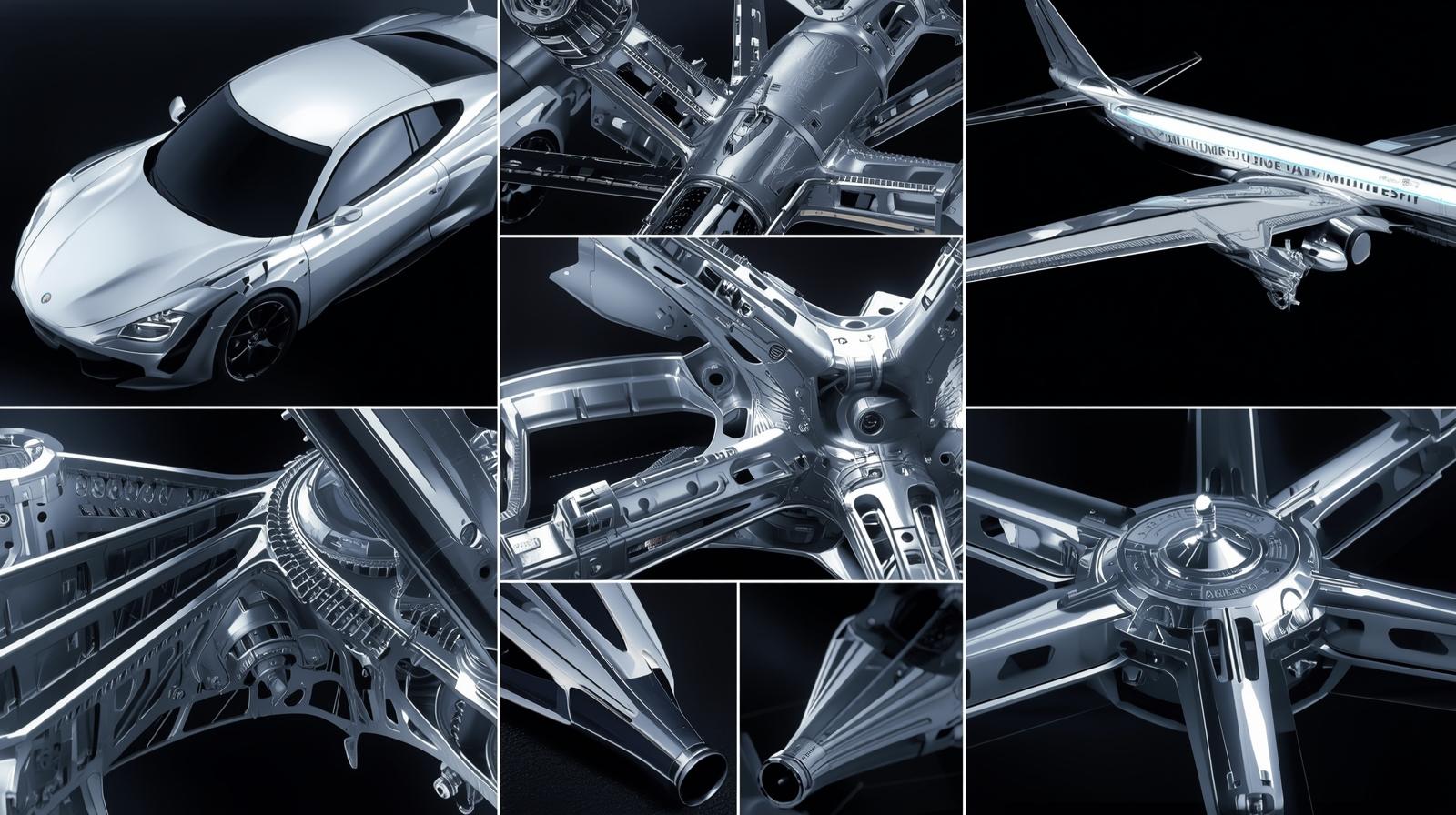
Applications de la fonte d'aluminium dans l'automobile, l'aéronautique et l'aérospatiale
La fonte d'aluminium est un matériau indispensable dans les secteurs de l'automobile et de l'aérospatiale en raison de sa résistance, de sa durabilité et de sa légèreté. Chacun des composants du moteur, des boîtiers de transmission, des supports d'avion et des boucliers thermiques dépend de la fonte d'aluminium pour fonctionner efficacement. Le fait qu'il reste fiable même dans des conditions extrêmes est dû à sa polyvalence, ce qui en fait un matériau d'ingénierie privilégié.
Appareils ménagers et ustensiles de cuisine
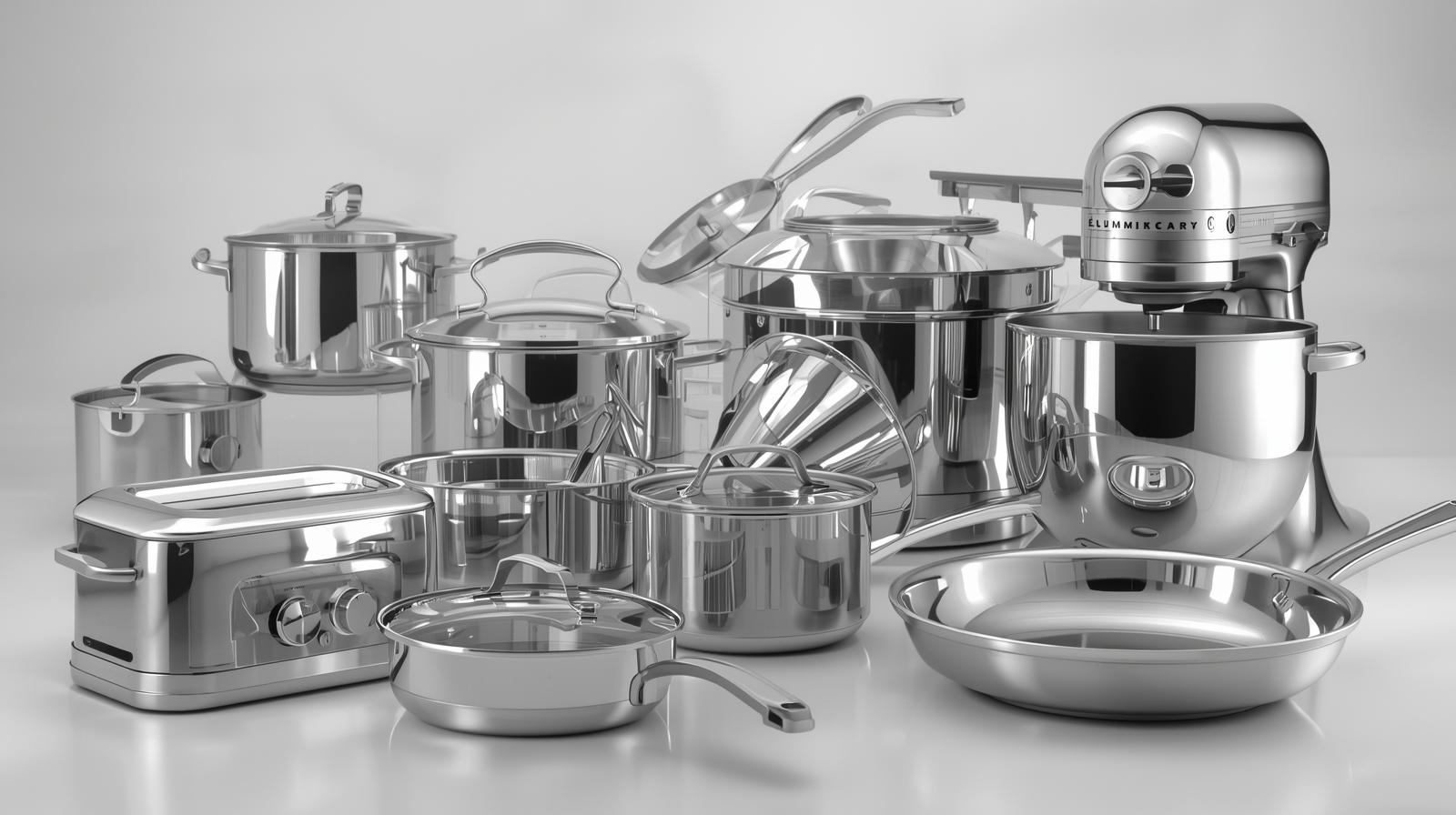
Utilisation quotidienne de la fonte d'aluminium dans des ustensiles de cuisine durables et des appareils de cuisine modernes
La fonte d'aluminium est également très importante pour les articles domestiques, qui doivent être à la fois durables et résistants à la corrosion. Ses propriétés sont utiles pour les cadres de réfrigérateurs, les pièces d'un aspirateur et les couvercles d'un gril. Aluminium moulé Les poêles à frire sont toujours utilisées en raison de leurs inconvénients, à savoir qu'elles ne sont pas chauffées uniformément et qu'elles ont une longue durée de vie, ce qui en fait l'un des choix les plus fiables dans les cuisines modernes et les appareils électroménagers.
Comment identifier les produits en aluminium moulé de haute qualité
La fonte d'aluminium doit posséder :
- Surfaces lisses et uniformes
- Pas de fissures ou de trous visibles
- Poids constant, poids uniforme et équilibre.
- Dans certains cas, comme la certification par le fabricant.
Il n'est pas très difficile de maintenir la fonte d'aluminium en bon état.
Conseils d'entretien pour les articles en aluminium moulé
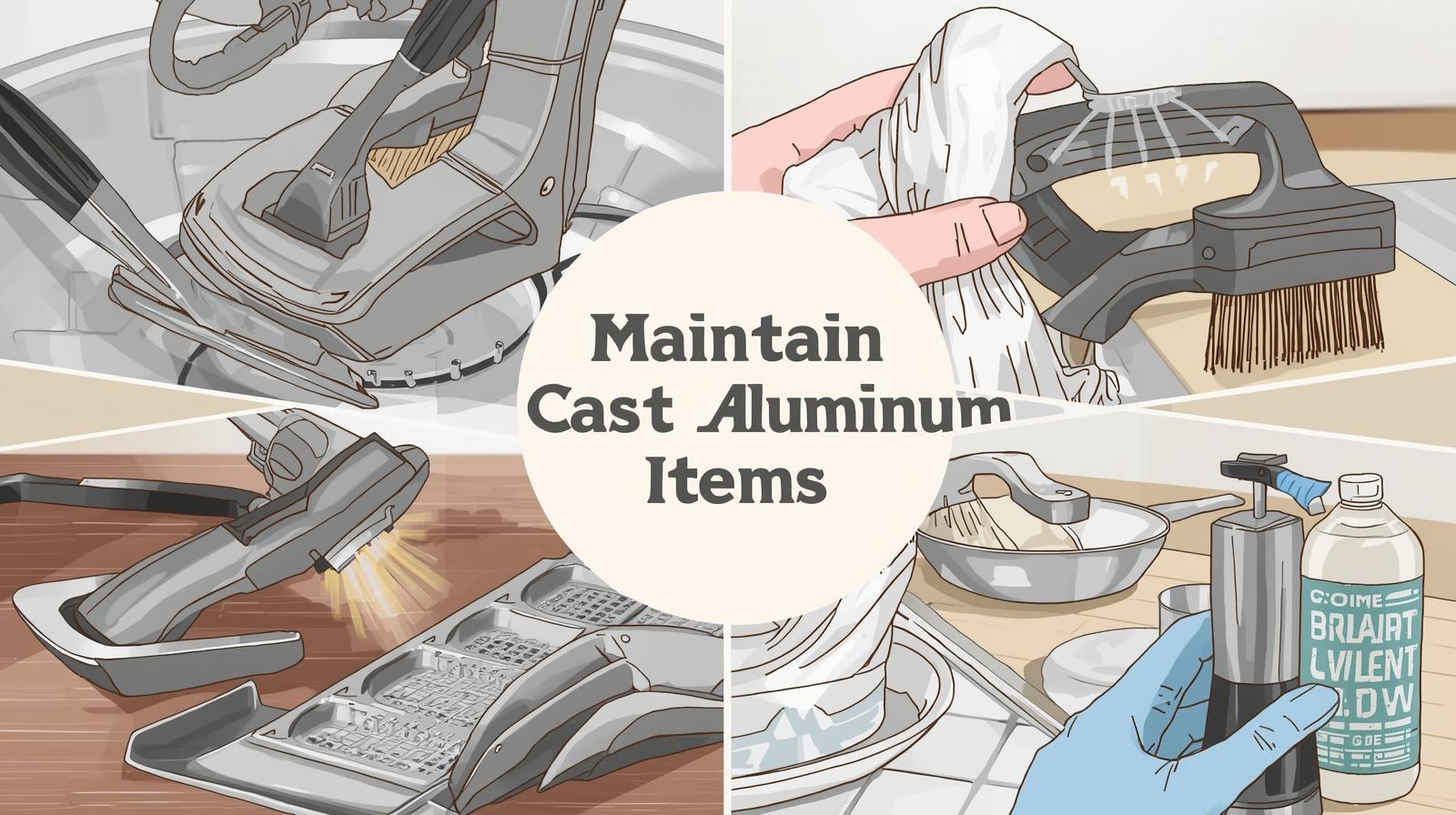
Méthodes de nettoyage et d'entretien appropriées pour les ustensiles de cuisine et les appareils en fonte d'aluminium
Maintenir la fonte d'aluminium en bon état est plus facile que vous ne le pensez.
Étapes de nettoyage et de protection
Des soins adéquats permettront de aluminium moulé pour être durable et esthétique. Un savon doux et de l'eau peuvent être utilisés pour nettoyer en évitant une accumulation excessive, tandis que des abrasifs puissants peuvent préserver la surface. Dans les applications extérieures, la résistance à l'humidité et à la corrosion peut être obtenue en appliquant des finitions protectrices aux priorités telles que les pièces moulées en aluminium, afin de préserver leur résistance, leur éclat et leur performance à long terme dans un environnement difficile.
Prolonger la durée de vie de l'aluminium moulé
Le nettoyage, le traitement et l'exposition à des flammes directes doivent être évités et donc maintenus régulièrement lors de la manipulation de la fonte d'aluminium. Ces mesures simples contribueront grandement à prolonger la durée de vie de la fonte d'aluminium, ce qui la rendra durable et fiable. Les produits en fonte d'aluminium offrent des performances durables et durent plus longtemps grâce à un bon entretien. Ils sont donc rentables et durables pour l'industrie et les ménages.
Tendances futures : Pourquoi la demande de fonte d'aluminium augmente-t-elle ?
La fonte d'aluminium gagne du terrain en raison de la prise en compte par le secteur industriel de la durabilité et de la légèreté. Son utilisation dans les voitures électriques, les systèmes de production d'énergie renouvelable ainsi que dans la technologie aérospatiale souligne la diversité de ses applications. La fonte d'aluminium est un matériau recyclable efficace et durable qui catalyse également l'innovation et l'expansion à long terme dans les industries manufacturières contemporaines.
Conclusion
La fabrication moderne s'est appuyée sur la fonte d'aluminium, qui a apporté beaucoup en termes de résistance, de polyvalence et de rentabilité. La fonte d'aluminium est utilisée pour sa légèreté, sa durabilité et ses performances dans les voitures, les pièces aérospatiales, l'électronique, la poterie et dans toute la cuisine. La connaissance de sa production et de ses applications a montré pourquoi la fonte d'aluminium est restée l'un des matériaux les plus fiables, les plus durables et les plus exploités dans les industries modernes.
FAQ
La fonte d'armement est-elle supérieure à la fonte d'aluminium ?
Pas toujours. La fonte est plus solide et conserve la chaleur plus longtemps, mais la fonte d'aluminium est beaucoup plus légère et ne rouille pas.
La fonte d'aluminium peut-elle rouiller ?
Non. L'aluminium ne rouille pas, mais il peut être détruit en cas d'exposition non surveillée à l'eau salée.
Peut-on cuisiner en toute sécurité dans de la fonte d'aluminium ?
Oui. La majorité des ustensiles de cuisine en fonte d'aluminium sont anodisés, ce qui permet de les utiliser en toute sécurité au quotidien.
La fonte d'aluminium est-elle chère ?
En général, non. Il est moins cher que l'acier inoxydable et peut être moins cher que la fonte, en fonction de l'utilisation.
Est-il possible de réparer la fonte d'aluminium ?
Oui. Une grande partie des pièces en aluminium moulé peut être réparée à l'aide de techniques de soudage et de brasage spécialisées.
La fonte d'aluminium est-elle écologique ?
Absolument. L'aluminium est l'un des matériaux les plus facilement recyclables au monde.
0 commentaires