
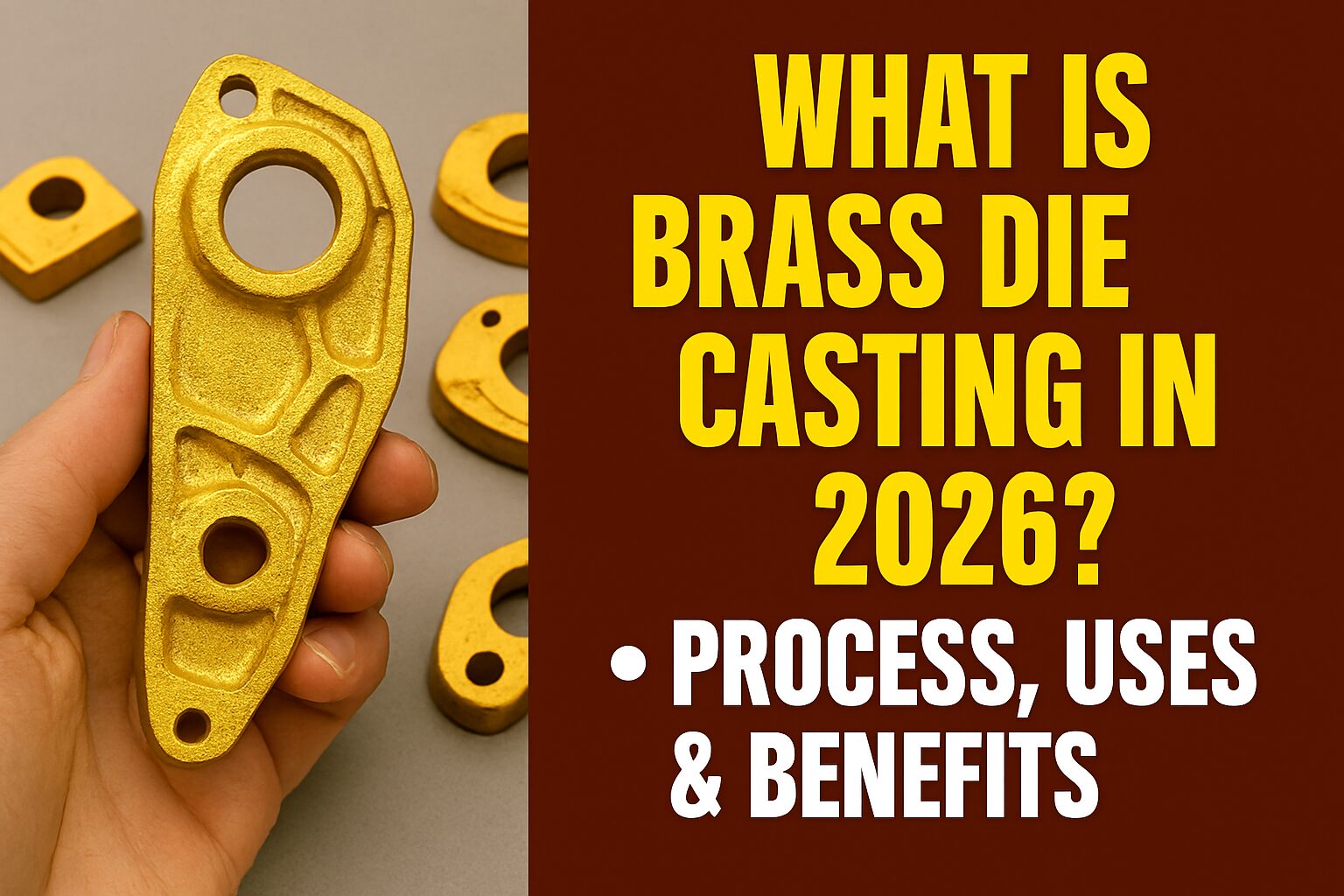
Du har sannsynligvis brukt et skinnende messingdørhåndtak, snudd en rørleggerventil eller til og med lagt merke til noen fint ferdige metallkomponenter: nesten helt sikkert har du kommet over messingstøping, selv om du kanskje aldri har tenkt på slikt. Støping av messing er blant dem der produksjonsprosessene har holdt seg skjult bak kulissene og har levert kraft til forskjellige bransjer når det gjelder styrke, skjønnhet og pålitelighet med bare en eneste gåte i den.
Hva er messingstøping da? I sin enkleste definisjon kan det beskrives som en produksjonsprosess ved hjelp av smeltet messing som tvinges (under høyt trykk) inn i en stålform (en dyse) for å danne komplekse deler med høy presisjon. Se på det som å helle flytende metaller i et spesialisert isbitbrett, men med svært høy temperatur, høyt trykk og teknisk finesse.
Her vil vi dele informasjonen du trenger å vite om messingstøping trinn for trinn på et enkelt språk (rett frem). Ingen fluff. Ingen overbelastning av sjargong. Bare hard, jordnær kunnskap.
Forstå messing som metallegering

Messinglegering som kombinerer kobber og sink, verdsatt for maskinbearbeidbarhet, korrosjonsbestandighet og dekorativ appell
Vi skal komme til castingprosessen, men før vi går inn på galskapen, er det på sin plass å snakke om stjernen i showet messing i seg selv.
Hva er messing laget av?
Messing er en legering som består av sink og kobber. Produsenter kan foredle messing ved å endre andelen av disse to metallene for å oppnå ulike kvaliteter som hardhet, farge, korrosjon og maskinbearbeidbarhet.
En kategori av messinglegeringer inneholder også spor av bly, tinn, aluminium eller jern for å gi spesielle egenskaper. Dette er en av grunnene til at messing er så populært i produksjonen.
Viktige egenskaper ved messing
Messing skjer ikke tilfeldigvis å være populær. Det er ledsaget av en lang liste over fordeler:
- Meget gode korrosjonshindrende egenskaper.
- Styrke og holdbarhet Høy styrke og holdbarhet.
- Elektrisk og termisk ledningsevne er god.
- Gyllent, attraktivt utseende.
- Enkel å bearbeide og støpe
Kort sagt er messing den sveitsiske armékniven blant metaller, og til tross for sin allsidighet og pålitelighet er den god å ha på seg.
Hva er pressstøping?
Pressstøping Pressstøping er en støpeteknikk for metaller der det smeltede metallet presses inn i en støpeform under høyt trykk. Formen er vanligvis av herdet stål, og kan brukes mange ganger.
Blant de andre fordelene med pressstøping, sammenlignet med en tradisjonell metode, er at den er rikt støpt:
- Høy dimensjonsnøyaktighet
- Glatt overflatefinish
- Konvensjonell produksjon, masseproduksjon og massekvalitet.
I denne prosessen får man deler som både er sterke mekanisk og estetisk når man bruker messing.
Trinn-for-trinn-prosess for støping av messing
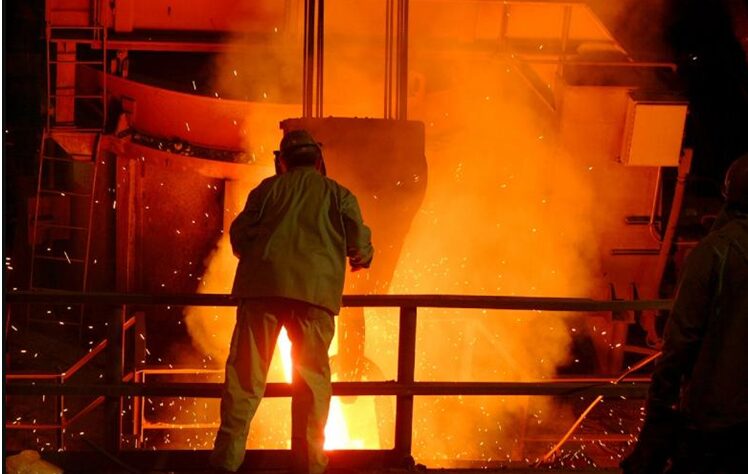
Støpeprosessen i messing forklares trinn for trinn, fra formdesign til ferdigstilling av den endelige komponenten
Smelting av messing
Messinglegering varmes opp i en industriell ovn til den smelter bort. Dette gir riktig flyt av legering, legeringskonsistens og den beste kvaliteten på støping under injeksjonsprosessen gjennom oppnåelse av riktig temperatur.
Klargjøring av matrisen
Det er stålformen som rengjøres godt og oljes inn for å unngå vedheft. Deretter spennes den godt fast for å tåle det voldsomme trykket og varmen som oppstår når den smeltede messingen skal injiseres.
Injeksjon
Messingen er allerede smeltet og presses deretter inn i støpeformens hulrom. Dette trykket garanterer at metallet kommer inn i alle detaljer og skaper korrekte, tette og ensartede støpte deler.
Avkjøling og størkning
Når messingen injiseres, smelter den raskt inn i matrisen. Metallet størkner til ønsket form, med nøyaktige dimensjoner og reduksjon av defekter eller indre feil.
Utstøting
Etter herding åpnes en matrise med ekstrem forsiktighet, og utstøterpinner presser hele messingdelen ut uten å skade eller deformere den endelige formen.
Trimming og etterbehandling
Tunge deler, f.eks. blinker eller løpere, elimineres. Andre etterbehandlingsprosedyrer som polering eller lakkering brukes i tillegg for å øke overflatenes utseende, funksjonalitet og levetid.
Typer pressstøping som brukes til messing
Varmkammerstøping
Det er den vanlige teknikken som brukes på metaller med lavt smeltepunkt. Messing smeltes i sjeldne tilfeller bort ved varmkammerstøping fordi det har et høyere smeltepunkt.
Støping i kaldt kammer
Den foretrukne prosessen for messing er kaldkammerstøping. Den smeltede messingen helles i et kammer og sprøytes inn i formen. Denne teknikken fungerer ved mye høyere temperaturer, og resultatet er av høyere kvalitet.
Hvorfor messing brukes i pressstøping
Grunnen til at messing brukes i Die Casting.
Hvorfor ikke bruke messing i stedet for andre metaller som aluminium eller sink?
Løsningen er enkel: ytelse.
Ingen andre metaller kan måle seg med messingens styrke, korrosjonsbestandighet og tiltalende utseende.
Fordeler med pressstøping av messing
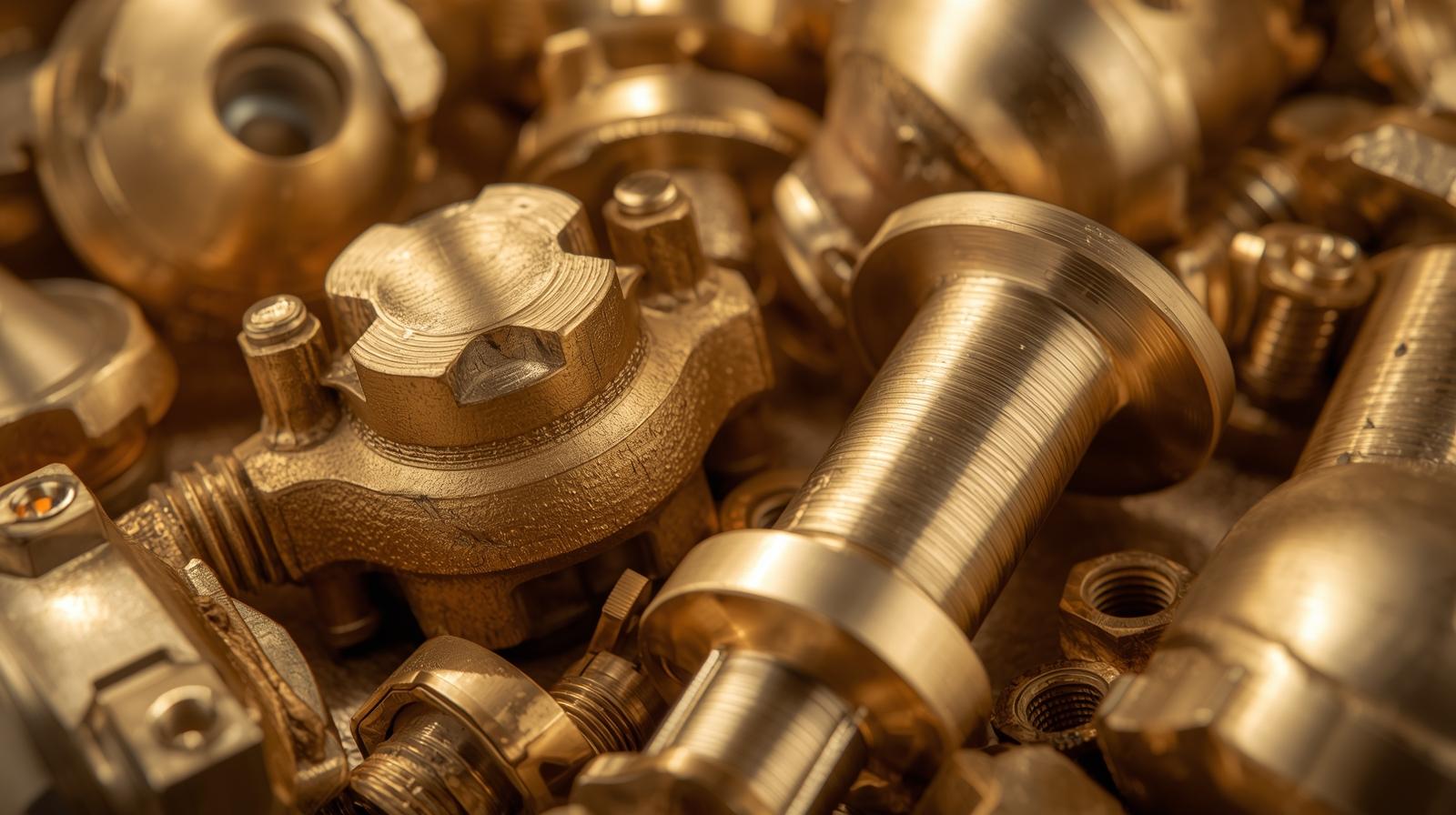
Pressstøping i messing gir holdbarhet, dimensjonsnøyaktighet og motstand mot slitasje og korrosjon
Styrke og holdbarhet
Pressstøpte komponenter av messing er harde. De tåler også mekanisk trykk godt og egner seg derfor godt til bruk i industri- og konstruksjonsarbeid.
Motstandsdyktighet mot korrosjon
Faktisk er messing naturlig korrosjonsbestandig mot antimon i våte miljøer eller sjømiljøer. Det er derfor det er populært innen rørleggerarbeid og utendørs.
Elektrisk og termisk ledningsevne
Messing er også en effektiv leder av elektrisitet og varme, og kan brukes i elektriske komponenter og kontakter.
Estetisk appell
Messing er riktignok vakkert. Dekorasjons- og arkitekturprodukter blir mer eksklusive med sin gylne finish.
Begrensninger ved pressstøping av messing
Ingen produksjonsprosess er perfekt, og ulempene med pressstøping av messing inkluderer høye materialkostnader sammenlignet med aluminium eller sink, høyere energiforbruk siden det har en høyere smeltetemperatur, og høye kostnader for verktøyet som brukes i små serier. Ulempene oppveies imidlertid ofte av fordelene i form av lang levetid, lang levetid og høy kvalitet.
Pressstøping av messing vs. andre støpemetoder
Pressstøping av messing vs. sandstøping
- Trykkstøping har forbedret nøyaktigheten.
- Lave volumvolumer er mer økonomisk ved sandstøping.
- Støpegods er jevnere i etterbehandlingen.
Pressstøping av messing vs. investeringsstøping
- Pressstøping er raskere i masseproduksjon.
- Mer kompliserte former kan støpes i investeringsstøping.
- Trykkstøping har en høyere presisjon.
Begge metodene har sine fordeler, men pressstøping av messing er en god løsning for produksjon av store volumer og høy presisjon.
| Sammenligningsaspekt | Pressstøping av messing | Sandstøping | Investeringsstøping |
|---|---|---|---|
| Presisjon | Høy dimensjonsnøyaktighet og små toleranser | Lavere presisjon sammenlignet med pressstøping | God presisjon, men mindre konsekvent enn trykkstøping |
| Overflatebehandling | Produserer glatte, rene overflater | Grov overflate, krever ofte ekstra etterbehandling | Utmerket overflatefinish |
| Produksjonshastighet | Svært rask og effektiv for masseproduksjon | Langsommere prosess, egnet for små partier | Langsommere enn trykkstøping |
| Designkompleksitet | Best for konsistente, repeterbare design | Begrenset detaljkapasitet | Tillater svært intrikate og komplekse design |
| Kostnadseffektivitet | Kostnadseffektiv for produksjon av store volumer | Billigere for lavvolumproduksjon | Høyere kostnader på grunn av kompleks prosess |
| Beste brukstilfelle | Høyvolum, presisjonsproduksjon | Lavt volum eller store, enkle deler | Komplekse, detaljerte komponenter |
Vanlige bruksområder for pressstøping av messing
Selv om det kanskje ikke er åpenbart, er pressstøping av messing overalt.
Bransjer som er avhengige av støpte komponenter i messing
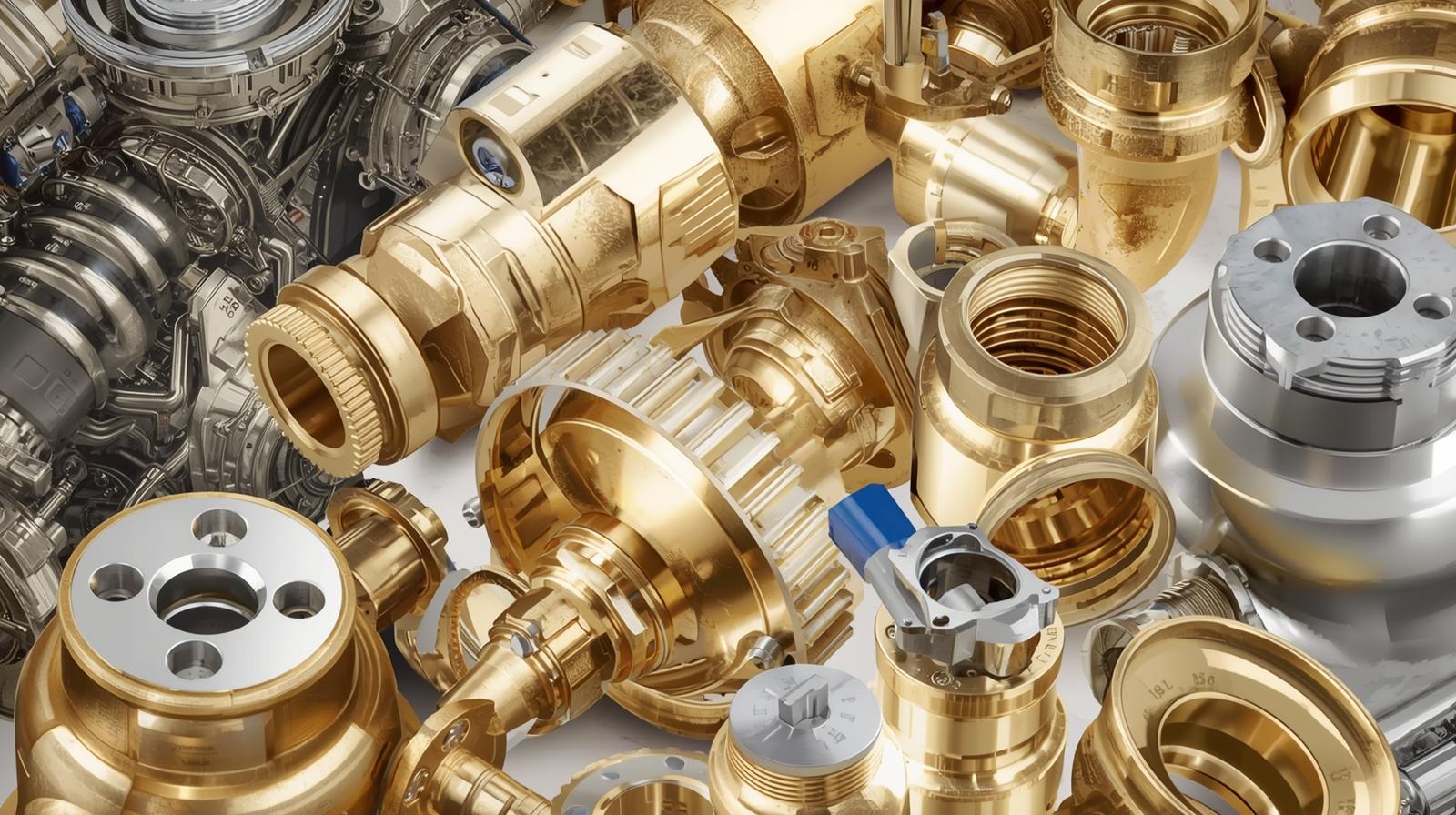
Støpte komponenter i messing er mye brukt i rørleggerarmaturer, bildeler, elektriske systemer og dekorativ hardware
Bilindustrien
På grunn av den gode styrken og varmebestandigheten til pressstøpt messing, og dens evne til å motstå korrosjon, er bruksområdene mange i bilindustrien i drivstoffsystemkomponenter, koblinger og beslag. Slike egenskaper hjelper delene med å overvinne vibrasjoner, trykk- og temperaturvariasjoner, slik at delene kan fungere lenge og holde kjøretøyet trygt.
Elektro og elektronikk
Pressstøping av messing er optimalt i elektriske og elektroniske terminaler, kontakter og ledende deler. For å oppnå god slitestyrke, sikker tilkobling og kontinuerlig drift av komponenter i elektriske systemer brukes messing, siden det er en pålitelig elektrisk leder, har riktige dimensjoner og er motstandsdyktig mot slitasje.
Rørlegger- og sanitærarmaturer
Støping av messing brukes oftest i rørlegger- og sanitærarmaturer; ventiler, kraner og rørkontakt. Messing er et pålitelig valg å bruke i bolig-, kommersielle og industrielle rørleggerarbeidssystemer på grunn av sin iboende evne til å motstå korrosjon, holdbarhet og kapasitet til å imøtekomme trykkvann.
Luft- og romfart og industrimaskiner
Støpte deler i messing brukes i romfart og industrielt utstyr på grunn av den høye styrken, presisjonen og påliteligheten til delene. De er i stand til å fungere godt i mekanisk stress, et veldig tøft miljø og konstant drift, og er derfor nødvendig der sikkerhet, holdbarhet og nøyaktig arbeid er viktig.
Dekorative og arkitektoniske bruksområder
Det enkle utseendet og den uanstrengte finishen til pressstøping av messing gjør den populær til dekorative og arkitektoniske formål. Håndtak til dører, knotter, beslag og dekorative triks finnes i legeringen av messing på grunn av dens anvendelighet, da den alltid er holdbar, motstandsdyktig mot korrosjon og alltid utviser skjønnhet selv når den eldes
Designhensyn i pressstøping av messing
Kvalitetsdesign er kostnadseffektivt og gir bedre ytelse.
- Ensartet veggtykkelse
- Riktige trekkvinkler
- Unngå skarpe hjørner
- Designet for enkel utstøting
Design smart og få færre feil og bedre kvalitet på delene.
Kvalitetskontroll i pressstøping av messing
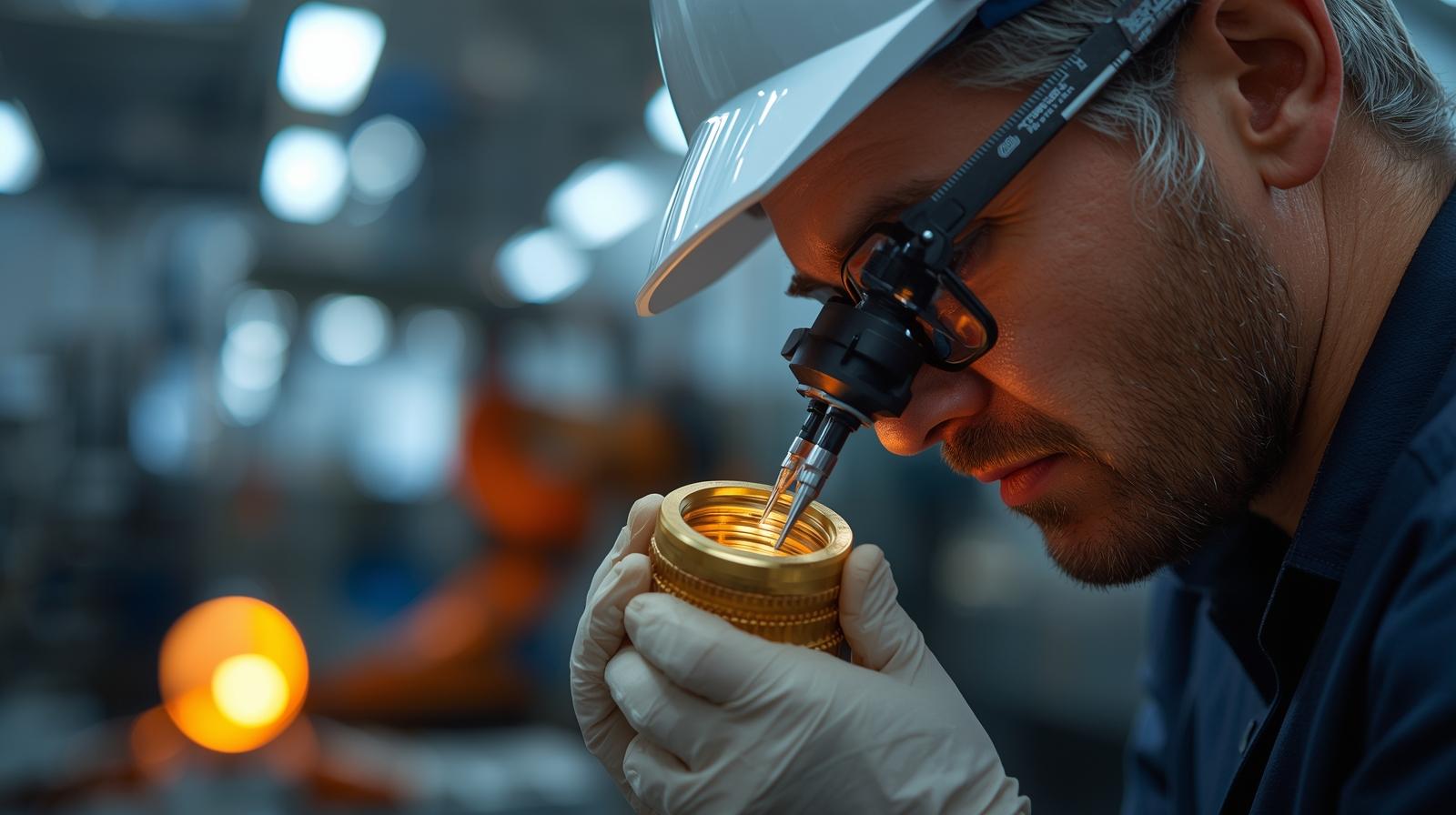
Kvalitetskontrollprosesser for pressstøping av messing, inkludert inspeksjon, testing og forebygging av feil for å sikre pålitelige komponenter
Toleranse og presisjon
Trykkstøping av messing sikrer høy grad av dimensjonsnøyaktighet fordi det produserer komponenter med små toleranser og konsistente mål. Denne nøyaktigheten bidrar til å redusere feil, gir riktig passform, oppnår generell produktkvalitet og eliminerer i betydelig grad behovet for kostbare sekundære maskineringsprosesser.
Alternativer for overflatebehandling
Polering
Messingen poleres til en blank overflate som et speil. Det øker visualiteten, minimerer feilene på overflatene og øker korrosjonsmotstanden, og derfor er pressstøpte komponenter av messing gode til dekorative og luksuriøse formål.
Plettering
Plettering er et tynt lag messing som er dekket av et belegg av metaller, krom eller nikkel. Dette forbedrer korrosjonsbestandighet, slitestyrke og utseende, i tillegg til at det gjør det mulig for produsentene å oppnå ønskede farger, teksturer og bedre holdbarhet på overflaten.
Pulverlakkering
Pulverlakk er en dekorativ og sikker overflatebehandling av messingdeler. Det forbedrer motstandsdyktigheten mot riper, kjemikalier og miljøpåvirkning, og det finnes et stort utvalg av farger og overflater som kan brukes både funksjonelt og estetisk.
Børsting
Overflaten er mekanisk behandlet for å gi en fin, strukturert finish som følge av børsting. Denne behandlingen gir messing et matt/satinaktig utseende, skjuler små skavanker og gir pressstøpte deler et moderne og stilig utseende.
Disse overflatene gjør at funksjoner og utseende ser bedre ut.
Miljøpåvirkning og bærekraft
Messing er resirkulerbart 100%. Det er mulig å produsere messingskrap og resirkulere det uten kvalitetsmerker, og dermed er støping av messing et mer miljøvennlig alternativ enn mange andre.
Kostnader for pressstøping av messing
Kostnadene avhenger av:
- Legeringssammensetning
- Komplekse verktøy
- Produksjonsvolum
- Krav til etterbehandling
Det kan være kostbart å lage verktøy i begynnelsen, men ved masseproduksjon reduseres kostnadene per enhet.
Fremtidige trender innen pressstøping av messing

Nye trender innen pressstøping av messing, som miljøvennlig produksjon, presisjonsautomatisering og innovasjon i bransjen
Fremtiden er lys og gyllen.
- Intelligent og automatisert produksjon.
- Nye og bedre legeringsformuleringer.
- Energieffektive ovner.
- Grønne produksjonsprosesser.
Med en økning i kvaliteten og bærekraften i industrien er også støping av messing i endring.
Konklusjon
Så, hva er støping av messing? Det er en effektiv produksjonsteknikk som kombinerer teknisk nøyaktighet og utsøkte materialer. Produsenter produserer harde, korrosjonsbestandige og attraktive deler som brukes i et ubegrenset antall bransjer ved å helle smeltet messing i tette former. I produksjonsprosessen, enten skjult i en maskin eller som en utpreget prydgjenstand, er støping av messing et svært viktig element i moderne produksjon. Og i takt med den teknologiske utviklingen vil betydningen bare øke.
Vanlige spørsmål
Er pressstøping av messing bedre enn pressstøping av aluminium?
Det varierer avhengig av bruken. Messing er sterkere og mer motstandsdyktig mot korrosjon, mens det lettere og billigere aluminiumet er lettere.
Er det mulig å bearbeide støpte gjenstander i messing på en resirkulerbar måte?
Ja, det er sant at hele messingen kan resirkuleres uten tap.
Hvilke segmenter er det som bruker mest messingstøping?
Bilindustrien, rørleggerbransjen, elektro-, industriutstyrs- og bygningsindustrien.
Messing dør plagsom er kostbar?
Det er høye startkostnader knyttet til verktøy, og kostnaden per enhet reduseres dramatisk ved masseproduksjon.
Hvordan ferdigstilles de støpte delene med messing?
Børsting, polering, plettering, pulverlakkering og så videre.

0 kommentarer