
Deuren zonder scharnieren, grendels of sloten kunnen niet goed functioneren. Elke deur heeft sterke, betrouwbare onderdelen nodig om te kunnen openen, sluiten of beveiligen. In dit geval spelen deurbeslagcomponenten een cruciale rol. Hun belangrijkste taak is ondersteuning bieden, beweging geleiden en je ruimte veilig maken. Een onderdeel van hoge kwaliteit maakt je deur nog duurzamer.
Deurbeslagcomponenten kunnen van verschillende types zijn. Het kan gaan om deurklinken, scharnieren, handgrepen, sluitplaten en sloten. Elk van deze onderdelen dient een ander doel. Maar samen vormen ze een compleet systeem voor soepele deurfuncties.
Moderne deuren bieden zelfs meer functionaliteiten. Deze deuren verbeteren de uitlijning en bieden een betere bescherming tegen ongelukken of inbraak. Zelfs de kleinste onderdelen, zoals een veer of een spindel, spelen een essentiële rol in de normale werking van de deur.
Wat is een deurklink?
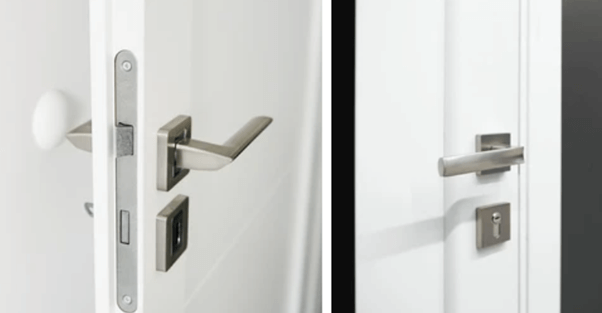
Een deurklink is een eenvoudig maar zeer effectief onderdeel van een deursysteem. Het is een mechanisch apparaat dat een deur tijdelijk in de gesloten stand houdt. Hiervoor wordt gebruik gemaakt van een dagschoot met een sluitplaat op het deurkozijn. De deur kan ook worden geopend en gesloten met een handgreep, knop of hendel. Het hele proces wordt volledig gecontroleerd en er is geen sleutel of slot nodig.
Als je uitlegt hoe een component van deurbeslag werkt, komt de dagschoot op de eerste plaats. Het is een van de meest essentiële onderdelen van klink- en deurbeslag. De vorm lijkt op een metalen stukje dat schuin uit de rand van de deur steekt.
Een deurklink voorkomt meestal dat de deur beweegt en houdt hem op zijn plaats. De klink helpt dus voorkomen dat de deur uit zichzelf openzwaait. De klink werkt met een sluitplaat op het deurkozijn. Wanneer de deur gesloten is, past de klink gemakkelijk in de plaat. Dit zorgt voor een stevige greep. Het resultaat is dat de deur gesloten blijft tot er een externe kracht wordt uitgeoefend.
Deurgrendels zijn er in verschillende soorten en maten. Sommige zijn ontworpen voor lichte binnendeuren. En sommige zijn gemaakt voor zwaar gebruik. Gebruikelijke soorten grendels zijn buis-, insteeksloten en randgrendels. Daarnaast zijn er nog andere soorten, zoals veersloten, nachtsloten en magnetische sloten.
Hoe werkt een deurklink?
Een deurklink werkt door middel van een eenvoudig mechanisch proces. Als je de deurknop of deurkruk draait, draait de metalen staaf aan de binnenkant, die de spil wordt genoemd. De as loopt door het midden van het slotmechanisme.
Deze draaiing helpt om de dagschoot terug in de deur te trekken. Op deze manier wordt de deur voldoende ontgrendeld als de grendel naar binnen beweegt. Nu kun je de deur gemakkelijk duwen of trekken. De actie voelt heel soepel en gemakkelijk aan wanneer je de deur gebruikt.
In de klink zit een kleine veer. De veer regelt de beweging van de deur, inclusief voorwaartse en achterwaartse beweging. Als je de veer loslaat, duwt hij de grendel terug naar buiten. Ook bereidt het de dagschoot voor op het volgende sluiten. Op deze manier herhaalt de cyclus zich elke keer dat de deur wordt gebruikt.
Sommige grendels van deurbeslagcomponenten bevatten een vergrendelingssysteem. Deze grendels voorkomen dat de grendel beweegt wanneer deze vergrendeld is. Dergelijke functies voegen een extra beveiligingslaag toe en helpen de privacy van gebruikers te beschermen. Er zijn verschillende soorten grendels op de markt, maar hun belangrijkste functie is hetzelfde. Elk type houdt de deur veilig en eenvoudig te bedienen.
Onderdelen voor deurslotmontage
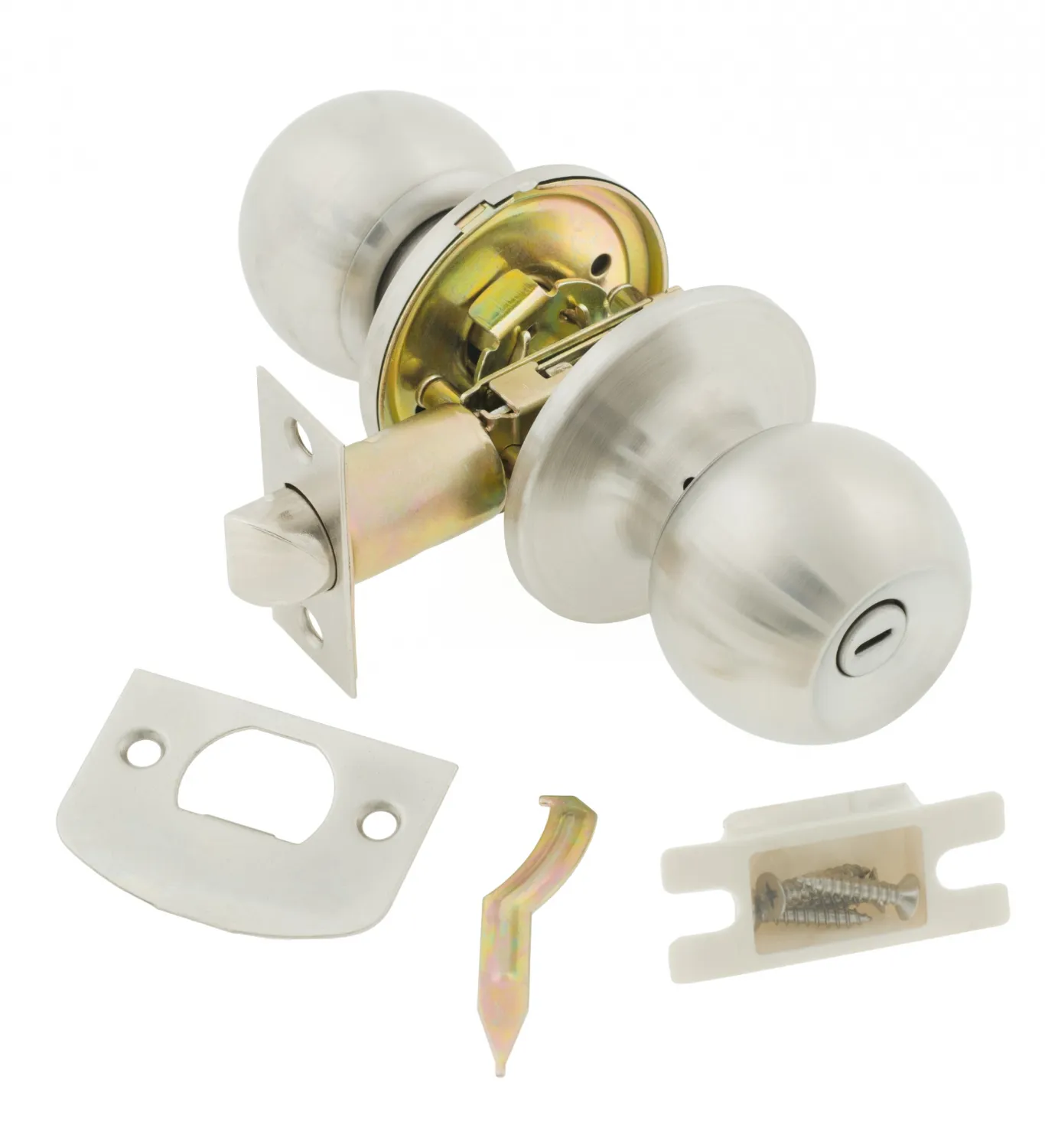
Als je wilt leren hoe een deurgrendel werkt, moet je eerst weten hoe hij is gemaakt. Je moet begrijpen hoe elk onderdeel van de deurklink samenwerkt met de andere. Een klink ziet er misschien eenvoudig uit, maar hij is afhankelijk van verschillende onderdelen van het deurbeslag. Er zijn zes onderdelen voor deurklinken.
Dagschoot
De dagschieter is een van de belangrijkste onderdelen van het deurbeslag. Hij steekt uit de rand van de deur. De dagschieter zorgt ervoor dat de deur gesloten blijft. Zoals eerder vermeld, beweegt de dagschoot in de sluitplaat wanneer de deur sluit. Deze actie houdt de deur in zijn positie.
Het grendelstuk is meestal van metaal met een schuine rand. Deze schuine rand zorgt ervoor dat de grendel naar binnen wordt geduwd wanneer de deur sluit. De grendel blijft zoals hij was, tenzij je de deurkruk draait. De grendel is ontworpen voor een snelle, soepele werking. De soepelheid is sterk afhankelijk van de vorm en functie van de nachtschoot.
Lente
De veer is een klein maar essentieel onderdeel van het deurklinkmechanisme. Het is de primaire krachtbron van het deurklinkmechanisme. Het is een opgerold stuk metaal in het deurklinkhuis dat stroom levert.
Het belangrijkste doel van de veer is om een constante spanning op de dagschoot te handhaven. Op deze manier duwt de kracht de dagschoot altijd naar buiten in de gesloten positie.
De veer wordt gebruikt wanneer de deur wordt gesloten of geopend. Hij regelt de algemene snelheid en kracht van de grendel. Een zwakke veer kan ervoor zorgen dat de deurklink het begeeft. Aan de andere kant zorgt een sterke veer voor een soepele, betrouwbare werking. De veer speelt een cruciale rol in het grendelsysteem, ondanks zijn kleine formaat.
Slagplaat
De sluitplaat is een hardwarecomponent van een metalen plaat. Het heeft een vaste plaats op het deurkozijn en wordt beschouwd als een van de belangrijkste onderdelen van deurbeslag. De plaat heeft een gat of opening van de perfecte grootte, waardoor de dagschoot past. Blijkbaar fungeert het als een geleider of het laatste rustpunt voor de dagschoot. Ook beschermt de sluitplaat het deurkozijn tegen slijtage door de metalen grendel die er tegenaan schuurt.
De sluitplaat is essentieel omdat deze de zwakste plek in het deurkozijn versterkt. Het zorgt er ook voor dat de grendel soepel en nauwkeurig blijft bewegen. Voor de beveiliging of veiligheid helpt een sluitplaat de deurgrendel ingeschakeld te houden en voorkomt hij dat hij beweegt wanneer de deur sluit.
Frontplaat
De frontplaat is een ander cruciaal onderdeel van deurklinkbeslag. Het is een dunne en decoratieve metalen plaat. Deze plaat is alleen zichtbaar aan de rand van de deur wanneer de klink eruit komt. Voor een beter sluitmechanisme bedekt het de eigenlijke uitsparing (gat) in de deur. Bovendien geeft het de deur een nette, aantrekkelijke afwerking.
Het voorpaneel wordt op de deurrand geplaatst. De plaat wordt op de juiste manier op de rand bevestigd en vastgeschroefd. Zo houdt het het interne sluitmechanisme binnen de deur. Het biedt ook openingen waar de grendel doorheen kan. Voor betere prestaties moet je altijd een sterke voorplaat gebruiken, omdat deze de klink stabieler maakt.
Knop of handvat
De knop of handgreep maakt deel uit van de onderdelen van het deurbeslag. Het is het deel waar mensen de klink vastpakken of draaien. Het omvat de knop of de hendel aan beide zijden van de deur. Als je de knop of hendel draait, beweegt het sluitmechanisme. Zo krijg je de nodige kracht om de zware dagschoot naar achteren te trekken.
De handgreepset bestaat uit de buitenste handgreep en de binnenste delen. Het omvat de werking van het deuroppervlak. Het kiezen van de juiste knop of handgreep kan dus invloed hebben op de stijl van je deur en hoe gemakkelijk hij opengaat. Het is de primaire interface tussen jou en de deur.
Spindel en mechanisme
De spil is een metalen staaf, meestal vierkant, die de klink van de ene kant naar de andere kant van de deur verbindt. Als je een hendel draait, draait de spil in de klink. Deze rotatie is essentieel voor een goede werking van de klink.
De as grijpt in het mechanisme in een kleine vergrendeling. Deze grendel trekt vervolgens de dagschoot naar binnen. Dit hele mechanisme regelt de beweging van de deur. Dit betekent dat het mechanisme zowel het openen als het sluiten regelt. Als het mechanisme faalt, werkt de deur niet correct.
Soorten deurgrendels
Verschillende soorten deuren hebben verschillende sluitoplossingen nodig. Over het algemeen vind je drie belangrijke soorten componenten voor deurklinken. Ze verschillen vooral in hoe ze vergrendelen en hoe ze veiligheid en beveiliging bieden.
Doorgangsgrendel
Doorgangsgrendels zijn een van de eenvoudigste soorten deurgrendels. Het bevat een grendel, maar er is geen vergrendelingsmechanisme. De deur kan dus vrij geopend en gesloten worden. Je kunt de deur gemakkelijk van beide kanten openen via de handgreep. Fabrikanten hebben het ontworpen om de deur dicht te houden, niet om hem te beveiligen. Daarom is hij geschikt voor drukbezochte, niet-privéruimten.
Voordelen
- De installatie is relatief eenvoudig en biedt snelle toegang
- Geen sleutel en vergrendelingsmechanisme nodig
- Minder duur en overal verkrijgbaar op de markt
- Soepele deurbeweging voor veelvuldig gebruik thuis en op kantoor
Nadelen
- Biedt nul beveiligings- en privacyopties
- Niet geschikt voor de slaapkamer en privéruimte
Privacy grendel
Privacygrendels worden gebruikt wanneer kamers een eenvoudig sluitsysteem nodig hebben. Het bevat een basisvergrendelingsmechanisme. Er is geen sleutel nodig om het slot te bedienen. Meestal wordt het gebruikt in slaapkamers en badkamers. Het gebruik van deze sloten in slaapkamers geeft persoonlijke ruimte en basisveiligheid. De fabrikanten hebben het zo ontworpen dat het niet per ongeluk kan worden geopend. In noodgevallen kun je het gemakkelijk buiten de deur ontgrendelen met een pin.
Voordelen
- Zorgen voor basisbeveiliging of -veiligheid voor gebruikersruimten
- Gemakkelijk te ontgrendelen vanaf de buitenkant van de deur in een noodsituatie
- Eenvoudig te bedienen met een duimomdraai
Nadelen
- Relatief slechte beveiliging of beveiliging van lage kwaliteit bieden
- Iedereen kan het openen met een eenvoudig hulpmiddel
- Niet geschikt voor gebruik in de hoofddeur of -ingang
Slot met sleutel
Een slot met sleutel wordt gebruikt als er een hoge mate van veiligheid nodig is. Het maakt gebruik van een cilinderslot. Het bevat een sleutelgat aan de buitenkant van de deur. Je kunt het gemakkelijk openen met een sleutel. Soms wordt aan de binnenzijde een duimknop of drukknop gebruikt om de deur te vergrendelen of te ontgrendelen. Het voorkomt geforceerd openen. Het biedt dus de hoogste mate van veiligheid. Dergelijke functies maken het ideaal voor gebruik in huizen, winkels of andere werkplekken.
Voordelen
- Toegangscontrole is substantieel; het heeft een sleutel nodig om te ontgrendelen
- Geschikt voor hoofddeur of entree
- Betere beveiliging tegen diefstal en illegale toegang bij dagelijks zakelijk gebruik
Nadelen
- Relatief complexer voor installatie dan andere basisvergrendelingen
- duurder dan eenvoudige grendels
- In sommige gevallen moeten deze vergrendelingen worden onderhouden of gerepareerd
Andere onderdelen voor deurbeslag
Een deur vertrouwt op meer dan alleen klinken om correct te werken. Net als deursloten spelen veel andere onderdelen van het deurbeslag hun eigen rol. Ze werken allemaal samen om een soepele deurbeweging, veiligheid en dagelijks gebruik te garanderen.
Deursloten en Deadbolts
Deursloten en nachtsloten zorgen voor veiligheid. Beide zijn cruciale onderdelen van deurbeslag. Een deurslot regelt het sluiten en openen van de deur. Vaak is het sluitsysteem geïntegreerd met het dagschootsysteem, waardoor ontgrendeling met een sleutel mogelijk is. Aan de andere kant is een nachtschoot een aparte, uit metaal vervaardigde, sterke grendel. Deze biedt extra stevigheid aan het sluitmechanisme. Het gebruik van nachtschieters maakt ontgrendeling met geweld moeilijk.
Meestal werken nachtgrendels en sloten met duimsleutels. Het kan zowel digitaal als handmatig zijn. Het biedt superieure kracht en veiligheid, waardoor het een geschikte optie is voor gebruik op de buitendeur of de hoofdingang. Het gebruik van een degelijk sluitsysteem voorkomt diefstal. Kies daarom altijd voor een kwalitatief hoogwaardig, sterk nachtslot voor maximale bescherming.
Deurscharnieren
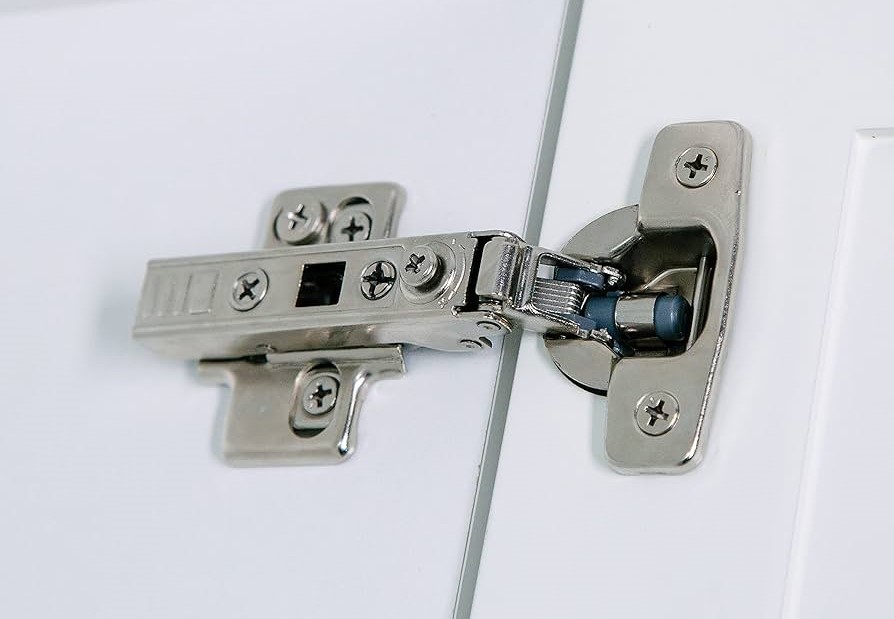
Gewoonlijk zijn deurscharnieren mechanische lagers die de plaat en het deurkozijn met elkaar verbinden. Scharnieren zorgen ervoor dat de deur soepel open en dicht kan zwaaien. Ze bestaan meestal uit 2 platen en bevatten een pin die ze verbindt. Hier zorgt de pin ervoor dat de deur kan draaien.
De meeste deuren hebben twee, drie of meer scharnieren. Het zijn de scharnieren die het volledige gewicht van de deur dragen. Daarom moeten ze zo worden gemaakt dat ze het gewicht van de deur gemakkelijk kunnen dragen. Voor betere resultaten gebruiken fabrikanten staal, messing of roestvrij staal om een sterk scharnier te maken. Controleer voordat je het scharnier koopt of het perfect is uitgelijnd en controleer de gewichtsclassificatie van het scharnier.
Deuraccessoires
Deuraccessoires of deurbeslagcomponenten omvatten een breed scala aan secundaire onderdelen. Deze items verbeteren de algehele kwaliteit en het uiterlijk van de deur. Voorbeelden van items zijn deurstoppers, haken, kijkers, naamplaatjes en nog veel meer. Deze onderdelen hebben geen invloed op het vergrendelen, openen of bewegen van de deur. Maar ze ondersteunen de veiligheid en het gemak van het dagelijks leven.
Een deurstopper voorkomt dat de deur tegen de muur slaat. Deurkijkers vergroten de veiligheid van de gebruiker. Hiermee kun je controleren of kloppers bekend of onbekend zijn. Het gebruik van schopplaatjes beschermt de deur tegen beschadiging. Je kunt ook tochtstrips gebruiken om de kieren rond de deur af te dichten. Deze onderdelen maken de deur comfortabeler en gaan langer mee.
Deursluiters
Een deurdranger regelt hoe de deur sluit. Het is een mechanisch onderdeel dat op de deur en het kozijn is gemonteerd voor betere controle. Het belangrijkste doel is om te sluiten na het openen. Hiervoor gebruikt de deurdranger hydraulische vloeistof of een veer om een constante snelheid en kracht te handhaven tijdens de sluitbeweging van de deur. Op deze manier wordt voorkomen dat de deur dichtslaat en wordt een goede sluiting zonder schade gegarandeerd.
Deurdrangers komen het meest voor in middelbare scholen, bedrijfs- of commerciële gebouwen, scholen en ziekenhuizen. Waarom gebruiken mensen ze? De belangrijkste reden is om de verkeersstroom te regelen. Het helpt ook bij brandveiligheidsprotocollen. Een goed afgestelde deur verbetert ook de kwaliteit van de deur en de levensduur. Kies dus voor een goede set deurdrangers die langer meegaan en veiliger zijn voor mensen van alle leeftijden om doorheen te lopen.
Zak- & schuifdeurbeslag
Zak- en deurschuifdeurbeslagcomponenten helpen de deur in de zak of langs de deur te schuiven. Hierdoor kan de deur langs verborgen rails bewegen, wat ruimte bespaart. Deze deuren bewegen horizontaal langs het kozijn, niet op scharnieren. En de holte van de kamer bevindt zich op de holte van de muur, terwijl schuifdeuren van links naar rechts bewegen. Dit soort deuren wordt vaak gebruikt in slaapkamers, badkamers en kleine kamers. Hier maakt het systeem gebruik van rails, rollen en geleiders.
In dit deursysteem is de looprail het meest kritieke onderdeel. Het geeft de weg aan om de deur te bewegen. Rollen in de rails helpen de deur soepel in een bepaalde richting te bewegen. Fabrikanten plaatsen deze aan de bovenrand van de deur.
Patiodeurbeslag
Patiodeur hardwareonderdelen verwijzen naar de onderdelen die gebruikt worden op grote glazen schuifdeuren die naar buitenruimtes leiden. Veiligheid is een primaire focus voor deze deuren. Deze deuren kunnen meerdere vergrendelingsopties hebben voor een betere veiligheid. Dergelijke veiligheidsoverwegingen leiden fabrikanten tot het gebruik van zware slotsystemen, handgrepen, rollen, railsystemen, enzovoort.
Deze rollen en rupsbanden zijn ontworpen om zware glaspanelen te weerstaan. In bepaalde gevallen gebruiken fabrikanten weerbestendige materialen. Het gebruik van deze materialen voorkomt dat onderdelen gaan roesten of vocht absorberen. Het verbetert ook de algehele kwaliteit en bereidt de deur voor op zware omstandigheden.
Deursloten
Het belangrijkste doel van deursloten is om de deur vast te houden zonder hem te vergrendelen. Zoals eerder vermeld, maakt het gebruik van een metalen grendel die verbonden is met een veer. Hiermee kun je de deur openen nadat je aan de handgreep hebt gedraaid. Wanneer je de klink draait, beweegt de grendel naar binnen. Na het sluiten duwt de opgeslagen energie van de veer de grendel in de sluitplaat. Daarnaast zijn er nog andere deurbeslagcomponenten, zoals een knop, rozet of frontplaat.
Haspen
Een hasp is een vergrendelingsaccessoire. Meestal gebruiken mensen het voor veiligheid en beveiliging, zoals deuren, kasten, hekken en vele andere dingen. Het bestaat uit twee hoofdonderdelen: een metalen plaat met een scharnierende lus en een tweede plaat met een scharnierende staaf. De staaf zwenkt over het nietje en vergrendelt het op zijn plaats met een hangslot. Het is een efficiënte optie als een standaard hangslot nodig is. Ze zijn eenvoudig maar sterk genoeg om ongeoorloofde toegang te voorkomen.
Schuifdeur wielbeugel
Het is een specifiek onderdeel van het schuifdeursysteem en wordt vaak een rol of een hanger genoemd. Hier wordt de beugel rechtstreeks aan de bovenrand van de schuifdeuren bevestigd. Je kunt beugels gebruiken voor een grote verscheidenheid aan deuren, waaronder hout, glas en aluminium. Het houdt de deur vast en maakt gebruik van wieltjes die langs de rails draaien. Dit zorgt ervoor dat de deur perfect hangt en soepel beweegt.
Hoe kies je de juiste fabrikant van deurbeslagcomponenten?
De kwaliteit van deurbeslagcomponenten hangt vooral af van hoe ze gemaakt zijn. Het koetswerk en de materialen moeten sterk zijn om een lange levensduur te garanderen. In dit geval zijn goede productie- en kwaliteitscontroles belangrijk. De juiste fabrikant kiezen is in dit geval cruciaal.
Niet elke spuitgietfabriek kan je de beste kwaliteit bieden. Er zijn zoveel goedkope producten die er in eerste instantie identiek uitzien. Maar op de lange termijn degraderen ze snel en gaan ze uiteindelijk onverwacht kapot. Hier zijn enkele kritieke factoren die je in overweging moet nemen bij het kiezen van een betrouwbare fabrikant van deurbeslagcomponenten.
Productiemogelijkheden
Een goede fabrikant moet een sterke gieten, bewerkingen oppervlaktebehandeling. Gieten is essentieel voor gepersonaliseerde artikelen. De juiste bewerking en oppervlakteafwerking zorgen voor de beste functionele producten. Ga dus op zoek naar een fabrikant met moderne technologieën en een bewezen staat van dienst.
Aanpassingsoptie
Een professionele fabrikant moet flexibele aanpassingsmogelijkheden bieden. Dit kan alles omvatten van ontwerp, grootte en afwerking om aan specifieke behoeften te voldoen. Het ondersteunt ook merkbehoeften en speciale projecten. Flexibel maatwerk getuigt ook van sterke technische vaardigheden.
Productkwaliteit en certificeringen
Productkwaliteit geeft aan hoe goed de hardware op de lange termijn zal presteren. Controleer hun kwaliteitscertificeringen (bijv. ANSI/BHMA-normen). Je kunt ook klantbeoordelingen controleren. Een sterke klantenbeoordeling betekent dat de producten strenge protocollen doorlopen.
Materiële kwaliteit
Voor onderdelen van deurbeslag moeten fabrikanten materialen van hoge kwaliteit gebruiken. Bijvoorbeeld massief messing, roestvrij staal of specifieke zinklegeringen. Het gebruik van sterke materialen voor deurbeslagcomponenten zorgt ervoor dat onderdelen bestand zijn tegen corrosie en zware omstandigheden, wat resulteert in een lange levensduur.
Doorlooptijd en levering
Evalueer eerst hun vermogen om je deadline te halen. Het bedrijf moet je betrouwbare en consistente doorlooptijden voor de projecten bieden. Controleer ook of ze een sterk supply chain management hebben, want dit zorgt ervoor dat bestellingen op tijd worden geleverd en voorkomt kostbare vertragingen.
Technische ondersteuning
Een gerenommeerde fabrikant biedt altijd een degelijke technische dienst en dienst na verkoop. Ze moeten ook een duidelijke installatiegids en probleemoplossing bieden. Bovendien bieden ze vervangende onderdelen als dat nodig is. Controleer of het bedrijf dergelijke voordelen biedt en motiveer ze met klantbeoordelingen.
Aludiecast GC precisie (China spuitgieten): Uw vertrouwde deur Hardware componenten fabrikant
Aludiecast GC Precision is een van de top 10 spuitgietfabrikanten in China. Het bedrijf biedt aluminium, zink en magnesium spuitgietcomponenten. Hun productielijn is uitgerust met moderne machines en gereedschappen.
Voor deurbeslagcomponenten biedt Aludiecast GC precision zowel reguliere als op maat gemaakte oplossingen. Het team volgt een strenge kwaliteitscontrole voor verschillende industrieën. Onze ingenieurs kunnen uw onderdelen ontwerpen en verbeteren om aan uw behoeften te voldoen. Daarnaast bieden we ook een betrouwbare levering van het eindproduct.
Bovenal is Aludiecast GC Precision een vertrouwde bron voor hoogwaardige hardwarecomponenten. Als je vragen hebt, neem dan gerust contact op met neem contact op met onze klantenservice. We zijn altijd bereid om uitdagende taken te verkennen.

0 reacties