
Aluminum is one of the most commonly used metals in today’s production. It’s light, corrosion-proof, recyclable, and has a low price point. This makes it used everywhere, from mobile phones to aircraft landing gear. However, it isn’t just all aluminum parts are created equal.
アルミダイカスト and forging are the two most typical manufacturing processes. Both processes make good metal parts, but there are significant differences in process, internal structure, strength, cost, and ideal application of each.
If you are an engineer, buyer, product designer, or hobbyist choosing between die-cast aluminum and forged aluminum, this guide covers how each process works, how the materials compare, and which one suits your project.
What is Die-Cast Aluminium?
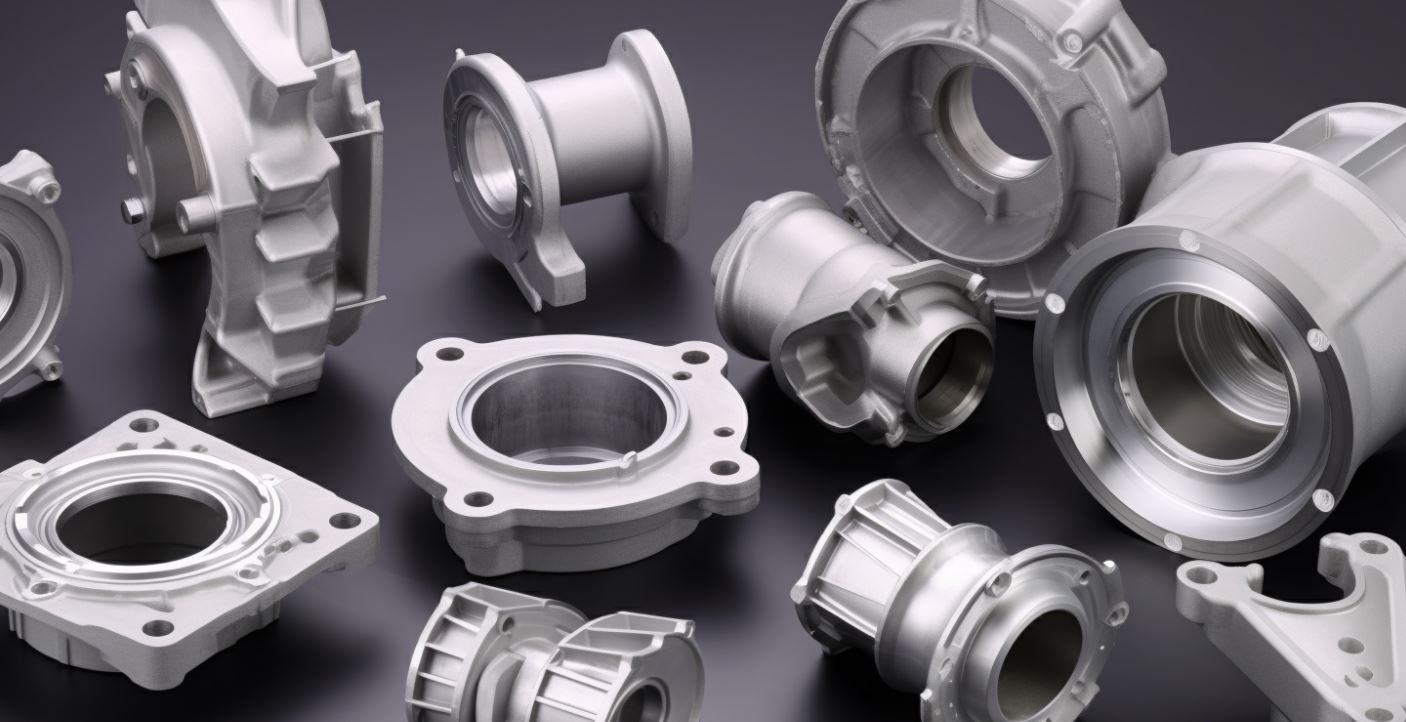
Die casting aluminum is injected under pressure into a steel mold, known as the die, which can be reused. Metal fills all the details of the cavity, cools, solidifies, and the final part is ejected.
It is also known as the Aluminium Die Casting and High Pressure Die Casting (HPDC) process. This is a casting process, meaning that the metal goes through a liquid form before reaching its final shape.
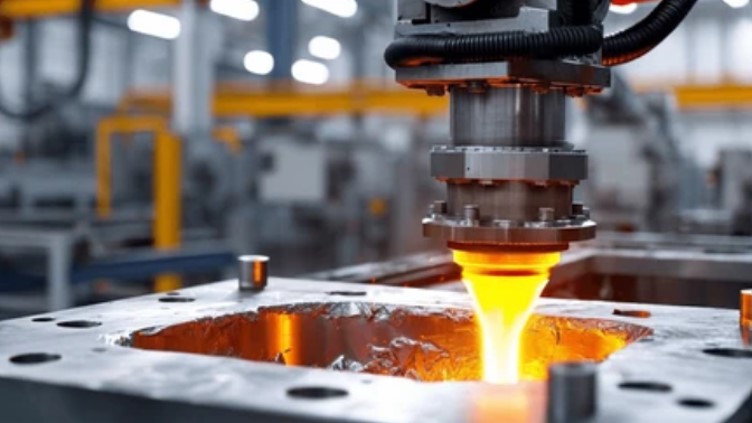
How the Aluminum Die Casting Process Works
Clean and pre-coat two halves of hardened steel dies with a lubricant to control temperature and part release.
- 溶ける: This process is usually done in a 650-720°C furnace.
- 注射をする: High-speed and high-pressure molten metal is pushed into the Die cavity.
- 冷却と凝固: The metal is rapidly cooled in the die, after which it solidifies into the desired shape.
- 退場: The die part is then ejected by a set of ejector pins.
- Trimming and finishing: Excess material is removed (flash, gates, and runners). The component can then be further treated and processed with machining, polishing, powder coating, or anodizing.
Common Die-Casting Aluminum Alloys
Alloy selection is based on strength, corrosion resistance, fluidity, and cost. The following table compares four most commonly used aluminum alloys for die casting.
| Alloy (Equivalent) | 主要な要素 | 引張強度 | 降伏強度 | 伸び | 密度 | 耐食性 | 最適 |
| A380 (ADC10) | Si 7.5-9.5%, Cu 3-4% | ~324 MPa | ~160 MPa | ~3.5% | ~2.74 g/cm³ | フェア | General-purpose parts, housings, brackets |
| A383 (ADC12) | Si 9.5-11.5%, Cu 2-3% | ~310 MPa | ~150 MPa | ~3.5% | ~2.74 g/cm³ | フェア | Complex, thin-walled parts |
| A360 | Si 9-10%, Mg 0.4-0.6% | ~317 MPa | ~170 MPa | ~3.5% | ~2.63 g/cm³ | 素晴らしい | Corrosion-prone and high-temperature parts |
| A413 | Si 11-13% | ~296 MPa | ~130 MPa | ~3.5% | ~2.66 g/cm³ | 素晴らしい | Pressure-tight hydraulic and pneumatic parts |
Advantages of Die-Cast Aluminum
The following features help you understand the pros of die-cast aluminum
- These are suitable for complicated forms and detailed features
- Many designs can achieve thin walls (around 1 mm or less).
- High production speed and high repeatability.
- Effective cost reduction at high volume.
- Excellent surface finish with little or no post-processing required
- Tight dimensional tolerances, which cut down on machining.
Disadvantages of Die-Cast Aluminum
Here are certain cons associated with die-cast aluminum;
- 多孔性: Trapped gas and shrinkage can create tiny voids inside the part.
- Lower ductility: It is less ductile and less fatigue-resistant than forged parts.
- Costly: Expensive initial tooling cost for steel dies.
- Poor suitability for heat treatment in standard high-pressure processes, because trapped gas can cause blistering
- Less suitable for safety-critical, high-stress components.
What Is Forged Aluminum?
Forged aluminum is made by shaping a solid piece of aluminum, called a billet, using compressive force. The billet is normally heated to forging temperature (usually between 350-500℃, which is still below its melting point). After that, it’s pressed, hammered, or squeezed between dies and taken into the shape that the designer desired.
Aluminium is a non-tempering metal, which improves and corrects the grain alignment in the internal structure of the piece to conform to the shape of the part. The primary reason forged aluminum is stronger and tougher.
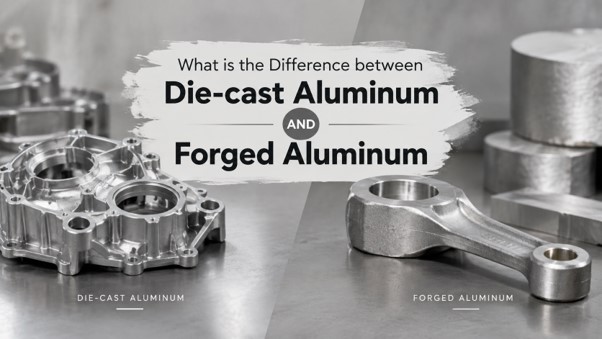
Common Forging Aluminum Alloys
Alloys are selected based on strength, toughness, and heat treatability. The following table provides a comparison of the four most widely used forging aluminum alloys in the most commonly used T6 temper.
| 合金 | 主要な要素 | 引張強度 | 降伏強度 | 伸び | 密度 | 耐食性 | 最適 |
| 6061-T6 | Mg 0.8-1.2%, Si 0.4-0.8% | ~310 MPa | ~275 MPa | ~12% | ~2.70 g/cm³ | 素晴らしい | General structural parts, wheels, fittings |
| 6082-T6 | Mg 0.6-1.2%, Si 0.7-1.3%, Mn 0.4-1.0% | ~320 MPa | ~260 MPa | ~10% | ~2.70 g/cm³ | 非常に良い | Structural and automotive parts, suspension components |
| 7075-T6 | Zn 5.1-6.1%, Mg 2.1-2.9%, Cu 1.2-2.0% | ~570 MPa | ~500 MPa | ~11% | ~2.81 g/cm³ | フェア | Aerospace, motorsport, high-stress components |
| 2014-T6 / 2024-T4 | Cu 3.9-5.0% (Mg, Mn, Si in smaller amounts) | ~480 MPa (2014-T6) / ~470 MPa (2024-T4) | ~415 MPa / ~325 MPa | ~13% / ~20% | ~2.80 g/cm³ | Poor (needs protective coating) | Aircraft structures, heavy-duty load-bearing parts |
Detailed Comparison: Key Differences Explained
Let’s explain the differences in a more detailed way.
1. Manufacturing Process
The most notable difference is the way the metal is formed. Die casting is a process that utilizes liquid metal, which flows easily into the complicated cavity. Forging usually applies to solid metal that is under pressure.
Think of the ways it is like cooking. Die casting is similar to pouring batter into a mold. Forging is similar to kneading and pushing dough out of shape. The second involves building up its internal structure.
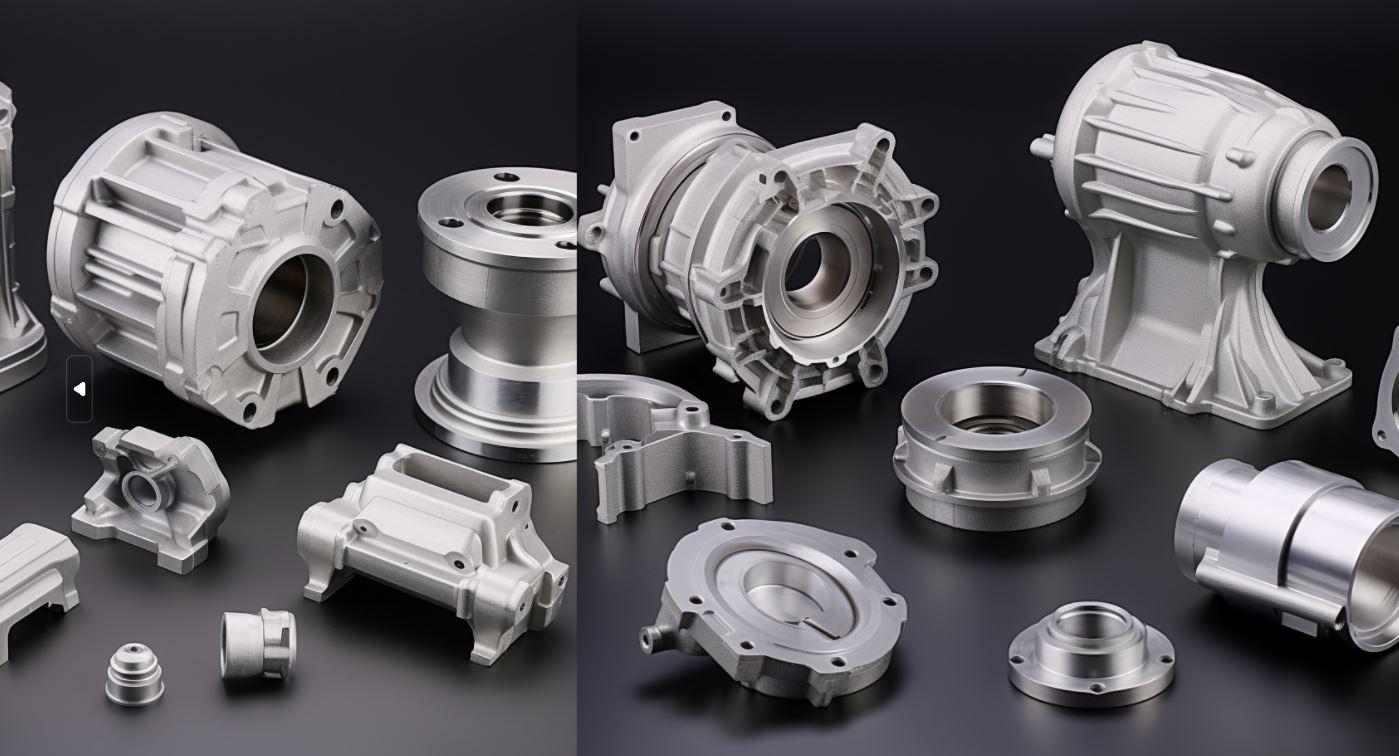
2. Strength and Mechanical Properties
In practical applications, forged aluminum proves superior, especially when subjected to repeated or extreme stress.
Moreover, metal compression occurs, and internal voids are eliminated. After that, the grain flow is adapted around the metal part contours. This increases tensile strength, yield strength, and impact toughness. Also affects the fatigue life of the metal part.
Die-cast aluminium can demonstrate a decent tensile strength on paper too. The tensile property of A380 could be between those of some wrought alloys. However, the elongation (ductility) of the die-cast parts is generally low, and they are more brittle. Internal porosity may also form areas of vulnerability, causing cracks to form in the material due to cyclic loading.
3. Internal Structure and Porosity
Among the many concerns in die casting, one of the most important is porosity. High-velocity pressure injection of molten aluminium can result in trapping of air and gases. The small gaps can also occur as the metal cools and contracts.
In decorative components, these pores are inconsequential, but in pressure-bearing or load-bearing components they could be a serious problem. These include vacuum-assisted die casting, squeeze casting and optimized gating, which all minimise the amount of porosity but seldom produce a completely porosity-free cast.
Forged aluminum has a dense, void-free structure, since the process compresses the metal rather than pouring it.
4. Design Flexibility and Complexity
This is where die casting excels. Die casting can generate:
- Thin walls
- Ribs and bosses
- Fine details and text
- Internal cavities that are complicated (cores)
- Low machining load components (near-net-shape parts).
Forging is more limited. The metal must be capable of plastic flow under pressure, making very fine detail, deep cavities, and thin sections more difficult to create. Forged parts are typically simpler and cut into various shapes.
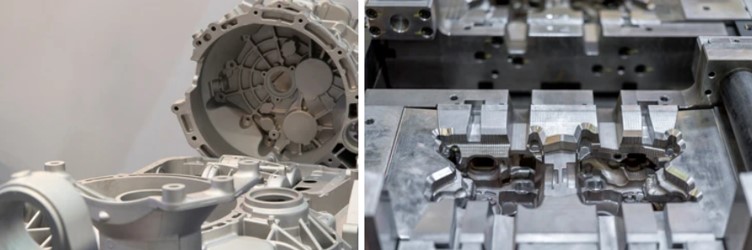
5. Cost Comparison
The production volume greatly influences the cost. For mass-produced, non-critical parts, die casting is nearly always the less-costly process. The increased reliability often outweighs the extra expense in high-performance and safety-critical parts.
6. Surface Finish and Appearance
Most die cast parts are produced with a smooth, fine finish which is ideal for painting, powder coating, plating, or anodizing.
Forged parts are typically given more of a handcrafted feel once they’re made and will look great after the machining and finishing operations. Forged aluminum is also more likely to undergo uniform anodizing, so it is used for high-quality cosmetics like bike parts and wheels.
7. Weight
They both have aluminium materials and hence different densities. The variance in weight typically relates to design. Forged parts are also lighter for the same strength, as the engineer can use less material to obtain the same strength properties. The die casting process, then, can produce very thin wall thicknesses, and this weight saving is especially useful in the correct design.
8. Heat Treatment & Post Processing
Aluminum and its alloys, like 6061 and 7075, are very sensitive to heat treatment, increasing strength and hardness (T6e, for example).
Gaseous elements will be released when standard high-pressure die-cast parts are conventionally heat-treated at high temperatures, for which this is not suitable. Properties can be enhanced via specialized processes like vacuum die casting, low-pressure casting, and certain T5 or T7 treatments.
Applications: Where Each Type Is Used
Die Cast Aluminum in General Use Applications
- 産業用だ: Transmission housings, engine blocks, brackets, and more and more large structural castings
- Tape and banding: Packing tape or duct tape
- Industrial products: Industrial bottles, cookware, appliance parts
- Electronic / Electrical: Antenna housings and enclosures
- Smuggling: Locked valve or lock box body, gearbox cover for smuggling locks, Engine breather, Jack port breaker.
Common Applications of Forged Aluminum
They are widely used in;
- 製造業: Aircraft components and structural frames
- 自動車: Forged wheels, suspension arms, connecting rods, pistons
- Motorcycle / Bicycle: High-quality accessories for wheels, crank, and handlebar
- Marine and defense: Load-bearing fittings and firearm components
- 産業機器: High-pressure hydraulic fittings, heavy-duty tools
Application Summary Table
The following table gives a brief description of the difference between die-cast aluminum and forged aluminum;
| 産業 | Die-Cast Aluminum Examples | Forged Aluminum Examples |
| 自動車 | Gearbox cases, engine covers | Wheels, control arms, pistons |
| 航空宇宙 | Non-structural housings | Landing gear, structural fittings |
| エレクトロニクス | Enclosures, heat sinks | Premium device frames (machined) |
| Cycling / Motorsport | Basic brackets | Cranks, wheels, stems |
| インダストリアル | Pump and valve housings | High-stress fittings and tooling |
Die-Cast vs Forged Aluminum Wheels: A Popular Example
One of the most searched comparisons involves wheels.
- Cast aluminum wheels (including die-cast and gravity or low-pressure cast) are affordable, available in countless designs, and fine for everyday driving.
- Forged aluminum wheels are lighter for a given strength, tougher under impact, and preferred in motorsport and performance driving. They are much more expensive.
Note that most of the wheels sold as cast are also low-pressure and gravity cast, and not high-pressure die cast… safety-critical wheels require lower porosity. This still, however, shows the trade-off between costs and benefits.
How to Choose: Die-Cast or Forged Aluminum?
Here are some questions to consider when choosing the process that fits your project.
Choose die-cast aluminum if:
- You need high volumes at a low per-part cost
- The part has a complex shape, thin walls, or fine detail
- The part is a housing, cover, or enclosure with moderate mechanical loads
- You need a smooth surface finish with minimal machining.
- Most of the time, speed and cost are more important than maximum strength.
Forged Aluminum If:
- The part must withstand high stress, impact, or fatigue
- Safety and reliability are paramount
- The strength-to-weight ratio must be superb.
- Production quantities are light to medium.
- You can pay more for greater performance
Die-Cast Aluminum vs Forged Aluminum: Quick Comparison Table
Let’s get a quick comparison of features of both die-cast and forged aluminum;
| 特徴 | アルミダイカスト | Forged Aluminum |
| Starting material | Molten aluminum alloy | Solid aluminum billet |
| Forming method | Liquid metal injected into a die | Solid metal compressed under force |
| Internal structure | Random grain, possible porosity | Refined, directional grain flow |
| 強さ | 中程度 | High to very high |
| Fatigue resistance | より低い | 素晴らしい |
| 延性 | 低い | グッド |
| デザインの複雑さ | Excellent for intricate shapes | Limited to simpler geometries |
| Wall thickness | Very thin walls possible | Thicker sections typical |
| 表面仕上げ | Smooth as-cast | Needs machining/finishing |
| Tooling cost | 高い | Moderate to high |
| Per-part cost (high volume) | 低い | より高い |
| Production speed | Very fast | 遅い |
| Typical use | Housings, brackets, covers | Structural, load-bearing, safety parts |
よくある質問(FAQ)
1. Is forged aluminum stronger than die-cast aluminum?
Yes, in most practical applications. Because of its finer grain structure and lack of porosity, forged aluminum exhibits superior yield strength, ductility, impact strength, and fatigue strength.
2. Is it cheaper to buy a die-cast or forged aluminum?
At larger production runs, die-cast aluminum is often less expensive per component because it uses fast cycle times and near-net-shape parts. Forging costs more per piece, but can be cheaper for critical, low-volume components.
3. Is die-cast aluminium heat treatable?
Standard high-pressure die-cast parts are not suitable for conventional solution heat treating due to the presence of trapped gas in the parts. Some alloys can be heat-treated, and vacuum die casting can be used.
4. Is forged aluminum lighter than die-cast aluminum?
The density is the same, but forged parts may be lighter as they can often be designed to be stronger with less material. Thin walls are another way that die casting can help to reduce weight.
5. How can I determine if a part is die-cast or forged?
Parts that have been die-cast may exhibit parting lines, ejector pin marks, gate marks, and a very fine, smooth surface. Forged pieces almost always feature trimming flash lines and a more consistent feel. The manufacturer’s data or lab testing is typically required for reliable identification.
6. Which is better for automotive parts?
It varies by component. The difference between a suit of Die casting and one of Forging is that the former is used for housings and non-critical components, and the latter for wheels, suspension arms, pistons, and other high-impact parts.
7. Will die-cast aluminium rust?
Aluminium does not rust like iron; it has a protective oxide layer. In a hostile environment, coatings or painting can be used to avoid corroper; there is a possibility to corrode even in mild environment.
結論
The key difference between die-cast aluminum and forged aluminum is how these materials are created, which affects all other aspects of the product. Die casting injects molten aluminum into a mold, which makes it ideal for complex, thin-walled, high-volume parts at low unit cost. Forging compresses heated solid aluminum, which gives superior strength, toughness, and fatigue resistance for demanding, safety-critical applications.
Neither process consistently performs better. The right selection depends on the performance requirements, part geometry, production volume, and cost. Die casting is used for cost-effective mass production of housings or covers. For structural load-bearing elements that can’t fail, use forged. If in doubt, talk to a manufacturing partner early in the design phase; minor design changes can transform a part into a more economical process.
0コメント