Zinc Die Casting Manufacturer in China: Zamak 3, Zamak 5 Die Casting Components
OEM Contract zinc die casting components manufacturing services with zamak 3, zamak 5…
Zinc Die Casting Services, Its Process, Applications, and Design Tips
When it comes to manufacturing metal parts, zinc die casting components are a high-demand option. It uses different alloys to make complex zinc metal parts. These parts have strong mechanical properties. In addition to their strength, these parts possess exceptional mechanical properties. That is why they are widely used in different applications. Here, we will discuss these applications in detail. Additionally, we will discuss its whole process, design tips, advantages, disadvantages, and alternatives in detail.
What is zinc die casting?
It is a metal alloy casting process that used to manufacture zinc alloy casting components. First, the zinc alloy melts down into a molten state. Next, high pressure forces the molten zinc alloy into a die cavity (metal die casting mold). Then the zinc attains the shape of a die. The zinc then cools down and is ejected from the die. Therefore, this technique is best suited for making large volumes of medium-zinc alloy die casting parts. People often use this process to produce highly accurate parts. Additionally, it can deal with different zinc alloys, i.e., Zamak (zamak 3, zamak 5), and ZA series.
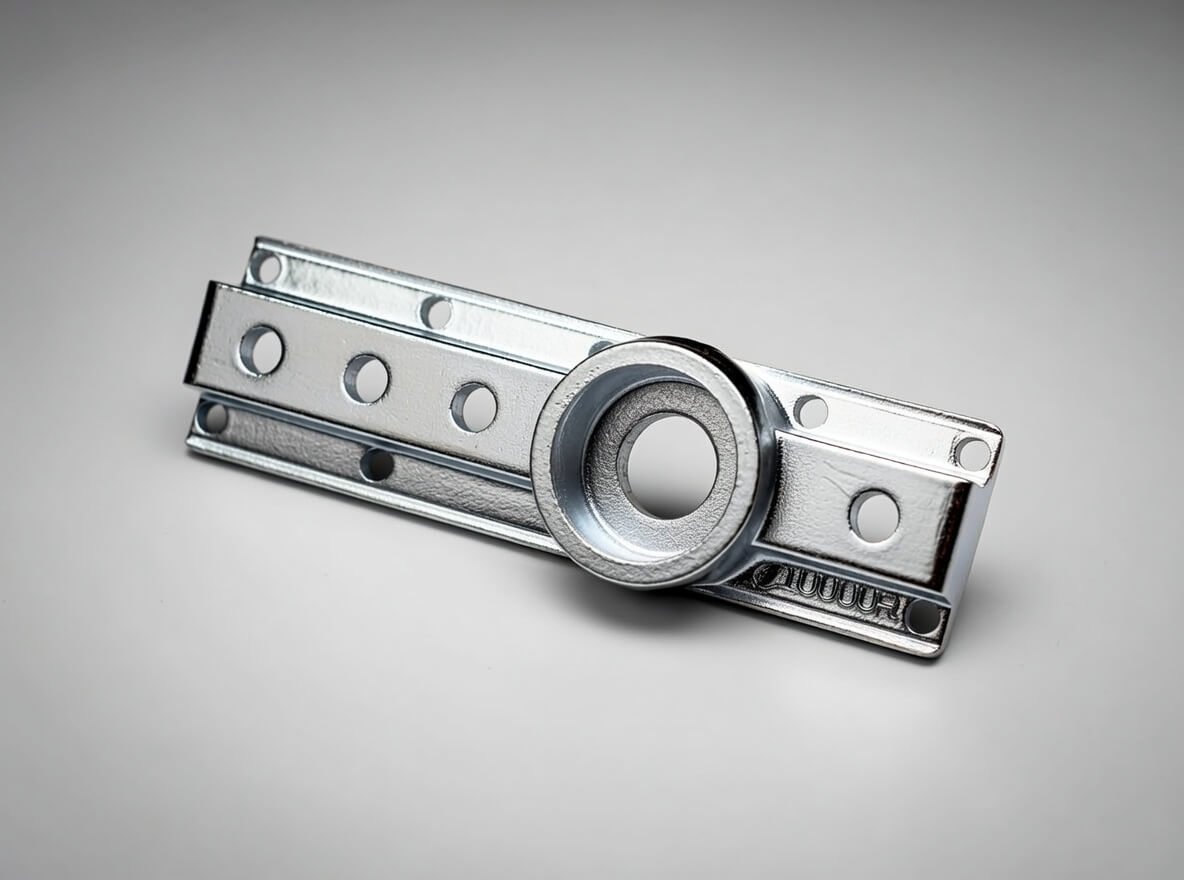
Zamak 5 die casting
What are the processes involved in zinc die-casing Process?
When you are looking for Zamak die casting components, the best option is looking for a die casting company who is professional in zinc die casting services. in that case to understand the zinc casting process is very important for you to slect the right supplier. Here is a detailed description of the steps involved in making zinc die casting components.
1. Design Zamak Part and Tooling
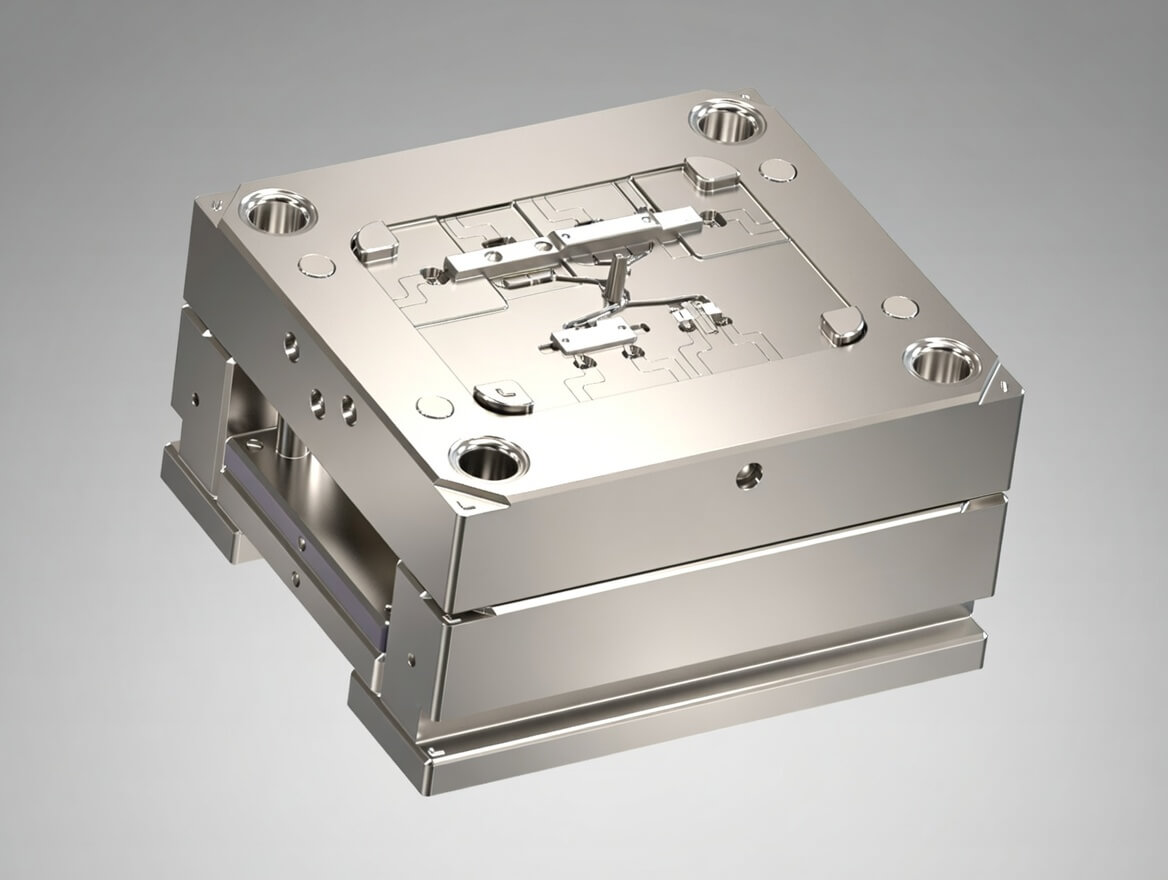
Zinc die casting begins with the design phase. This phase may include the zinc alloy part design and tooling design. The engineers use smart software, i.e., CAD or CAM, to design the parts and tools. They add all the little details to the designs to ensure the zinc alloy part’s precision. They carefully consider the following aspects of part design:
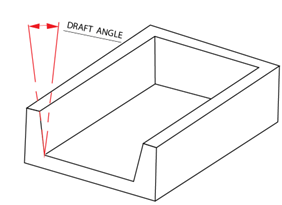
- Draft Angle: For every zinc alloy die casting parts that must have draft angle, The normal draft angles is between 1-3 degrees. It helps remove the zinc alloy part from the die. some times for some speical zinc die casting parts, 0.5 degree can be applied, this is according to the part design.
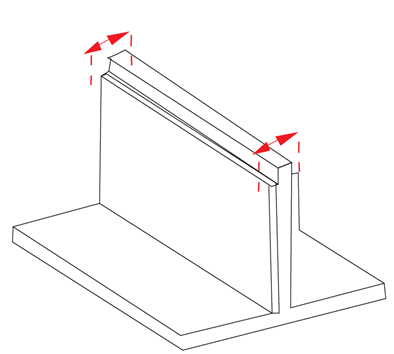
- Wall Thickness: They maintain a uniform wall thickness. So, they can prevent defects and allow proper filling. for zinc die casting parts the min wall thickless is 0.8mm, but this is designing on the design geomitry, if you do now know about this, we suggest you find a professional zinc die casting partner designer, or you can contact us for help.
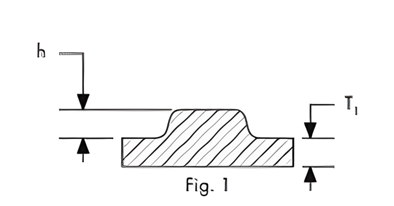
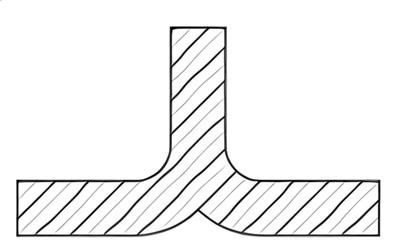
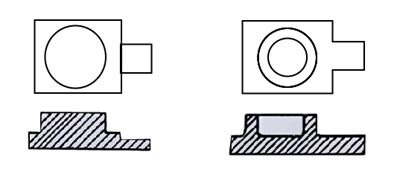
- Ribs and Fillets: The engineers incorporate ribs and fillets into their designs. The ribs contribute to the strengthening of the metal alloy component. The fillets assist in avoiding sharp corners to prevent stress.
Furthermore, in zinc die casting tooling design, the tooling designer engineers will design the completely 3D and 2D tooling drawing according to part design, and create the BOM list for all of components, for zinc die casting tool that requires high-quality steels like H13, 8407, and 1.2344. This die comprises two halves, i.e., the cover die (fixing half) and the ejector die (moving half). Therefore, we have properly designed the die to align with the CAD designs. It guarantees that the final part will be exactly match a die.
2. Melting and Injection to trial the tooling
Once die casting tooling manufacturing completely, then we start to trial the tool, this step includes the melting of the zinc material. This is usually done in a furnace. We make sure to adjust the temperature between 700°F and 800°F (370°C and 430°C). This range helps to keep the zinc metal in a molten state. After that, the molten zinc is allowed to be injected into the die-casting tooling by the machine. This hot chamber die casting machine comprises a punch, a die cavity, and a cooling chamber. After injecting the molten alloy into the mold, the punch applies high pressure, forcing it into the die cavity. Then the molten zinc takes on the shape of a die and achieves all of its dimensions.
3. Cooling and Solidification
Once the injection process is finished, the molten zinc is cooled by the cooling system. The steel mold starts to cool down the molten zinc rapidly. But this cooling has certain limits. it is usually fastened up using the cooling channels. The coolant, or water, is allowed to pass through this channel. They help cool the zinc alloy. After cooling, the zinc starts to solidify. At this stage, it takes the mold dimensions. Besides this, fast cooling helps get fine-grained structures with high strength. Additionally, this cooling time depends on the part size and its complexity. Simpler designs cool down earlier.
4. Ejection and Trimming
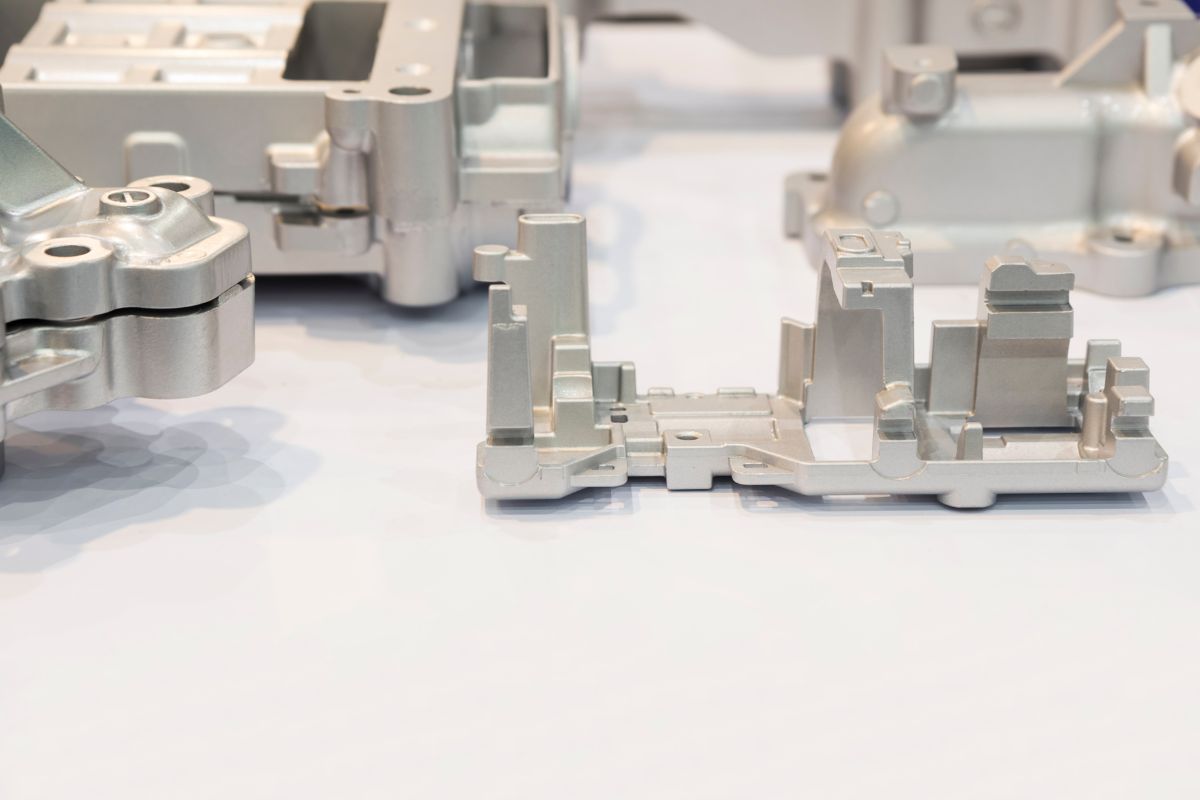
The zinc die casting manufacturing process’s final step is the ejection and trimming of the zinc alloy part. After solidification, the die opens. Then the ejector pins start to push the part out of the mold. This mold is designed smartly. It can easily come out of the die cavity without causing any damage. Additionally, if there is excessive material, i.e., flash, it attaches around the edges of the zinc alloy part. It is important to remove it. The trimming process accomplishes this. This process can use different mechanical operations, such as cutting, grinding, or filing. All of these processes result in the production of fine parts.
5. Secondary Processes
Some parts are finalized after trimming. But a few of them need additional processes. They can get a better appearance and specific dimensions. For example, drilling holes, threading, machining, or refining surfaces. While some zinc die casting parts may need better appearance and additional properties like corrosion resistance and functioning, they can undergo the painting process. Moreover, some zinc alloy die casting components may need durable finishing. They can tolerate harsh environmental conditions; they may need plating or powder coating process.
Finally. if you are looking fir zinc die casting services, we suggest you contact a die casting manufacturer who can do one stop services for you, in that case you only need to talk with one supplier, we are a die casting company in China that offer zinc die casting services from part design, tool design, die casting tooling manufacturing, mass production, secondary machining, surface finish inspection, packing, assembly, and delivery. Contact us to get a quote in 24 hours.

Commonly Used Zinc Alloys for Die Casting
Here are the different alloys of zinc. They have various applications in different fields. Let’s discuss their properties, composition, and applications in detail.
|
Alloy of Zn |
Composition |
Properties |
Typical Applications |
|
Zamak 3 |
Zn 96%, Al 4%, Mg 0.03% |
Good balance of strength, ductility, and castability |
Automotive parts, hardware, electrical housings |
|
Zamak 5 |
Zn 95%, Al 4%, Cu 1% |
Higher strength and hardness, good creep resistance |
Gears, levers, small mechanical components |
|
Zamak 7 |
Zn 99.99%, Al 0.05%, Mg 0.01% |
Superior ductility and fluidity, high purity |
Electronic connectors, precision components |
|
Zamak 2 |
Zn 94%, Al 4%, Cu 3% |
Highest strength and hardness among Zamak alloys |
Heavy-duty mechanical parts, tools |
|
ZA-8 |
Zn 92%, Al 8%, Cu 1% |
High strength and hardness, good bearing properties |
Bearings, bushings, small machinery parts |
|
ZA-12 |
Zn 88%, Al 12%, Cu 1% |
High strength, hardness, good castability |
Structural parts, high-load components |
|
ZA-27 |
Zn 73%, Al 27%, Cu 2% |
Highest strength and hardness, lower density |
Heavy-duty applications, large machinery parts |
Fundamental Design Tips for Zinc Die Casting
Here are some important tips, you can use to make zinc die casting components more effective and efficient. When you need zinc die casting services, below tips may still help you with your Zamak die casting project, becauase your supplier will not understand the purpose of your zinc casting components, of course if you want your supplier to do the design for you, then they should handle those factors.
|
Design Aspect |
Fundamental Tips |
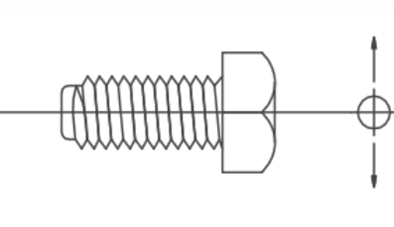
Simplified Drawings |
|
Draft Angles |
Incorporate draft angles (typically 1-3 degrees). |
|
|
Wall Thickness |
Maintain uniform wall thickness (0.040-0.120 inches for zinc). |
|
|
Ribs |
Add ribs to strengthen areas without increasing overall thickness. |
|
|
Fillets |
Use fillets instead of sharp corners (radius of 0.020 inches or more). |
|
|
Undercuts |
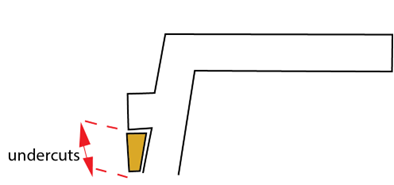
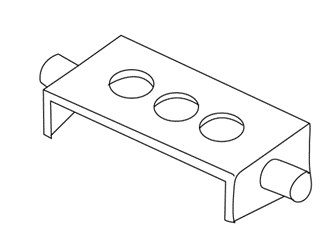
Minimize undercuts or use slide cores if necessary. |
|
|
Bosses |
Design bosses with appropriate height and diameter (1:1 to 3:1 ratio). |
|
|
Holes and Slots |
Design with consistent size and spacing (minimum diameter of 0.040 inches). |
|
|
Texturing |
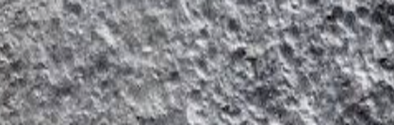
Add textures to flat surfaces to improve aesthetics. |
|
|
Tolerances |
Use realistic tolerances (±0.002 to ±0.005 inches). |
|
|
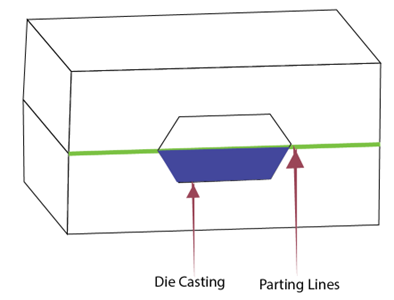
Parting Line |
Position the parting line strategically. |
|
Applications of the Zinc die-casting
Like other processes, Zinc die-casting is also widely used in different industries. Let’s discuss its applications in detail.
1. Automotive Industry
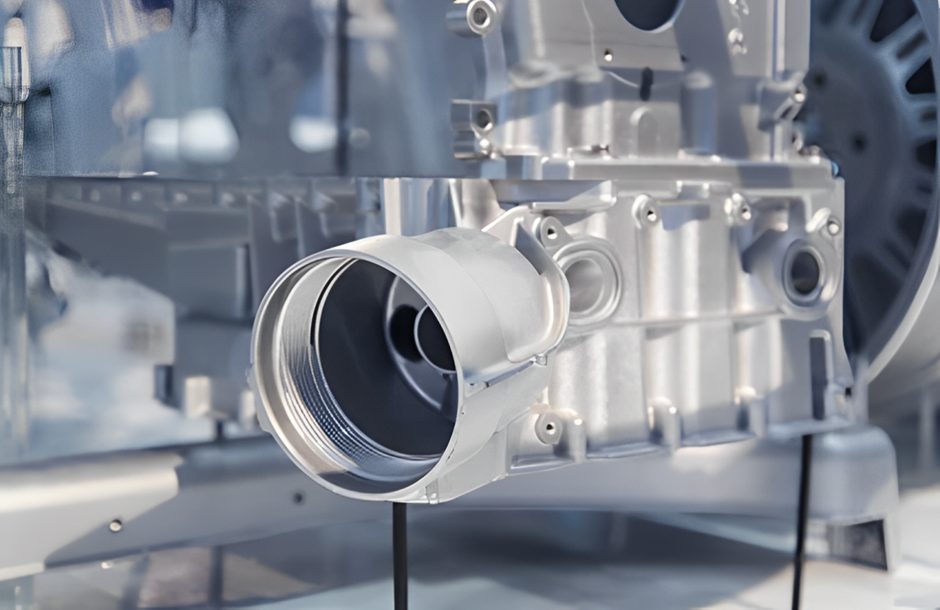
Zinc die-casting has many applications in the automotive sector. It is used to make precise and durable automotive zinc die casting parts. They may include carburetors. These carburetors need high-dimensional accuracy and surface finishing. Zinc die casting is the best option for this type of automotive parts. Besides this, some automotive brake parts need high strength and reliability. So, in this case, zinc die casts are good options. Moreover, zinc die casting has many applications to make parts that can manage stress and wear.
2. Electronics Industry
Zinc die casting has found applications in the electronics industry. It helps make complex and detailed parts. These parts show excellent electrical conductivity and shielding properties. Besides this, zinc die casts are lighter in weight. Hence, they provide strength and durability. Moreover, electrical connectors demand precision and consistent shapes. Here, zinc die castings fit very well. It also helps dissipate heat from electronic components. Overall, it increases the performance and longevity of the component.
3. Consumer Goods
In this sector, zinc die casting is a relatively cost-effective solution. It can add aesthetics to functional parts. Moreover, it is quite durable and easy to operate. So, it is widely used in making bulk quantities with customized shapes and dimensions. It is used to make different products. They usually include luggage, doors, and appliances. It is because of their strength and aesthetic finishing.
4. Industrial Equipment
Besides other sectors, zinc die-casting has many applications in industrial sectors. It is used to make different components. These generally need high precision and strength. Moreover, they have high resistance to tough environmental conditions. The best example is pump components. Zinc die-castings help make these parts. They are usually housings and impellers. Moreover, this process is widely used to make valves, machinery, and equipment as well.
What are the pros of zinc die-casting?
Just like other methods, zinc die casting also offers different benefits. Let’s discuss these in detail.
1. Precision
This technique gives high-dimensional accuracy. It is capable of producing complex details. Besides this, zinc die-casting is ideal for making parts that need tight tolerance. Its precision itself proves that the final product will surely meet the design specifications. It will help reduce the extensive post-casting processes and machining. Besides this, it also minimizes the need for finishing.
2. Strength and Durability
Zinc die casting allows various alloy usages. These alloys need excellent mechanical properties. They may include good impact resistance and tensile strength. Besides this, it makes zinc die-cast parts strong and durable. So, the part becomes more capable of bearing significant mechanical stress and wear. That is why zinc die-casting is extensively used in applications, i.e., automotive and industrial equipment.
3. Surface Finish
Zinc die casting helps make parts with smooth surfaces. So, it is really easy to apply plating and finishing. Along with this, it has an inherent surface quality. So, it allows different post-casting processes. They may include painting, powder coating, and electroplating. So, the zinc die casts guarantee aesthetic appeal and corrosion resistance. Besides this, it also produces highly precise final products.
4. Efficiency
Zinc die-casting is an efficient and reliable way to make metal parts. It has high production rates with minimal machining required. Moreover, it can make large quantities. So, they’re suitable for making high-volume production runs. Thus, they decrease the manufacturing time and cost.
5. Cost-Effective
This technique is very economical compared to other die-casting methods. It gives itself a smooth finish. So, there is no need for secondary operations. But yes, the initial cost of zinc die casting is quite high, i.e., the tooling design cost. But when it comes to bulk production, The cost decreases and gives consistent results.
Zinc die casting services
What are the cons of zinc die-casting?
Like advantages, zinc die-casting also has some drawbacks. So, let’s discuss them here.
1. Size Constraints
The zinc die-casting suits small or medium-sized productions. If you try to make large-size parts, Then this process offers limitations. It generally happens because of the die-casting machines and mold sizes. So, you can find other alternatives to make the large parts.
2. High Initial Cost
As we have discussed earlier, the zinc die-casting method needs specific designs and tooling. So, it is obvious that it has a higher cost than other techniques. So, this makes it less useful for small productions. However, this can be used to produce large production volumes with consistent designs.
3. Thermal conductivity
Zinc alloys are better thermal conductors than other metals. So, it becomes difficult to deal with heat during the process. So, you need to carefully design the mold. Besides this, you also need to add appropriate cooling strategies to avoid any defects.
What are the alternatives available for zinc die casting?
By comparing both the benefits and drawbacks of zinc die-casting, we can try using different alternatives to get the desired parts. So, their explanation is in the below table.
|
Alternative |
Material |
Advantages |
Disadvantages |
Applications |
|
Aluminum alloys |
Lightweight, corrosion-resistant |
Higher melting point |
Automotive parts, aerospace components |
|
|
Magnesium alloys |
Very lightweight, good strength-to-weight ratio |
More expensive material |
Consumer electronics, automotive components |
|
|
Plastic Injection Molding |
Thermoplastics |
Lightweight, versatile |
Lower strength and durability |
Consumer goods, medical devices |
|
Sand Casting |
Various metals |
Good for large parts, lower tooling cost |
Rough surface finish, lower accuracy |
Engine blocks, large machinery parts |
|
Investment Casting |
Various metals |
High precision, excellent surface finish |
High cost, longer production time |
Turbine blades, medical implants |
|
Powder Metallurgy |
Metals and alloys |
High precision, minimal waste |
Smaller parts, high tooling costs |
Gears, bearings, structural parts |
|
Stamping |
Metals |
High-speed production, low cost |
Flat or simple shapes, high initial tooling cost |
Automotive panels, electronic components |
|
Forging |
Metals |
High strength, excellent durability |
Simpler shapes, higher material waste |
Automotive, aerospace components |
Conclusion
In conclusion, zinc die-casting is a smart technique for making metal parts. It has many applications across many industries. Here, the zinc metal turns into a molten state and is injected into a furnace. After that, it undergoes high pressure and is inserted into the die cavity. Then it starts to attain the shape of mold and is allowed to cool down. After solidification, the zinc part ejects out of the die cavity and checks if it needs trimming or surface finishing. So, this is quite a simple step. This is significantly used to make small parts and cater to large productions. So, it is widely used in many industries.
Frequently Asked Questions
Q1. How can you compare zinc die casting with aluminum die casting?
Well, both zinc die casting and aluminum die casting components start with melting the metal, and then it attains the shape of the mold. But zinc die casts have precision and a surface finish. On the other hand, aluminum die casts are useful for lighter parts with good corrosion resistance.
Q2. Can you recycle the zinc die-cast parts?
Absolutely Yes, zinc die-cast parts are thermal conductors. So, they can easily melt down at certain temperatures. So, they are fully recyclable and highly good for the environment.
Q3. What post-processing techniques are generally used to make zinc die-cast parts?
There are multiple. So, the most common post-processing techniques are machining, plating, painting, and powder coating.
Products Gallery


LED Lamp Heat Sink Components, Marine Components, Architectural Hardware Components, auto components, Mechanical Engineering Components, Automobile Parts, LED lighting enclosure & parts, window and door Hardware, Sports Equipment Components, Automotive Components, Electric Tool Parts.
About Us
Established in 1999, GC Precision Mold Co. ltd (Was Aluminium die casting manufacturer (China) Limited ), is now becoming one of the leading global suppliers of high quality die casting parts and machining of nonferrous metal products.
Our production line include but not limited to aluminium die casting, zinc die casting, bronze sand casting, aluminum gravity casting, CNC precision machining. our products were recognized and certified by ISO 14001 and IATF 16949, we always ready to be your trusted die casting supplier and partner in China.